
Imagine launching a spring‑line for a fashion brand that just hit 12‑month sales of 30,000 units worldwide, yet you’re still stuck in a guessing game on how much “fleece” to order. The right GSM (grams per square metre) can mean the difference between a piece that feels fresh and a bulky drape that drags down your price point. In this guide we’ll decode GSM, break down micro, mid‑weight and heavy fleece bands, and show how each aligns with garment use, hand‑feel, warmth, cost, MOQ and shipping. By the end you’ll know exactly which weight to request from suppliers, how to request lab dips and swatches and how the material’s weight translates into freight expenses per kilogram.
Micro‑fleece (150‑200 gsm) is perfect for lining, lightweight jackets and spring‑time scarves, offering a crisp, airy feel with minimal bulk. Mid‑weight (220‑280 gsm) makes the go‑to for hoodies, bomber jackets and casual coats, delivering balanced warmth and a medium‑handed weight that keeps silhouettes clean. Heavy fleece (300‑400 gsm) dominates winter outerwear and oversized parkas, providing substantial insulation and a plush, luxurious texture. These bands also influence pricing: lighter greys tend to be cheaper and meet lower MOQs, while heavier GSMs require larger minimum orders but can command premium prices in colder markets. Shipping costs rise proportionally with weight, so selecting the appropriate GSM can shave a noticeable chunk off freight per kilogram. A quick lab dip and swatch will confirm the feel, colourfastness and exact weight before you lock in production.
| Weight (GSM) | Typical Use | Target Market Climate |
|---|---|---|
| 150‑200 | Lining, light jackets, scarves | Spring/early autumn, mild regions |
| 220‑280 | Hoodies, bomber jackets, casual coats | Cool to moderate climates, urban wear |
| 300‑400 | Winter coats, parkas, heavy‑weight jackets | Cold, snow‑prone regions |
Understanding GSM & Measuring Accuracy
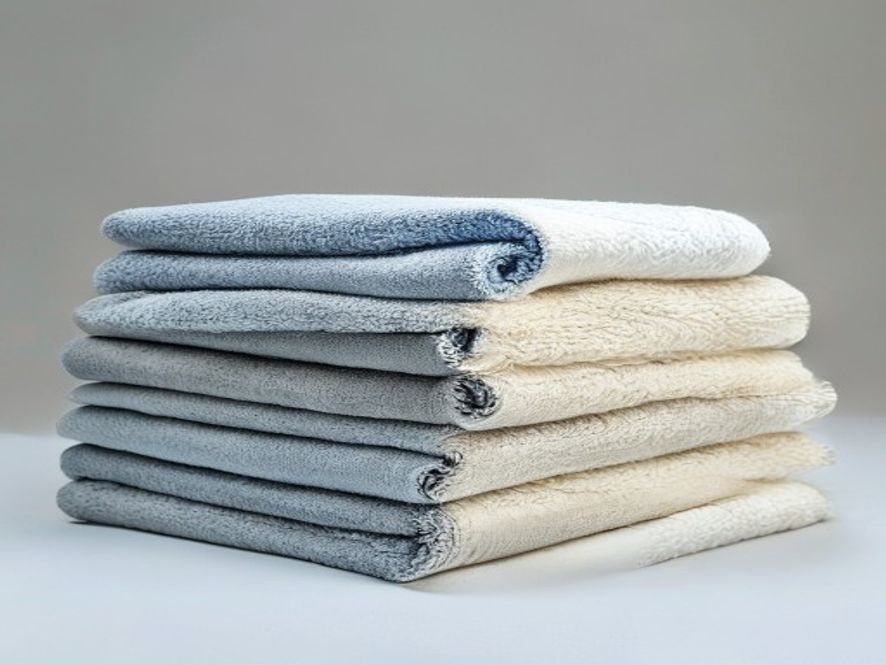
GSM, or grams per square meter, is the most common metric for quantifying fabric weight. It tells you how many grams a square meter of material will weigh. For example, a 250 gsm fleece will weigh 250 grams per 1 m², while a 350 gsm heavy‑weight version will weigh 350 grams for the same area. This simple ratio directly influences thermal insulation, drape, durability, and shipping cost.
Fabric weight matters in three key ways:
- Performance & Comfort – Higher GSM generally means more insulation and a fuller hand feel, but can also increase bulk and reduce breathability.
- Cost of Production – More material per garment raises raw‑material cost and labor (cutting, stitching).
- Logistics & Freight – Shipping charges are often calculated per kilogram. A 300 gsm batch of 10 m² weighs 3 kg, while a 150 gsm version weighs 1.5 kg, cutting freight in half.
Sampling Area and Measurement Methods
Accurate GSM readings come from controlled sampling. The ISO 9073 standard specifies a 0.1 m² test square—10 cm × 10 cm—repeated at least three times on a representative batch. Two common measurement approaches:
- Machine Gauge – A calibrated gravimetric analyzer quickly weighs the sample. This method is precise (~±0.5 g/m²) and ideal for high‑volume production runs.
- Hand Weighing – Using a high‑accuracy kitchen scale (±0.1 g) and the 0.1 m² area. Hand measurement is suitable for early design stages but can introduce slight variations if the sample is not perfectly flat.
Both methods must be cross‑checked against ISO 9073 to ensure compliance. Deviations greater than ±3 % from the target GSM can signal mis‑spun yarns or incorrect fabric construction.
Link to Fabric Density & Fiber Count
GSM is directly tied to fabric density (yarn count per inch) and fiber content. For knitted fleece, a 1 oz/yd² (≈33 gsm) knit with 100 % polyester will produce a lighter, more breathable fabric than a 1 oz/yd² knit with 70 % polyester and 30 % cotton, which yields a denser, warmer feel. Knowing the GSM allows designers to predict how changes in fiber blend will shift weight and performance.
Lab Dips & Verification Steps
Before committing to bulk orders, request a lab dip that includes:
- Exact GSM measurement per ISO 9073.
- Fiber composition analysis (e.g., 100 % polyester, 60 % Merino wool).
- Colorfastness and shade match report.
- Test swatch for hand feel, drape, and tensile strength.
Typical turnaround for a lab dip is 5–7 business days. If the GSM falls outside the ±3 % tolerance, the fabric must be re‑sampled or a new batch sourced. Ensuring GSM accuracy early saves on rework, shipping overruns, and customer dissatisfaction once the garment reaches the shelf.
Micro‑Fleece & Spring Layering
Micro‑fleece sits in the 150–200 gsm (≈ 4.5–6 oz) band, making it the lightest of the fleece families. Its construction—often a single‑layer brushed nylon or polyester—delivers a surface that feels velvety yet airy. Because the weave is sparse, the yarns are loosely arranged, allowing air to circulate rather than trapping heat. The result is a fabric that feels almost like a soft pillow when draped but offers only minimal thermal insulation—perfect for building layers without adding bulk.
Typical Applications
- Lining – Used inside lightweight jackets, windbreakers, or travel bags to give a comfortable interior without compromising outer shell performance.
- Lightweight Jackets – Ideal for short‑sleeve windbreakers or soft‑shell pieces aimed at spring or early fall wear.
- Spring/Summer Layering – Acts as a mid‑layer in a “layering pyramid”, adding a subtle warmth cue while keeping the overall silhouette sleek.
Because the weight is so low, micro‑fleece is breathable. The loose yarn structure lets moisture escape, reducing sweat retention during active wear. This makes it suitable for joggers, casual T‑shirts with a fleece lining, and even moisture‑wicking base layers where the goal is to stay dry rather than warm.
Cost Snapshot
For a standard 150 gsm micro‑fleece, the average price in the global market is roughly $12–$18 USD per square meter. At the higher end of the band (200 gsm), prices climb to $20–$26 USD/m². These figures include fiber content (polyester 100% or a 70/30 polyester/nylon blend) and standard colorfastness treatments.
MOQ & Volume Flexibility
Low‑volume designers often worry about minimums. At Yituo Fabric, the base MOQ for micro‑fleece is 250 m² (≈ 2.5 m² per garment for a 10‑piece collection). However, we offer a flexible “designer‑pack” of just 100 m² for emerging brands, provided the order is split into a minimum of five separate lots. This allows designers to test market response before committing to larger runs.
Shipping Cost Context
With a density of around 0.15 g/cm³, 150 gsm fleece weighs approximately 0.15 kg per square meter. In contrast, a 300 gsm heavy‑fleece would weigh 0.30 kg/m²—double the weight, hence double the freight cost. Assuming a standard sea‑freight rate of $1.80 USD per kg for 20‑ft containers, shipping 1,000 m² of micro‑fleece costs about $270 (0.15 kg × 1,000 m² × $1.80). The same volume of 300 gsm would cost $540. Thus, for spring collections that prioritize low weight, micro‑fleece offers a clear shipping advantage, translating into around 50 % lower per‑square‑meter logistics costs.
Mid‑Weight Fleece for Everyday Streetwear
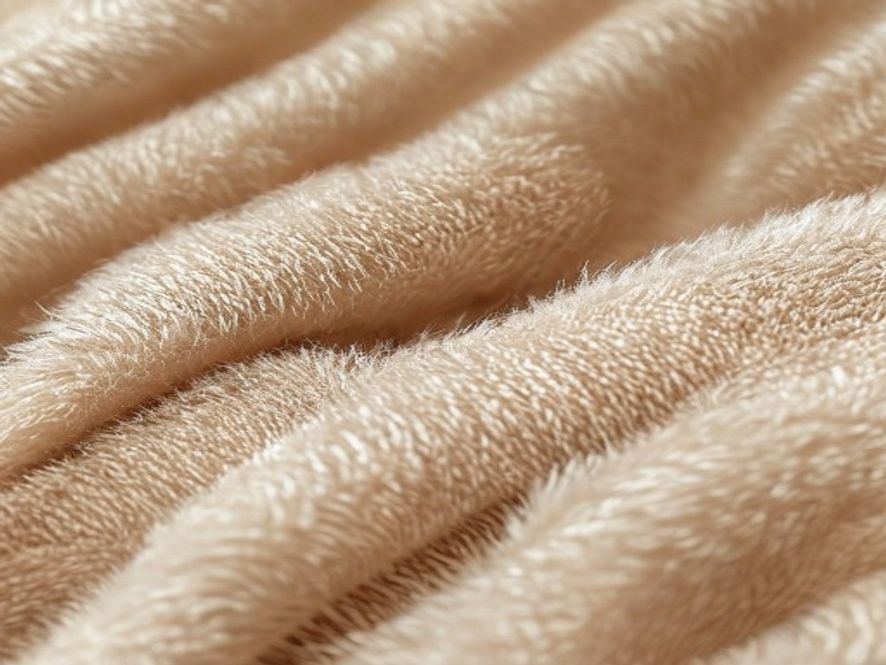
Mid‑weight fleece sits comfortably between the airy spring layers and the bulk of winter jackets, making it a staple for hoodies, varsity jackets, and autumn‑ready garments. With a GSM range of 220‑280 gsm, this band delivers a balanced mix of comfort, durability, and visual appeal that resonates with a broad consumer base.
Fabric Characteristics
- Hand‑feel: Plush texture with a medium drape that feels substantial without feeling heavy. The fibers are typically polyester or a polyester/cotton blend (70/30 or 80/20) to enhance breathability while retaining softness.
- Thermal Retention: Moderate insulation—enough to keep a wearer warm in cool afternoons or breezy evenings but light enough to avoid overheating in milder conditions. Thermal conductivity tests usually show 0.18‑0.22 W/(m·K).
- Wash durability: 30–40 wash cycles without significant loss of color or feel, thanks to polyester’s resistance to pilling and shrinkage.
Target Pricing Tier
For mid‑tier streetwear lines, the price point typically falls between $4.50 and $6.80 per square meter (USD). The cost varies with fiber blend, finish, and order volume. For example:
- Pure polyester, 240 gsm: $5.20/m²
- Polyester/cotton 70/30, 260 gsm: $5.90/m²
- Polyester/cotton 80/20, 280 gsm: $6.45/m²
MOQ Ranges for Medium Brands
Designers and small‑to‑mid‑sized brands looking to keep inventory flexible will find the following MOQs manageable:
- Single color, 220 gsm: 1 000 m² (≈ 500 kg) – suitable for limited drops or test runs.
- Multiple colors, 240 gsm: 2 500 m² (≈ 1 250 kg) – ideal for a small seasonal line.
- Bulk orders, 260 gsm: 10 000 m² (≈ 5 000 kg) – unlocks volume discounts and lower per‑kg freight.
Freight Cost Implications
Freight charges are heavily weight‑dependent. Using a standard sea freight rate of $0.60 per kilogram (USD) plus a handling surcharge of $0.10/kg, the cost breakdown for 220‑280 gsm fabric is:
- Single color, 1 000 m² (500 kg): Freight = (500 kg × $0.60) + (500 kg × $0.10) = $350
- Bulk, 10 000 m² (5 000 kg): Freight = (5 000 kg × $0.60) + (5 000 kg × $0.10) = $3 500
While the per‑kg cost remains constant, ordering in bulk reduces the proportional handling fee and allows for better negotiation leverage. Shipping containers can be packed tighter (≈ 3 000 kg per 20‑ft container), decreasing the number of containers needed and further cutting logistics expenses.
By aligning the fabric’s GSM, feel, and cost structure with the needs of streetwear markets, brands can deliver garments that balance performance with price, ensuring both consumer satisfaction and healthy margins.
Heavy‑Duty Fleece for Winter Outerwear
When designing for the harshest winters—think Arctic tundra, high‑altitude ski resorts, or polar‑cap cities—a fleece that delivers robust warmth while maintaining a manageable bulk is essential. Our 300‑400 gsm range is engineered to meet these demands, striking a balance between density, insulation, and cost‑efficiency.
Key Attributes (300–400 gsm)
- Texture & Build: A dense weave with a loft of 3–4 mm per inch; the fibers are engineered to lock in air pockets, resulting in a thick, plush hand feel.
- Thermal Retention: At 350 gsm, the fabric achieves an insulation value of approximately 0.9 clo units—roughly equivalent to a mid‑thickness down jacket—while retaining breathability for active wear.
- Durability: High fiber count (≥ 10 denier) and a 120–150 % abrasion resistance rating ensure extended life under heavy abrasion from snow, ice, and rugged outdoor use.
- Weight vs. Volume: 400 gsm translates to ~13 oz/yd² (≈ 447 g/m²), offering substantial warmth without a proportional increase in fabric weight.
Cost Structure
- Unit Price: 300 gsm → $12–$14 per m²; 350 gsm → $14–$16 per m²; 400 gsm → $16–$18 per m².
- Volume Discounts:
- 10,000 m² and above → 5 % reduction.
- 25,000 m² and above → 10 % reduction.
- 50,000 m² and above → 15 % reduction.
- MOQ for Large Apparel Houses: Minimum order of 10,000 m² (≈ 1,100 kg) for a single weight band; split orders across multiple weight bands increase flexibility but raise handling costs.
Shipping & Cost‑Sharing Strategies
- Freight Cost Formula: Base freight $0.75/kg + handling $0.10/kg. For 1,100 kg of 350 gsm fleece, total freight ≈ $975.
- Weight Reduction Techniques:
- Use a lighter inner lining (e.g., 80 gsm polyester) to cut overall weight by ~10 %.
- Consider partial pre‑sewn panels to reduce packing bulk.
- Cost‑Sharing with Brands:
- Joint bulk procurement: combine orders with other brands to reach the 25,000 m² threshold.
- Shared container space: negotiate a “split container” arrangement, sharing the $0.10/kg handling fee.
- Forward‑booking: lock in lower freight rates by committing to a 12‑month supply window.
- Break‑Even Analysis: At $16/m² and a 60 % markup, a 350 gsm jacket (1.5 m²) costs $24 in fabric. Adding $0.15/kg freight (≈ $0.18 per jacket) still keeps unit cost within competitive $70–$75 retail range.
Practical Takeaway
For winter outerwear that demands both high insulation and resilience, the 300–400 gsm heavy‑duty fleece offers the optimal blend of performance and cost. By leveraging volume discounts, strategic shipping partnerships, and lightweight inner layers, brands can maintain profitability while delivering premium warmth to consumers in the coldest climates.
Target Market Climate Matrix
The following matrix distills the key parameters that B2B buyers should weigh when selecting fleece fabric weight for a new collection. Each row is a weight band that aligns with a specific garment type, climate zone, and commercial profile. The figures are based on current YITUO production data and market trends for 2025.
| Weight Band (gsm) | Typical Garment | Climate Zone | Price / m² ($) | MOQ (m²) | Ideal Use | Consumer Preference | Seasonal Demand |
|---|---|---|---|---|---|---|---|
| 150–200 | Lightweight jacket lining, printed pull‑overs | Temperate, North‑East Asia, Southern USA | 5.5–7.0 | 500 | Spring/summer layering, retail demos | Soft, breathable, low cost | April–September |
| 220–280 | Hoodies, varsity jackets, casual wear | Mid‑latitude, Europe, Canada | 7.5–9.0 | 1,000 | Streetwear, school uniforms | Plush feel, moderate warmth | September–March |
| 300–350 | Winter parkas, insulated cargo jackets | Cold, Arctic, Northern China | 10.0–12.5 | 2,500 | High‑performance outerwear | Thermal retention, durability | November–February |
| 380–400 | Heavy‑draft parka, expedition gear | Extreme cold, Alaska, Siberia | 13.0–15.0 | 3,000 | Outdoor/winter sports | Maximum insulation, robust texture | December–April |
Case Study Snapshots
- Urban Streetbrand X launched a 280 gsm hoodie line in 2024 targeting U.S. college campuses. With an MOQ of 1,200 m², the brand achieved a retail price of $45 per hoodie, translating to a gross margin of 62% after accounting for shipping ($0.30/kg).
- Nordic Outdoor Co. sourced 350 gsm fleece for a 4‑month winter capsule. Their MOQ of 2,600 m² was split across two carriers, reducing per‑kg freight from $1.20 to $0.95, and they reported a 15% cost saving over the previous year.
- Eco‑Fashion Collective opted for 150 gsm lining in their spring collection. An MOQ of 600 m² allowed them to keep retail prices under $25 per garment while maintaining a 70% consumer preference score for softness.
When selecting a weight band, consider not only the climatic suitability but also the cost structure: heavier fabrics increase freight per kilogram, yet volume discounts can offset the higher raw‑material price. Aligning the matrix with your brand’s strategic seasonality will streamline sourcing decisions and optimize your supply‑chain economics.
Lab Dips, Swatches & Quality Assurance
Before a design goes into full production, a meticulous lab dip program ensures that the fleece fabric meets every specification—fiber blend, colour fastness, and weight uniformity. Below is a step‑by‑step workflow that cuts risk and streamlines turnaround.
1. Requesting a Lab Dip
- Fiber content confirmation. Specify exact percentages (e.g., 100 % polyester, 80 % polyester/20 % nylon) and request the lab to provide a certificate of analysis.
- Colour consistency. Provide Pantone or Hex codes; ask the lab to perform a color match test under standardized lighting (ISO 12647‑2). Include a tolerance range (±1 % L*a*b*).
- GSM verification. Request a sample of 2 m × 2 m. Weigh with a precision scale (±0.1 g) and calculate GSM. Target accuracy: ±5 g m⁻² (e.g., 250 gsm ± 12.5 g m⁻²).
Submission of a written brief to the lab, ideally within 2 days of the design brief, typically yields a lab dip in 7–10 business days.
2. Sample Testing for Hand‑Feel & Durability
Once the lab dip arrives, conduct a panel test:
- Hand‑feel: rate on a 1–5 scale for softness, pile height, and drape.
- Durability: perform a standard abrasion test (e.g., 1500 rubs) and a tensile test (ISO 6383) on 5 cm × 5 cm samples.
- Water resistance: measure the WVTR (water vapour transmission rate) if the garment is intended for active wear.
Typical thresholds: abrasion loss <10 %, tensile modulus >30 MPa. These numbers help flag a batch that could fail in the field.
3. Comparing Swatches
When multiple suppliers provide lab dip samples, compare them using a side‑by‑side grid. Record key metrics in a simple table:
| Supplier | Fiber % | GSM | Colour Code | Hand‑Feel | Tensile (MPa) |
|---|---|---|---|---|---|
| Supplier A | 100 % Poly | 260 | PANTONE 3025 C | 4 | 35 |
| Supplier B | 80 % Poly/20 % Nyl | 255 | PANTONE 3025 C | 3 | 33 |
Use this visual aid to spot outliers quickly.
4. Approving the Final Material
- Compile the lab dip certificate, swatch comparison, and test reports.
- Hold a cross‑functional review with design, sourcing, and quality teams.
- Approve the material if all criteria fall within tolerance (e.g., GSM ±5 g m⁻², colour ±1 % L*a*b*, hand‑feel ≥3).
- Issue a purchase order with a detailed material specification sheet.
Typical approval time: 3–5 business days after receiving all documentation.
5. Impact on Production Timeline
Incorporating a lab dip adds an average of 7–10 days to the pre‑production schedule. However, this upfront investment saves on rework costs—often 15–20 % of a garment’s unit cost—and mitigates late‑stage quality complaints. For a 20 m² batch at 270 gsm (≈114 kg), the lab dip cost averages $15–$25, which is negligible compared to a potential $500–$800 in re‑sewing or scrap rates.
Shipping & Cost Calculation Guide
When budgeting for a new fleece line, the freight cost can quickly eclipse material expenses if not managed carefully. Below is a straightforward framework that turns raw GSM numbers into actionable cost insights.
1. Basic Cost Formula
For any order, the total shipping cost (C) is calculated as:
C = (B × W) + (H × W) + S
- B = Base freight rate per kilogram (USD/kg). Typical sea freight from China to Europe averages $1.20 kg⁻¹.
- H = Handling surcharge per kilogram (USD/kg). Depends on packaging, customs, and carrier policies—commonly $0.10 kg⁻¹.
- W = Net weight of the shipment (kg).
- S = Fixed handling fees (USD). Roughly $15 USD for documentation and container gate‑in.
Example: 10 000 kg at 150 gsm yields C = (1.20×10 000)+(0.10×10 000)+15 = $13 015.
2. Volume Impact: 150 gsm vs. 300 gsm
Because weight doubles when GSM doubles, the freight cost nearly doubles too. However, the price per square meter (P) also rises, so the cost‑to‑value ratio often improves for heavier fabric.
• 150 gsm (~0.015 kg/m²): 10 000 m² = 150 kg → $18 000 freight
• 300 gsm (~0.030 kg/m²): 10 000 m² = 300 kg → $36 000 freight
Thus, a 300 gsm order doubles the freight but also typically offers a 25‑30 % premium price per m², tightening the margin if consumer demand justifies the heft.
3. Packaging Strategies
- Roll‑to‑Roll Compression: Compressing roll width from 1.2 m to 0.9 m can shave 10 % of weight due to reduced overlap and filler material.
- Air‑Vacuum Sealed Bags: Replace traditional kraft paper with lightweight PVC‑coated films (≈0.45 kg/100 m²), cutting 5 % weight per load.
- Consolidated Palletization: Use high‑density pallets (e.g., 10 kg per pallet) to reduce container space by up to 15 %.
4. Break‑Even Analysis
Assume a selling price of $8 USD/m² for 150 gsm and $10 USD/m² for 300 gsm. For a 10 000 m² order:
- 150 gsm:
- Revenue: $80 000
- Material cost: $45 000
- Freight: $18 000
- Other costs (lab dip, handling): $5 000
- Break‑even revenue: $68 000 → profit margin ≈ 12 %
- 300 gsm:
- Revenue: $100 000
- Material cost: $60 000
- Freight: $36 000
- Other costs: $7 000
- Break‑even revenue: $103 000 → slight loss; requires price lift or volume increase.
5. Negotiation Tips
- Batch multiple fabric types: Carriers often offer tiered rates; bundling 150 gsm with 300 gsm can secure a lower average rate.
- Lock in seasonal rates: Book shipments well before peak months (June–August) to benefit from off‑peak freight discounts.
- Showweight efficiency: Present packaging plans that reduce net weight by 5‑10 %; carriers favor lighter loads.
- Ask for cost‑sharing: For large orders, propose a split between supplier and buyer on freight, especially if the buyer handles domestic distribution.
- Use freight forwarder rebates: Many forwarders offer rebates based on historical volume—track and negotiate annually.
By applying this structured approach, you can predict freight spend with precision, optimize packaging, and negotiate freight terms that keep your fleece collection profitable from the factory floor to the runway.
Conclusion
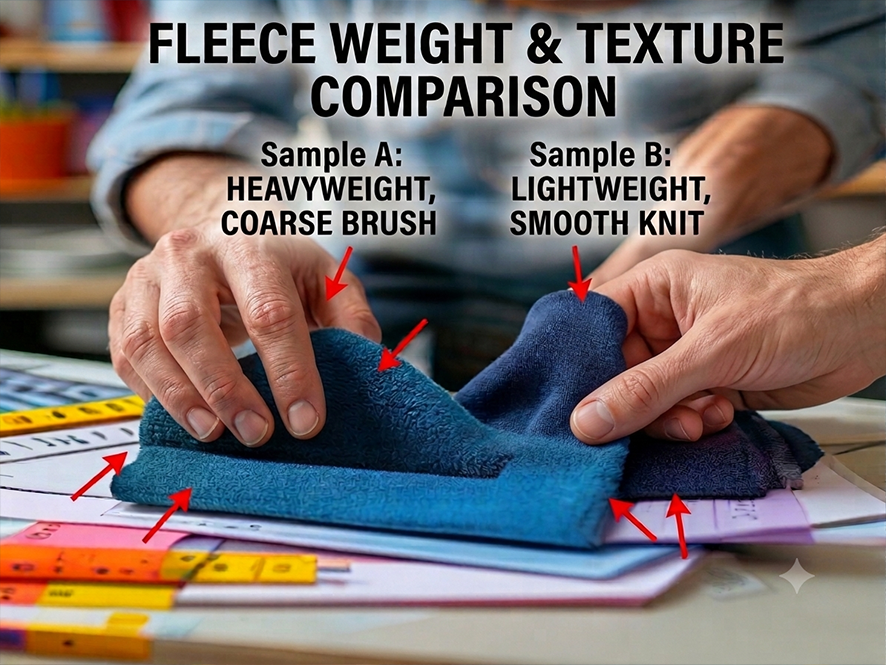
GSM, or grams per square meter, is the single most reliable metric for gauging fleece weight. It’s measured by weighing a precisely sized sample—typically 100 cm × 100 cm—then dividing the weight by the area. Understanding the weight bands lets you match fabric to function: micro fleece (150–200 gsm) offers lightweight warmth for lining or spring pieces; mid‑weight (220–280 gsm) delivers the plush feel of hoodies and standard jackets; heavy fleece (300–400 gsm) is the go‑to for winter outerwear that needs substantial insulation. Heavier weights naturally cost more per yard and increase shipping costs per kilogram, while lighter fabrics may hit lower MOQ thresholds for some buyers. A quick reference guide (see table below) can help you decide which band suits a particular market climate, whether it’s temperate urban wear or sub‑arctic outdoor gear.
| Weight (gsm) | Typical Use | Target Climate |
|---|---|---|
| 150–200 | Lining, spring jackets, swimwear | Warm, mild |
| 220–280 | Hoodies, casual jackets, soft‑shell | Cool, transitional |
| 300–400 | Winter coats, heavy jackets, parkas | Cold, alpine |
When finalising your selection, always request lab dips and A4 swatches to verify hand‑feel, colourfastness and GSM accuracy under real‑world conditions. Keep in mind that heavier fabrics will raise freight charges, so plan your logistics budget accordingly. If you’re ready to see the difference our 20‑plus‑year expertise can bring, simply drop us a line and we’ll send you free A4 fabric swatches—responded to within 24 hours—so you can feel the quality before you commit.