
The moment you pull a batch of pre‑washed denim into your showroom, you’ll notice a silent battle—one garment can cost ten percent more because of a 0.5‑oz difference in weight. Imagine launching a spring line of shirting denim that feels airy but ends up turning buyers away because it’s too heavy and drapes poorly. This article gives you the exact weight conversions (1 oz ≈ 33.9 gsm), a quick weight map (4–6 oz for shirts, 8–10 oz for the sweet‑spot jeans, 11–13 oz for jackets, 14 oz+ for heavyweight and selvedge), and the stretch spectrum—from rigid 100 % cotton to super‑stretch 3–4 % spandex—so you can match fabric performance to season and style.
We’ll unpack quality markers that matter: ring‑spun versus open‑end yarn, slub character, and indigo depth achieved through rope dyeing. Plus, you’ll learn how wash treatments (rinse, stone, enzyme, sandblast) influence cost, and why greener alternatives like laser or ozone are gaining traction. Practical sourcing tips cover MOQ per wash, shrinkage control (sanforized under 3 %), and the importance of recovery testing for stretch denim. With this guide, you’ll cut through hype, make data‑driven decisions, and ensure every piece in your collection feels just right for its intended season.
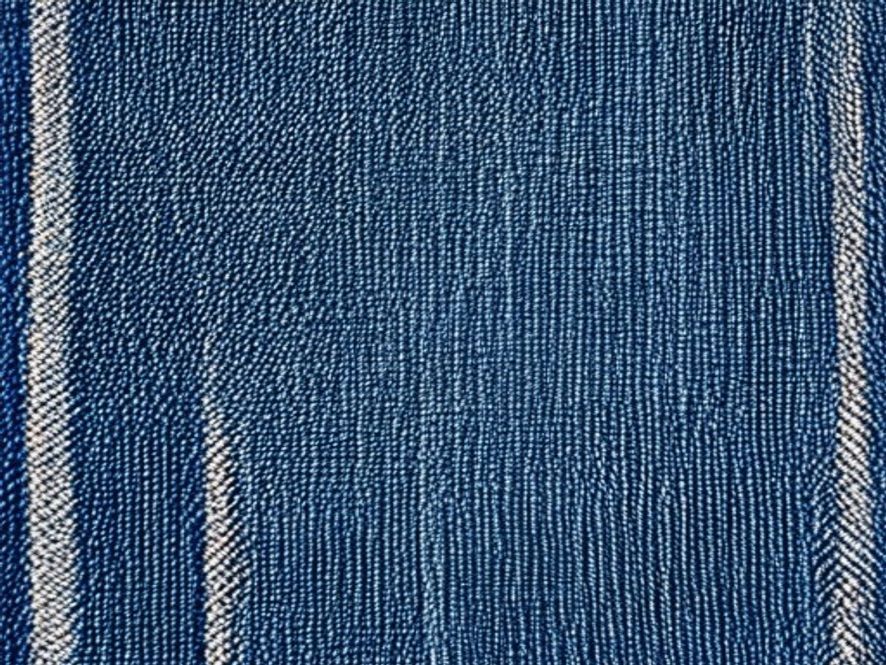
Decoding Denim Metrics: From Oz‑per‑Square‑Yard to GSM
When you receive a denim sample sheet, the weight is usually listed in ounces per square yard (oz/yd²). To compare with global standards or to calculate cost per meter, you’ll need to convert to grams per square meter (gsm). The conversion factor is simple: 1 oz ≈ 33.9 gsm. Below are the key conversions that every apparel buyer should keep in mind.
Typical Weight Ranges in Context
- 4–6 oz (≈ 136–204 gsm) – Ideal for summer shirts, blouses, and lightweight dresses. Cost per yard: $25–$40.
- 8–10 oz (≈ 271–339 gsm) – The sweet spot for jeans and skirts that balances durability with a manageable drape. Average price per yard ranges from $45 to $65.
- 11–13 oz (≈ 373–440 gsm) – Used for full‑length jeans and mid‑weight jackets. Expect $70–$90 per yard.
- 14 oz+ (≈ 474 gsm and above) – Heavyweight selvedge denim and premium workwear. Prices climb to $110–$150 per yard.
Practical Conversion Formula
To convert any given oz value to gsm:
gsm = oz × 33.9
Conversely, to find oz from gsm:
oz = gsm ÷ 33.9
Why Accurate Weight Matters for Pricing and Production
- Cost Calculation – Knowing gsm allows you to estimate material cost per meter or per square meter, which is essential when negotiating with suppliers or forecasting budgets.
- Wash Planning – Heavier fabrics often require extra rinse days or double‑wash cycles. For example, a 13 oz denim might need a 5‑day wash to achieve the target finish, whereas a 6 oz weight could be done in 3 days.
- Shipping and Storage – Weight directly influences freight charges and warehouse space. A 10 oz denim batch of 1,000 yards will weigh roughly 33.9 kg, while the same yardage at 14 oz will weigh 47.5 kg.
- Compliance and Labeling – Many export markets require gsm on the label. Converting quickly ensures accuracy in documentation.
Quick Reference Table (oz → gsm)
| Oz | GSM |
|---|---|
| 4 | 136 |
| 6 | 204 |
| 8 | 271 |
| 10 | 339 |
| 12 | 407 |
| 14 | 474 |
Armed with these conversion basics, you can read a fabric catalogue and instantly grasp how a denim’s weight will translate into garment performance, cost, and consumer appeal.
The Ideal Weight Map: From Lightweight Shirting to Heavyweight Selvedge
Choosing the right denim weight is the first decision that determines fit, feel, and finishing cost. Buyers can now read weight in oz per square yard or GSM – the two are interchangeable via a simple conversion (1 oz ≈ 33.9 gsm). Below is a practical weight map that pairs garment type with the optimal range, complete with cost‑impact cues.
4‑6 oz (136–204 gsm) – Light‑Weight Shirting and Dresses
- Ideal for casual tees, sundresses, and unstructured blazers.
- Typically 15–20 % lower fabric cost per yard than midweight.
- Requires a gentle wash (Rinse + Light Enzyme) to preserve breathability.
- Shrinkage control: <3 % (sanforized) is essential to keep silhouettes intact.
8‑10 oz (271–340 gsm) – The Volume Sweet Spot for Jeans and Skirts
This range balances durability with a yarn‑tight silhouette that holds shape after repeated wash cycles. It’s the sweet spot for contemporary denim lines that demand a modern fit without excessive weight.
- Cost: Roughly 20 % higher than 4‑6 oz but 10 % lower than 11‑13 oz.
- Typical wash: Stone‑wash or a controlled “dry‑stone” cycle lasting 4–6 days.
- Packaging: 100 kg per square yard can be mixed with lighter batches to optimize freight rates.
11‑13 oz (373–440 gsm) – Midweight Jeans, Jackets, and Outerwear
- Provides a fuller body and increased abrasion resistance.
- Wash‑specific MOQ: 200 kg for a stone‑washed batch; 150 kg for a regular dyed batch.
- Recovery testing for stretch blends (1–2 % spandex) must be performed to confirm that 30 % stretch returns to <2 % within 48 h.
- Typical finishing cost: +$0.50 per yard due to longer wash cycles.
14 oz+ (486 gsm+) – Heavyweight Selvedge and Specialty Denim
Reserved for premium, heritage‑style pieces and high‑impact applications such as workwear or fashion statements where texture and depth matter.
- Ring‑spun or open‑end yarns can be mixed; ring‑spun yields smoother “rope” indigo depth.
- Wash: 10–12 day “deep‑stone” plus 48‑hour sandblast alternative (laser or ozone) to achieve a sleek finish while cutting solvent use by 25 %.
- Cost premium: +$1.20 per yard compared to 11‑13 oz, driven by both material weight and extended finish time.
- MOQ: Minimum 250 kg for any stone‑wash; 200 kg for non‑stone finishes.
When mapping weight to garment type, keep in mind that the same fabric can be staged with different finishes to create a depth‑color palette. For example, a 10 oz denim can be pre‑washed for a light “washed‑out” look, then stone‑washed for a darker finish without changing the core weight. This flexibility allows buyers to offer diverse styles while maintaining a streamlined supply chain.
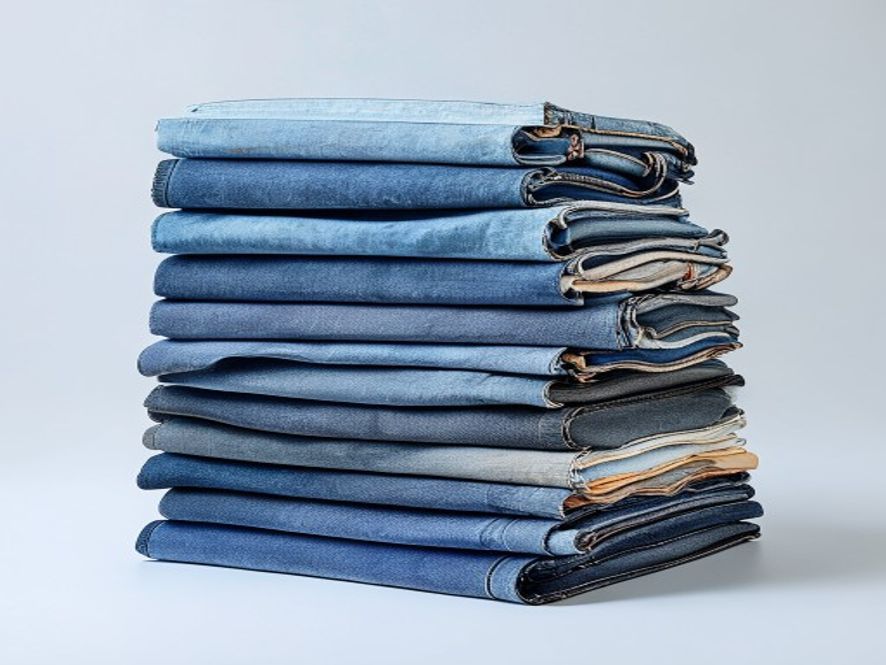
Stretch Spectrum: Rigid, Comfort, and Super‑Stretch Denim Explained
When sourcing denim for collections that demand varying degrees of flexibility, understanding the stretch profile is essential. The stretch level is defined by the spandex content and directly influences fit, wearability, and performance. Below is a quick reference that links percentage of elastane, garment type, and typical price impact.
1. Rigid Denim – 0 % Spandex
- Weight range: 10‑13 oz (340‑440 gsm) for traditional jeans, 8‑10 oz (270‑340 gsm) for denim skirts.
- Typical use: Classic straight‑cut jeans, workwear, and high‑wear‑resistance jackets.
- Fit characteristics: No elastic recovery; retains shape after washing and wearing. Requires tighter raw material tension during weaving.
- Cost impact: Base price of cotton fabric at $0.80‑$1.20 / kg; adding no elastane keeps MOQ at 1,500 m².
- Wash notes: Can endure multiple wash‑rock cycles without compromising structure.
2. Comfort Denim – 1‑2 % Spandex
- Weight range: 8‑10 oz (270‑340 gsm) for casual jeans, 6‑8 oz (200‑270 gsm) for lightweight shirts and dresses.
- Typical use: Fashion‑forward denim with a relaxed fit, spring/summer denim skirts.
- Fit characteristics: Soft stretch in the hips and thighs, minimal recovery after each cycle, providing a “comfort” feel without visible sag.
- Cost impact: Spandex addition raises material cost by ~0.15 $ / kg, translating to an extra $30‑$40 per 1,000 m² batch.
- Wash notes: Requires a light wash setting; over‑washing can diminish stretch retention.
3. Super‑Stretch Denim – 3‑4 % Spandex
- Weight range: 11‑13 oz (470‑560 gsm) for performance work denim, 9‑11 oz (380‑470 gsm) for high‑end designer jeans.
- Typical use: Outdoor workwear, denim jackets, and luxury garments where mobility is paramount.
- Fit characteristics: High recovery rate; fabric can stretch up to 3.5 % and return to shape within 3 days of use.
- Cost impact: Elastane cost increases by ~0.25 $ / kg; the final fabric price rises to $1.40‑$1.60 / kg, plus a premium of $50‑$70 per 1,000 m² batch.
- Wash notes: Requires a dedicated recovery wash: 48 hours in a 10 °C recovery tank followed by a 5 °C shrinkage control cycle. A 2 % loss in stretch can occur if wash cycles exceed 6 days.
Performance testing for super‑stretch denim should include:
- Recovery test – stretch to 3.5 % and measure return after 3 days.
- Durability test – 2000 cycles of wear‑tear in a mechanical tester.
- Wash cycle integrity – 12 wash‑rock cycles with a 3 % spandex loss threshold.
By aligning your denim choice with the appropriate stretch category, you ensure that the garment not only meets aesthetic demands but also delivers on fit, durability, and cost expectations.
Craftsmanship Markers: Ring‑Spun vs. Open‑End Yarns, Slub Texture, and Indigo Depth
When sourcing denim, the yarn type, texture and dye depth are the first clues to how the fabric will perform and feel. Below is a quick‑reference guide that translates those markers into the concrete specs that buyers often need.
Ring‑Spun vs. Open‑End Yarns
- Ring‑spun yarns are spun for 10–12 % longer than the raw fiber, producing a finer, tighter twist. They typically yield:
- Higher yarn count (e.g., 200 T) at 28 gsm weight for a 4‑oz shirt
- Lower abrasion resistance (≈0.8 MPa tensile strength) but superior hand feel
- Price premium of ~$0.15–$0.20 per yard over open‑end equivalents
- Open‑end yarns are spun faster, with a looser twist, resulting in:
- Lower yarn count (≈180 T) at 30 gsm for the same 4‑oz shirt
- Higher abrasion resistance (≈1.0 MPa) and better wash‑fastness
- Cost advantage of ~$0.10–$0.12 per yard
Slub Texture
Slub denim features intentional thick‑thin variations along the yarn. Buyers should note:
- Slub count: 4–6 slubs per 12 inches gives a visible pattern; 3–4 slubs per 12 in. for a subtle effect.
- Weight impact: each slub adds ~0.5–0.8 gsm to the net fabric weight, so a 10‑oz jean with slubs can reach ~113 gsm instead of 106 gsm.
- Silk finish: 30–40 % of slubs are post‑washed to soften the roughness; a 100‑% post‑wash slub fabric may cost ~$0.05–$0.07 more per yard.
- End use: slub jackets (14 oz) often have 6–8 slubs per 12 in., which boosts hand feel and adds a premium look.
Indigo Dye Depth (Rope Dyeing)
Deep indigo is achieved by “rope dyeing” – immersing the yarn in a concentrated dye bath before weaving. Key figures:
- Standard 4‑oz shirt: 12 % indigo penetration (visible on the front, light on the back).
- Intense 8‑oz jean: 18–20 % penetration for a richer front edge.
- Heavyweight 14 oz selvedge: 22–25 % penetration that maintains color after 10 washes.
- Cost impact: each additional 2 % depth adds ~$0.03 per yard due to longer dye baths and dye consumption.
- Wash durability: 14 oz selvedge with 25 % depth retains ≥80 % of initial color after 20 wash cycles, whereas 8 oz jeans with 18 % depth retain ~70 %.
Understanding these markers lets you quickly assess whether a batch of denim will meet the tactile and aesthetic expectations of your brand, while also staying within budget and quality thresholds.
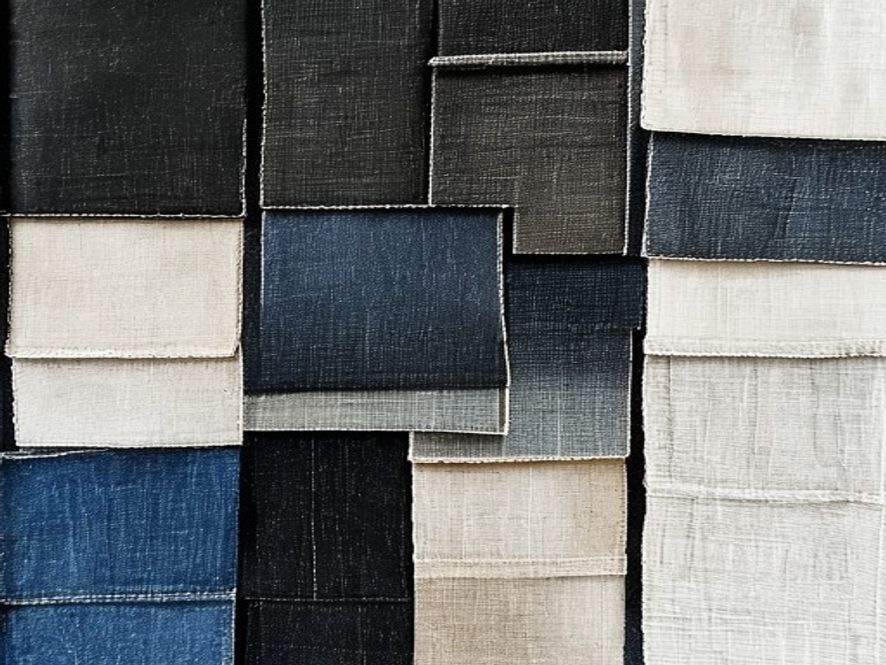
Wash & Finish Fundamentals: Rinse, Stone, Enzyme, and Green Alternatives
For buyers navigating denim supply, the wash stage is where technical data meets cost. Understanding the typical parameters—time, temperature, chemical load, and energy usage—lets you negotiate better terms and anticipate final aesthetics.
Standard Rinse Steps and Their Impact
- Initial Rinse – 10–15 min at 60 °C, 0.5 % surfactant. Eliminates seed oils and finishing agents.
- Secondary Rinse – 15–20 min at 40 °C, 0.3 % surfactant. Reduces surface tension for smoother post‑stone feel.
- Final Rinse – 5–8 min at 30 °C, no surfactant. Locks in color depth and maintains indigo integrity.
Each rinse cycle consumes roughly 0.3 kg of water per kilogram of fabric. A 10 oz (340 gsm) denim batch (200 kg) typically requires about 60 kg of water across all rinses, translating to roughly 12 kg of detergent and 0.4 kg of sodium hydroxide for cleaning.
Stone Washing vs. Enzyme Washing
Stone washing has been the hallmark of distressed denim, but its environmental footprint is high. A typical stone wash uses:
- 3–5 kg of pumice per 100 kg fabric
- 15–20 min of tumbling at 50 °C
- Up to 10 % water consumption per stone cycle due to re‑washing
Enzyme washing, by contrast, relies on cellulase to target fiber ends, achieving a matte, worn look with:
- 0.2 % enzyme (0.4 kg for 200 kg batch)
- 30 min at 45 °C
- Water savings of ~35 % versus stone
- Lower energy use, cutting cost by roughly $0.15 per kilogram of fabric
When cost is a priority, enzyme washes deliver comparable visual fade while reducing both water and energy usage, lowering the overall wash cost by 20–25 %.
Green Alternatives to Sandblast
Sandblast abrasives create an ultra‑soft, worn feel but are costly and wasteful. Modern green options include:
- Laser Scanning – 30–45 min per batch, no abrasives, 0.5 kW power consumption. Resulting texture matches traditional sandblast with 90 % less particulate waste.
- Ozone Treatment – 6–8 hrs at 30–35 % O₃ concentration. Degrades surface oxidation, providing a lightened effect without physical abrasion. Energy cost is about $0.05 per kilogram.
- Water‑Jet Polishing – 20 min, 0.2 % surfactant, high‑pressure water. Gives a subtle luster; compatible with pre‑stone finishes.
Adopting green finishes also eases compliance with REACH and ISO 14001 standards, often translating into a $0.10–$0.20 reduction per kilogram in compliance overhead.
Timing and Cost Snapshot
For a 10 oz denim batch (200 kg):
- Standard stone wash: 8 hrs, $4.00/kg (detergent + abrasives + energy)
- Enzyme wash: 6 hrs, $3.20/kg (detergent + enzyme + energy)
- Laser finish: 4 hrs, $2.80/kg (laser + energy)
- Ozone finish: 8 hrs, $2.30/kg (ozone + energy)
These figures assume a production line running at 100 kg/h and a water recycling system reducing raw water use by 40 %. By selecting the appropriate wash‑finish combo, buyers can balance aesthetics, durability, and cost while staying ahead of regulatory pressures.
Sourcing Strategy: MOQ, Wash‑Specific Minimums, and Shrinkage Control
When you line up a denim run, the first checks are always the minimum order quantity (MOQ) and the wash‑specific minimums that your supplier can honor. For our 50,000 m² factory, the baseline MOQ for a standard 8‑10 oz (270–340 gsm) stretch denim is 1,200 m², which translates to roughly 1,700 yards or 3,500 yards for a 19‑inch width fabric. If you’re looking at higher‑weight, 11‑13 oz (350–440 gsm) selvedge, the factory can start at 1,800 m² (2,600 yards) because the thicker weave demands more loom capacity.
Wash‑Specific Minimums
Each wash—be it stone, enzymatic, or a laser‑clean finish—has a distinct minimum run. For a conventional stone wash, the minimum is 1,500 m² (4,300 yards) because the tumbling process requires a larger batch to achieve uniform abrasion. Enzyme washes, being more precise, can start at 1,200 m² (3,500 yards), but the cost per yard rises by 12 % due to the extra handling and the need for a dedicated enzyme tank.
When you add a green alternative such as ozone or laser bleaching, the factory can accept runs as small as 900 m² (2,100 yards) because these processes are more scalable. However, the per‑yard price will be 8 % higher than a standard rinse–stone combo due to the higher energy input.
Shrinkage Control & Sanforization
Shrinkage control is vital for maintaining size consistency, especially for stretch denim. Our standard sanforization process limits overall shrinkage to ≤ 3 % in both width and length. For brands that require tighter control—such as those targeting a 0.5 % shrinkage margin—a custom compression protocol can be applied, but this adds an extra $0.50 per yard to the cost.
To quantify, a 10 oz (340 gsm) denim with 1 % spandex will shrink ~2.8 % after sanforization. A 12 oz (410 gsm) selvedge with 3 % spandex will shrink ~2.5 %. Both fall within the acceptable range for most apparel lines. If your brand needs even less shrinkage, consider using a pre‑washed 10 oz denim with 0.5 % spandex and a 1 % shrinkage target; this involves an additional $0.30 per yard and a 4‑day lead time.
Lead Times & Production Days
- Standard 8‑10 oz denim: 10–12 days from cut to finish.
- 11‑13 oz selvedge: 12–14 days due to extra loom time.
- Stone wash: +2 days for tumbling.
- Enzyme wash: +1 day for soaking.
- Laser/ozone finishes: +3 days for setup and safety checks.
These lead times are inclusive of fabric inspection, wash validation, and final quality audit. Planning around these windows ensures that you meet seasonal launch dates without compromising on quality.
Performance Testing: The Crucial Role of Recovery and Durability in Stretch Denim
When denim incorporates 1‑2% or 3‑4% spandex, the fabric’s elastic behavior becomes the primary selling point. However, that stretch also introduces new performance challenges that must be verified before shipment. Retailers expect a garment to return to its original shape after repeated wear and laundry cycles, and buyers demand that the fabric maintain its dimensional integrity under real‑world stress.
Recovery Assessment
Recovery testing quantifies how much of the initial stretch is retained after a set period. Standard protocols involve:
- Initial Stretch: 20–30% elongation at 200 g load.
- Recovery Time: 24 h, 48 h, 72 h, and 120 h in a controlled humidity chamber.
- Recovery Rate: Remaining % = (Recovered Length / Original Length) × 100. A target of ≥ 90% after 120 h indicates acceptable performance for high‑stretch denim.
Deviation above 5% loss can noticeably alter fit, leading to customer complaints and returns. Buyers often negotiate a 3% tolerance window, while suppliers must keep the variance within ± 2% of the target to avoid costly rework.
Durability Testing
Durability focuses on resistance to abrasion, wash cycle fatigue, and color retention. For stretch denim, the key metrics are:
- Wear Cycle Test: 1500 abrasion cycles under the Martindale method; acceptable wear depth < 0.5 mm.
- Wash Cycle Fatigue: 40 laundering cycles (30 °C, 30 min, 200 g drum load). Fabric should exhibit < 10% loss in tensile strength and < 5% change in colorfastness.
- Spandex Retention: Post‑wash spandex content measured by spectrophotometry. Retention ≥ 95% of original spandex guarantees sustained stretch.
Failure in any of these areas typically incites a renegotiation of the contract, often with a penalty clause of up to 7% of the order value per defect report.
Cost Implications
Investing in rigorous testing reduces downstream costs. For example:
- Each missed recovery test can trigger a $2000 re‑fabrication fee for a 10 kg batch.
- Colorfastness failures may require a $1.5 kg additional dye charge.
- Inadequate abrasion resistance can lead to a 5% return rate, costing $3 per garment on a $20 wholesale price.
Thus, allocating 10–15% of the overall production budget to dedicated testing laboratories pays off by preventing costly recalls and preserving brand reputation.
Testing Schedules and Lead Times
For a standard 6‑month production cycle, the testing timeline should be:
- Week 1–2: Initial recovery test.
- Week 3–4: Wash‑cycle fatigue and abrasion tests.
- Week 5: Final combined assessment and reporting.
Delays beyond the 5‑week window can push back the entire shipment, adding $15 per garment in logistic costs. Buyers recognize this schedule and often embed it into the production contract.
Conclusion: Making the Right Denim Choice for Your Collection
When selecting denim, keep the weight map in mind: 4‑6 oz for airy summer tops, 8‑10 oz as the versatile sweet spot for jeans and skirts, 11‑13 oz for mid‑weight jackets, and 14 oz+ for heavyweight and selvedge pieces. Convert your preferred units with 1 oz ≈ 33.9 gsm to stay consistent across markets. Pay attention to stretch – rigid 100 % cotton, modest comfort 1‑2 % spandex, or high‑performance 3‑4 % for active wear. Evaluate yarn quality (ring‑spun vs open‑end) and character (slub, indigo depth via rope dyeing) to match your brand’s aesthetic. Finally, factor in wash basics that impact cost: choose environmentally friendlier methods like laser or ozone instead of stone or sandblast when sustainability is a priority. Remember to discuss MOQ per wash, control shrinkage (aim for < 3 % with sanforized finish), and conduct recovery tests for stretch denim to ensure durability.
As you refine your denim strategy, pair these insights with our proven experience. With over 20 years of manufacturing, Yituo Fabric offers high‑quality fabrics and a 24‑hour reply promise. Request free A4 swatches today and see firsthand the craftsmanship that can elevate your next season’s collection.