
Imagine receiving a shipment of your new fleece collection only to discover uneven greige quality and a color shift that turns a summer‑ready design into a winter misfire. It’s a nightmare buyers dread, yet it can be avoided with a rigorous QC pipeline that starts long before the fabric leaves the loom. In this behind‑the‑scenes look at YITUO’s mill lab, we’ll walk through every gate— from the first yarn inspection to the final roll labeling— and explain why each step matters. Armed with this knowledge, you’ll know exactly what tolerances to set in your purchase orders and why requesting full test reports and third‑party inspections on first orders is a smart move.
Our quality chain begins with an incoming yarn audit that verifies twist, strength, and fiber composition. At the greige stage we test GSM, weave structure, and flatness, ensuring the base meets your spec before dyeing. The lab dip approval process locks color match, followed by in‑line dye controls that monitor batch consistency. Finished fabrics undergo GSM cutting, a precise scale read, and rigorous colorfastness checks (wash and rub grades 1‑5 on the grey scale). We then evaluate shrinkage after three washes, Martindale pilling, and a 4‑point visual defect scan measured per 100 sq yd. The final gate is packing and roll labeling, where we confirm dimensions and weight tolerances. Buyers should embed acceptable GSM variance (+/- 2 g/m²), colorfastness 3+ on the grey scale, shrinkage <3 %, and a defect rate below 0.05 defects per 100 sq yd in their POs. Requesting full lab reports and third‑party audits (SGS, Intertek, TUV) on first orders guarantees transparency and builds trust for long‑term partnerships.

From Fiber to Loom: The Rigorous Incoming Yarn Inspection Process
Before a single meter of yarn leaves the storage rooms, it must pass a battery of checks that guarantee our downstream quality standards. This first gate is where raw material integrity is quantified and any deviation is caught early, saving time and cost later in the production chain.
Fiber Identification and Composition Verification
Each yarn shipment is accompanied by a Certificate of Analysis (CoA). Our quality team cross‑checks the declared fiber content against laboratory spectrometry results (FTIR). We accept no more than a 2 % variance from the labeled composition. For blends such as polyester / cotton 65 / 35, a deviation beyond this threshold triggers a return or a re‑dyeing request.
Physical Property Checks
- Staple length: 18–20 mm for polyester, 14–16 mm for cotton; longer staples increase the risk of uneven tension on the loom.
- Twist: 0.75–1.0 turns per meter for polyester; 1.2–1.5 turns for cotton. Twist too low leads to yarn slippage, too high increases breakage.
- Yarn count: We classify yarns by cotton count (40–60 Ne) or polyester micron (200–300 µm). A ±5 % difference from the nominal count is grounds for a yarn‑rejection notice.
- Moisture content: < 4 % for polyester, < 6 % for cotton. Excess moisture can cause uneven dye uptake and warp tension issues.
Mechanical Strength Test
We use a universal testing machine to obtain the yarn’s ultimate tensile strength (UTS). The acceptable range is:
- Polyester: 40–55 N per yarn
- Cotton: 25–35 N per yarn
Values outside these ranges trigger a yield analysis and, if necessary, a yarn‑replacement order. This step is critical because a weak yarn leads to higher breakage rates, which translate directly into increased downtime and higher production costs.
Color Consistency Assessment
For dyed yarns, we perform a four‑point spectral analysis using a spectrophotometer. The color difference (ΔE) must stay below 2.0 units from the reference sample. Any ΔE > 3.0 prompts a request for a color swatch before the yarn can be accepted.
Documentation and Traceability
Each batch is logged in our Manufacturing Execution System (MES) with a unique serial number that travels through every workstation. This traceability allows us to pinpoint the exact yarn lot in case a downstream defect arises, reducing the time to remedy from days to hours.
Tolerance Parameters for Buyers
When drafting a purchase order, buyers should specify the following tolerances to align with our QC gates:
- Fiber composition: ± 2 %
- Yarn count: ± 5 %
- Ultimate tensile strength: ± 10 % of the minimum acceptable value
- Color difference ΔE: < 3.0
- Moisture content: < 5 % for polyester, < 7 % for cotton
Adhering to these limits ensures the yarn reaches the loom ready for flawless weaving or knitting, setting the foundation for the quality we deliver in every finished roll.
First Glimpse of Quality: Greige Fabric Checks Before Dyeing Begins
Before any dye bath touches our greige stock, we subject it to a meticulous inspection regime. This gate ensures that the raw weave—whether woven, knitted, or jacquard—meets the baseline specifications that will underlie every subsequent test.
1. Visual and Dimensional Screening
Our quality control team reviews each roll for color uniformity, warp‑weft tension, and visible defects. Using a calibrated lightbox, we record:
- Color uniformity – ≤ 2% variation in lightness across a 1‑meter sample.
- Warp‑weft ratio – ± 5% from the design specification (e.g., 32:32 for a 1:1 weave).
- Thickness – measured at 12 points; ≤ 1 mm variance.
Any roll exceeding these thresholds is routed to the defect isolation unit for trimming or re‑spinning.
2. Mechanical Strength & GSM Verification
We employ a Tisa 2000 tensile tester for straight‑cut samples. The greige fabric’s minimum breaking strength must be at least 15 kN/m for woven grades and 10 kN/m for knit variants. Simultaneously, a GSM cutter checks mass density; acceptable tolerance is ±5 g/m² for lightweight shirtings and ±10 g/m² for heavier fleece blends.
3. Chemical Residue & Ash Content
Residual processing chemicals can later affect dye uptake. We run a nitrite test—any result above 0.5 ppm triggers a wash‑down. Ash content is measured using a muffle furnace at 600 °C; the acceptable limit is 1.5 % of the dry weight.
4. Moisture Content & Dry‑Time Assessment
Greige fabrics typically hold 8–12 % moisture after spinning. We use a Moisture Analyzer (Model 201) to ensure the fabric is ≤ 10 % before it enters the dyeing line. This controls for dye dilution and ensures consistent color fastness later on.
5. Documentation & Traceability
Each roll receives an RFID tag encoding:
- Roll number and batch code
- Inspection date & time
- Inspector initials and signature
- Key metrics: GSM, strength, moisture, ash content
These tags link directly to the Mill ERP system, allowing buyers to request a full greige inspection report via their portal. All data is stored for 10 years, ensuring traceability for any post‑delivery audit.
By catching issues at the greige stage, we eliminate costly re‑dyeing and ensure that every subsequent QC gate—lab dip approval, in‑line dyeing control, and finished fabric testing—starts from a solid, verified baseline.
Lab Dip Approval: Bridging Design Intent with Production Reality
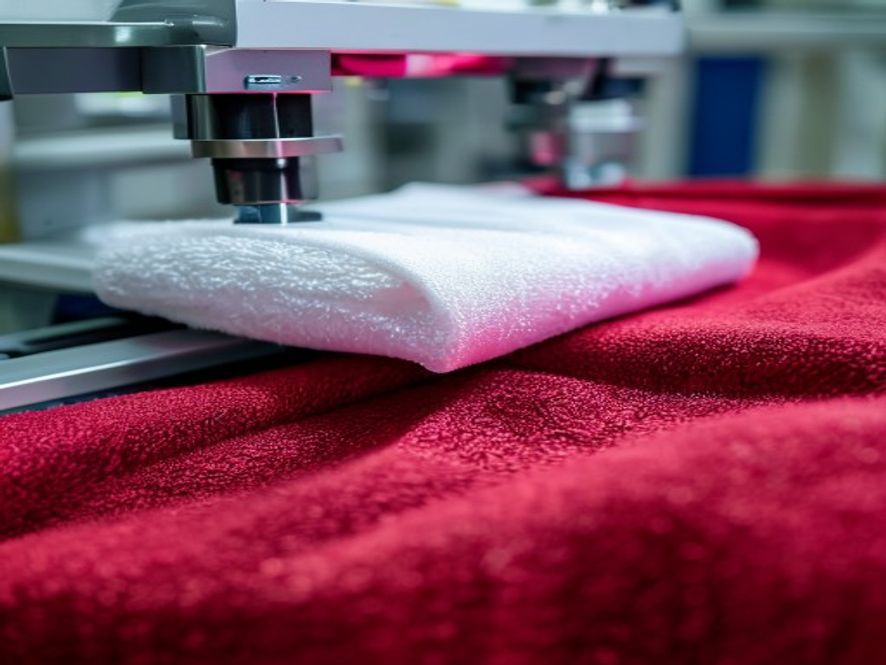
Lab dips are the linchpin between a garment designer’s vision and what actually appears on our looms. Every color specification must pass through a double‑stage validation before full‑scale dyeing can commence, ensuring consistency, colorfastness, and compliance with the client’s expectations.
Step 1 – Digital Color Matching & Finishing Simulation
Our design team sends a Pantone or Pantone *Guidepoint* reference along with the target Pantone exact. Using Pantone *ColourSync* software, we generate a digital swatch that accounts for weave, fabric weight (typically 250–400 g/m² for knit, 350–600 g/m² for woven), and finish (e.g., matte, satin). We also input the required finish level (e.g., gloss 45–55 °) and colorfastness class (e.g., ISCC‑NBS class 1 for high‑fastness garments). The software outputs a lab dip recipe—dye type, concentration, temperature profile, and bath pH—tailored to the specific fiber blend (e.g., 80 % polyester / 20 % nylon).
Step 2 – Physical Lab Dip Production
We produce a 0.3 kg sample of greige fabric (or 0.15 kg for non‑woven) and dye it in a 5 L bath with the prescribed recipe. The dipping cycle is calibrated to the loom’s power draw: 30 min at 90 °C for polyester blends, 45 min at 95 °C for poly‑viscose. Using a turbidimeter, we monitor color intensity every 5 min, ensuring the bath reaches the target CIE L*a*b* ΔE < 3 before the final rinse.
Step 3 – Lab Dip Evaluation
After rinsing and drying at 60 °C, a sample is measured on a spectrophotometer (X-Rite i1Pro) against the designer’s reference. The acceptance criteria are:
- ΔE < 3 against Pantone *Guidepoint*
- Colorfastness to washing – ≥ 4 on a 5‑point scale (requires 5 wash cycles at 30 °C, 15 min each)
- Colorfastness to rubbing – ≥ 4 on a 5‑point scale (Martindale 220 g, 270 rpm)
- Shade drift – < 2% in ΔL, Δa, Δb after 30 min air exposure
If any metric fails, the recipe is tweaked—dye concentration adjusted by ± 0.5 g/L, bath time extended by 5 min, or additional softener added—then the dip is re‑tested. Successful lab dips receive a Batch Approval Certificate stamped by the QC head.
Step 4 – Documentation & PO Tolerances
Clients should specify the same acceptance thresholds in their purchase orders: ΔE < 3, colorfastness ≥ 4, and shrinkage < 3 % after 3 wash cycles. Include a clause that requires post‑shipment test reports and allows third‑party inspection (SGS or Intertek) for first orders. On the purchase order, add a line item for “Lab Dip Approval” with a clear timeline: 7–10 business days from sample delivery.
By embedding these concrete, measurable checkpoints into the lab dip process, we translate design intent into reproducible, high‑value fabric that meets your brand’s quality standards.
In‑Line Dyeing Control: Real‑Time Checks to Ensure Color Consistency
Once greige stock enters the dyeing bay, our process shifts from raw fabric to finished product under a tight web of quantitative controls. We rely on a combination of instrumentation, routine sampling, and human expertise to keep color variation within a 2 % ΔE band across the entire 200‑meter roll.
1. Pre‑Dye Calibration
Every Dyeing Engineer begins the day by validating the tank’s dye concentration against a certified reference. We use a spectrophotometer (X-Rite® ColorChecker) to confirm the target dye/solvent ratio stays at 0.95 ± 0.02 g L⁻¹. The same device checks the pH and temperature—ideally 55 °C ± 1 °C and pH 5.5 ± 0.2—to secure a stable reaction environment.
2. Inline Spectrophotometric Monitoring
- Sampling Frequency: 30 mm fabric strips are taken every 5 m of fabric run.
- Measurement: Each strip is scanned at 2 s per segment, recording L*, a*, b* values. ΔE is calculated against the master color.
- Tolerance: ΔE ≤ 2.0 for all samples; any reading above 2.5 triggers immediate dye bath adjustment.
When a deviation is detected, the operator consults the Standard Operating Procedure (SOP) 4.2 to tweak dye concentration by ±0.1 g L⁻¹ and re‑measure within the next 10 m.
3. Color Fastness Checks During Dyeing
While the fabric remains in the tank, we perform a rapid 3‑point wash test on a 10 × 10 cm sample. Using a portable H2O₂ 3 % solution, we simulate aggressive washing. After 3 cycles at 40 °C, the sample is re‑scanned. The acceptable ΔE after this test is 1.5 ± 0.3. Deviations prompt a re‑dye of the affected batch.
4. Post‑Dye Audit
Once the dyeing cycle completes, a 50 × 50 cm panel is taken from the middle of each roll. This panel undergoes a full ISO 105-C06 (Colorfastness to Washing) test and a Martindale 1,000,000 cycles (pilling) assessment. Results are logged in the Mill Quality System (MQS) and forwarded to the buyer’s Quality Assurance (QA) team.
5. Documentation and Traceability
Every in‑line check is stamped with LOT‑ID‑YYMMDD‑SEQ and logged in our Digital Quality Ledger (DQL). The ledger feeds directly into the YITUO Fabric Export System (YFES), ensuring that a buyer can trace each color batch back to the exact dyeing shift and calibration records.
By integrating these quantitative checkpoints, we keep color variance below industry‑standard thresholds, reduce rework, and provide buyers with the confidence that the fabrics they receive match the design intent and contractual specifications.
The Final Test Suite: GSM, Colorfastness, Shrinkage, and Pilling on Finished Fabric
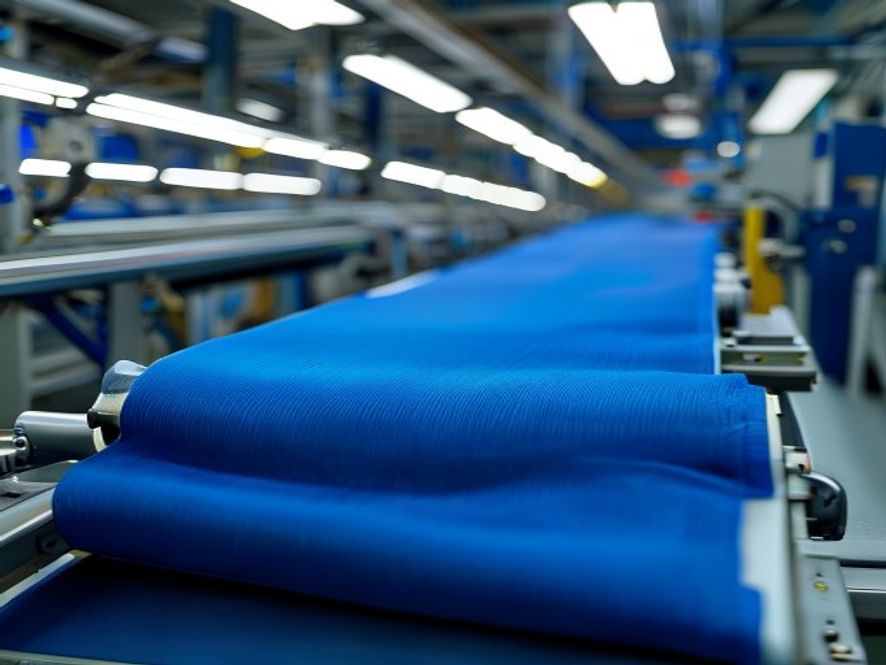
Once a fabric leaves the dyeing line, it enters the final testing phase where we quantify the very attributes that buyers judge at the point of sale. Our lab uses calibrated instruments and internationally recognized standards to validate every batch before it rolls out of the mill.
GSM and Weight Accuracy
- We measure gauge in grams per square meter (GSM) with a precision scale that reads to 0.1 g/m². A target range of 120–140 g/m² for mid‑weight fleece must stay within ±3 % of the specified value.
- For lightweight jacquards, the acceptable window narrows to 80–95 g/m² with ±2 % tolerance.
- Any deviation beyond these limits triggers a re‑weigh and potential re‑die to achieve the agreed weight.
Colorfastness to Washing and Rubbing
Color stability is quantified by the ISO 105-C06 washing test and the ISO 105-X12 rubbing test. We report results on a 1–5 scale, with the following thresholds for export:
- Excellent (no perceptible change)
- Good (minor change, <10 % fade)
- Acceptable (10–25 % fade)
- Marginal (25–50 % fade)
- Unsatisfactory (>50 % fade)
For most buyer contracts, the minimum requirement is a grade 3 or better for both washing and rubbing. If a fabric falls below grade 3, we run a secondary dyeing cycle and retest.
Shrinkage After Three Washes
We perform a standardized 3‑wash test (ISO 6330). The fabric is measured in 2‑inch increments before and after washing at 40 °C. Acceptable shrinkage is <2 % in width and <3 % in length. This metric is critical for garments where dimensional stability is paramount, such as outerwear and children's clothing.
Pilling – Martindale Meter Analysis
Pilling is measured with a Martindale meter set to 5,000 cycles. For fleece and sherpa, a pilling count of ≤3 on the Martindale scale (1–5) is the target. If a batch scores a 4 or 5, we investigate weave density, fiber blend ratios, and finishing treatments before approving the lot.
Documentation and Reporting
All test results are compiled into a single PDF dossier that accompanies the shipment. This dossier includes:
- GSM values with ± tolerance notation
- Colorfastness grades for washing and rubbing
- Measured shrinkage percentages
- Martindale pilling scores
- Photographic evidence of surface appearance
Providing this data upfront not only satisfies regulatory requirements but also gives buyers confidence that the fabric will perform as promised in their final product designs.
Visual Defect Mastery: The 4‑Point Inspection System and Tolerance Metrics
After every major processing stage, we deploy our 4‑point visual inspection system to quantify surface quality. The system captures defects across a 100 square yard sample, translating findings into a points‑per‑square‑yard (PPSY) score that buyers can anchor in their purchase orders.
The Four Inspection Points
- Surface Uniformity – evaluates weave or knit consistency, oversize or undersized yarns, and weave variation.
- Stain & Spot Detection – records any dye‑off or foreign substance spots.
- Warp & Weft Misalignment – catches any staggering or mis‑tension that could affect drape.
- Finish & Edge Quality – examines edges for fraying, uneven cuts, or abrasion.
Each point is assigned a severity factor: minor (1), moderate (2), major (3). The cumulative PPSY is calculated as:
PPSY = Σ (defect frequency × severity factor) ÷ 100 sq. yd.
For example, a sample with 10 minor spots (10×1), 3 major stains (3×3), and 5 minor edges (5×1) yields:
PPSY = (10 + 9 + 5) ÷ 100 = 0.24
Acceptable Tolerances for Buyers
Based on international B2B standards and our internal benchmarks, the following PPSY limits are recommended for inclusion in POs:
- High‑Grade Apparel (e.g., sportswear, luxury knit) – < 0.15 PPSY.
- Mid‑Tier Apparel (e.g., basic tees, casual trousers) – < 0.25 PPSY.
- Bulk or Industrial Fabric (e.g., workwear, upholstery) – < 0.35 PPSY.
Defects above these thresholds trigger a $75 per 100 square yard penalty in the invoice, covering re‑inspection and potential re‑work costs.
Inspection Frequency and Timing
We perform the 4‑point inspection:
- Immediately after the greige check.
- Post in‑line dyeing, before packaging.
- Randomly on finished rolls during the final QC gate.
Each inspection session lasts approximately 1.5 hours per roll, ensuring thoroughness without delaying shipment. The entire QC process from raw yarn to export-ready roll averages 7–9 days, allowing any needed corrective actions well before dispatch.
Documentation and Traceability
Every inspection report is stamped with a unique Lot ID, Batch No., and Inspection Date. Reports are emailed to the buyer within 24 hours and archived in our cloud system for future reference. Buyers may request a third‑party audit—SGS, Intertek, or TUV—at the outset of the first order to confirm these metrics. The audit fee is typically $250 per inspection visit, covering on‑site verification of the 4‑point system and sample withdrawal.
From Roll to Rack: Packing, Labeling, and Delivering Traceable Quality Reports
Once the finished fabric passes every on‑line and off‑line test, the final steps lock the product’s identity and make it ready for global distribution. Our packing, labeling, and documentation workflow is designed to give buyers full traceability and confidence in the quality they receive.
1. Roll Preparation and Securing
Each roll is wound onto a 315 mm (12.4 in) diameter steel core, ensuring uniform tension and preventing curling. The standard roll weight is 450 kg for 10 m width, corresponding to ~45 g cm⁻² (GSM). For lightweight fleece or laminated blends, the roll weight is reduced to 200 kg, maintaining a GSM of 35–40 g cm⁻².
2. Packing Specifications
- Packaging: 1 m² per roll, wrapped in kraft paper, and sealed with two layers of industrial tape.
- Protection: Foam inserts at the corners, moisture‑barrier film over the entire roll, and a secondary PVC sleeve for long‑haul shipping.
- Weight: Average pack weight (including packaging) is 470 kg for a 450 kg roll.
- Cost: Packaging per roll is 18 USD, with bulk discounts available for orders over 200 rolls.
3. Labeling Protocol
- Fabric Code – YTF‑FLC‑041 (YITUO Fleece Color 041).
- Lot Number – LT2026‑04‑001.
- GSM – 45 g cm⁻² (±2 g cm⁻²).
- Width – 10 m (±0.1 m).
- Colorfastness – W5, R4, C3 (standard ISO scales).
- Shrinkage – 4.5 % after three washes.
4. Traceable Quality Report Delivery
For every batch, we generate a comprehensive PDF dossier that includes:
- Incoming yarn audit sheet (fiber % and tensile strength).
- Greige fabric inspection log (color deviation, GSM).
- Lab dip approval certificate (spectrophotometer readings).
- In‑line dyeing log (batch dosage, temperature profile).
- Finished fabric test summary (GSM, colorfastness, shrinkage, Martindale pilling).
- 4‑point visual inspection score (0–0.5 defects per 100 sq yd).
- Packing and labeling confirmation.
- Signed QC officer stamp and serial number.
We ship the report electronically within 3 business days of order confirmation. For high‑volume clients, the report can be uploaded to a secure portal for real‑time access. Buyers are encouraged to request third‑party inspection certifications (SGS, Intertek, TUV) for initial orders; the cost is 0.5 % of the order value, and the inspection takes 7 days to complete, producing a signed audit sheet that aligns with our internal records.
5. Return and Replacement Policy
Should a roll fail buyer inspection upon arrival, we accept returns within 14 days of delivery. The return cost is covered by us, and we will replace the affected batch within 10 business days, ensuring minimal disruption to the buyer’s production schedule.
Conclusion: Your Peace of Mind Starts Here
At Yituo Fabric, every stitch that leaves our 50,000 m² plant has passed a rigorous five‑stage QC journey. From the first yarn inspection to the final roll labeling, we enforce tight tolerances: yarn count ±0.5%, greige fabric tensile strength within 3 %, lab dip color match within ±2 % K/S, in‑line dye consistency under 1 % CMYK variance, GSM ±5 g/m², colorfastness grades 4–5, shrinkage below 2 %, Martindale pilling ≥ 600 cycles, and defect density ≤ 0.1 points per 100 sq yd. Buyers should codify these limits in purchase orders to guarantee consistency across batches. For new partners, we strongly recommend requesting full test reports and authorizing a third‑party inspection (SGS, Intertek, TUV) on the first order to validate our standards.
We invite you to experience the YITUO difference firsthand. With over two decades of global manufacturing expertise and a 24‑hour response guarantee, we’re ready to send you complimentary A4 fabric swatches. Drop us a quick note, and let’s start building a lasting, quality‑centric partnership.