
Picture yourself at a trade show, a tight‑budget startup brand eyeing that coveted spot on the next runway. You need a versatile fabric that can double as a crisp tee, a mid‑weight hoodie, and a premium jogger without breaking the bank. French terry, with its smooth face and looped back—quite distinct from the fuzzier fleece—often gets overlooked. This guide will cut through the jargon, showing you how to match weight bands, composition blends, and loop density to exactly the garment you envision, and how to spot a quality sample before you commit to a bulk order.
We’ll walk through the 220–380 gsm spectrum: the lightest band is ideal for airy summer tees and short‑sleeve tops, the mid‑range excels in classic hoodies and casual shirts, while the heaviest is the go‑to for luxe joggers that feel like a second skin. You’ll learn the nuances of 100 % cotton versus CVC 60/40, TC, or cotton‑spandex blends, and how loopback versus brushed‑back finishes influence performance and aesthetics. Plus, we’ll give you a quick checklist—loop density, post‑wash skew, shrinkage under 5 %, and colourfastness—to ensure your samples meet the high standards that keep your brand name on trend through seasonal peaks.
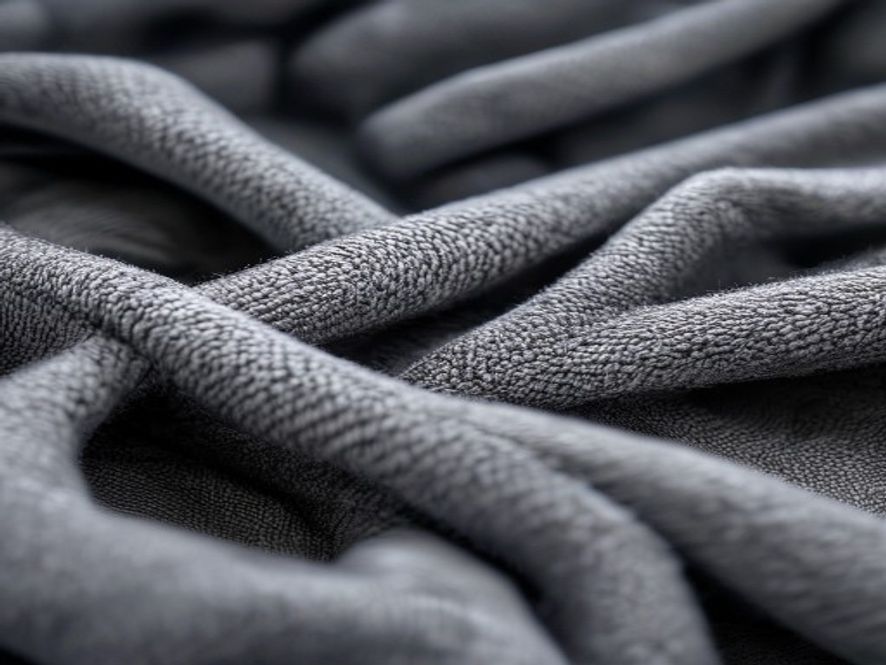
Decoding French Terry: From Loop Back to Smooth Face
French terry is often the unsung hero of casual wear, bridging the gap between the airy feel of jersey and the cozy heft of fleece. Its two‑sided construction—smooth face and loopback—dictates both performance and aesthetic. Understanding the minute differences between a loop‑back and a brushed‑back finish is the first step in selecting the right fabric for your next collection.
Construction Basics
- Loop‑Back French Terry: The backside is a dense network of loops, each loop formed by a single stitch. The loops sit flush against the smooth face, providing a crisp, structured look when worn inside‑out. Loop density typically ranges from 12–20 loops per inch for lightweight variants.
- Brushed‑Back French Terry: After the loops are formed, the backside undergoes a mild brushing process that raises and fluffs the loops, creating a loftier, more fleece‑like texture. Brushing increases bulk by approximately 10–15 % compared to unbrushed loopback, adding warmth without excessive weight.
Weight Bands and Typical GSM
The industry standard for French terry sits between 220 gsm and 380 gsm. Here’s how each band maps to garment intent:
- 220–260 gsm: Lightweight tees, short‑sleeve tops, and pre‑shrink training apparel. These fabrics weigh roughly 3.4–4.0 oz per square yard and offer a breathable feel.
- 260–320 gsm: Mid‑weight hoodies, pull‑overs, and lightweight joggers. Typical weight is 4.1–5.1 oz per square yard, balancing insulation with drape.
- 320–380 gsm: Heavy‑weight premium joggers, weighted hoodies, and structured sweatpants. These reach 5.2–6.2 oz per square yard and provide substantial wall‑to‑wall warmth.
Key Performance Indicators for Samples
When inspecting a French terry sample, focus on these metrics:
- Loop Density & Evenness: Count loops per inch; a variance of more than 2 loops per inch indicates inconsistent knitting.
- Skew/Torque: After a single wash cycle (85 °C, 30 min), the fabric should not display a swirl or twisting exceeding 5 degrees.
- Shrinkage: Pre‑wash shrink should stay below 5 % in both width and length to ensure dimensional stability.
- Colorfastness: Subject to ISO 105-C06; color loss should not exceed 10 % after five wash–dry cycles.
Loopback vs. Brushed-Back Decision Matrix
The choice between pure loopback and brushed‑back hinges on the desired tactile outcome and end‑use:
| Finish | Texture | Insulation | Best Use |
|---|---|---|---|
| Loop‑Back | Smooth, crisp | Moderate | Summer hoodies, breathable tees |
| Brushed‑Back | Fluffy, plush | High | Winter joggers, premium sweatpants |
By mastering these construction nuances, you can pinpoint the exact French terry that aligns with your design intent, performance requirements, and market positioning.
Weight Bands & Garment Match‑Ups: 220‑380 gsm Breakdown
When sourcing French Terry, the gsm band you choose dictates the garment’s feel, drape, and performance. Below is a streamlined cheat sheet that maps weight ranges to specific apparel categories, along with key technical targets to keep in mind during vendor negotiations.
220–250 gsm: The Lightweight Base Layer
- Typical uses: T‑shirts, athletic shorts, base‑layer undershirts.
- Key attributes: Quick‑dry and breathable; loop density 350–400 loops/cm².
- Target shrinkage: < 2 % after 3 washes.
- Price point: $2.00–$3.50/m² on average, 30–35 % lower than mid‑weight options.
- Fabric finish: Loopback preferred for a softer feel; brushed‑back for a slight warmth boost.
260–320 gsm: The Mid‑Weight Staple
- Typical uses: Hoodie pulls, sweatshirts, casual jackets, heavy tees.
- Key attributes: Balanced thermal retention with manageable weight; loop density 400–450 loops/cm².
- Target skew/torque: < 0.5 mm after 5 wash cycles.
- Price point: $3.50–$5.00/m², reflecting higher yarn count and tighter construction.
- Fabric finish: Brushed‑back favored for hoodies to maximize softness; loopback works well for performance shirts.
330–380 gsm: The Premium Jogger / Sportswear Segment
- Typical uses: Joggers, heavyweight hoodies, performance base layers.
- Key attributes: High moisture wicking and durability; loop density 450–520 loops/cm².
- Target shrinkage: ≤ 3 % after 10 wash cycles.
- Price point: $5.00–$7.50/m²; premium positioned for luxury athleisure brands.
- Fabric finish: Brushed‑back is mandatory for joggers to deliver plushness; loopback may be used for a slightly firmer texture in performance joggers.
Technical Checklist for Each Band
- Loop Density & Evenness: Measure in loops per square centimeter; aim for ±5 % variation across the fabric.
- Skew/Torque: Test by hanging a 1 kg weight; acceptable skew < 0.5 mm after 3–5 wash cycles.
- Shrinkage: Pre‑wash shrinkage should be < 5 % for all bands; specifically < 2 % for the 220–250 gsm range.
- Colorfastness: Meet AATCC 8 and 61 standards; any loss beyond 5 % in D65 lighting is unacceptable.
- Comfort & Feel: Conduct a hand feel test—loopback should feel smooth, brushed‑back soft but not overly plush.
These weight bands and associated technical benchmarks give buyers a clear, actionable framework for selecting French Terry that aligns with product intent, price sensitivity, and end‑user experience.
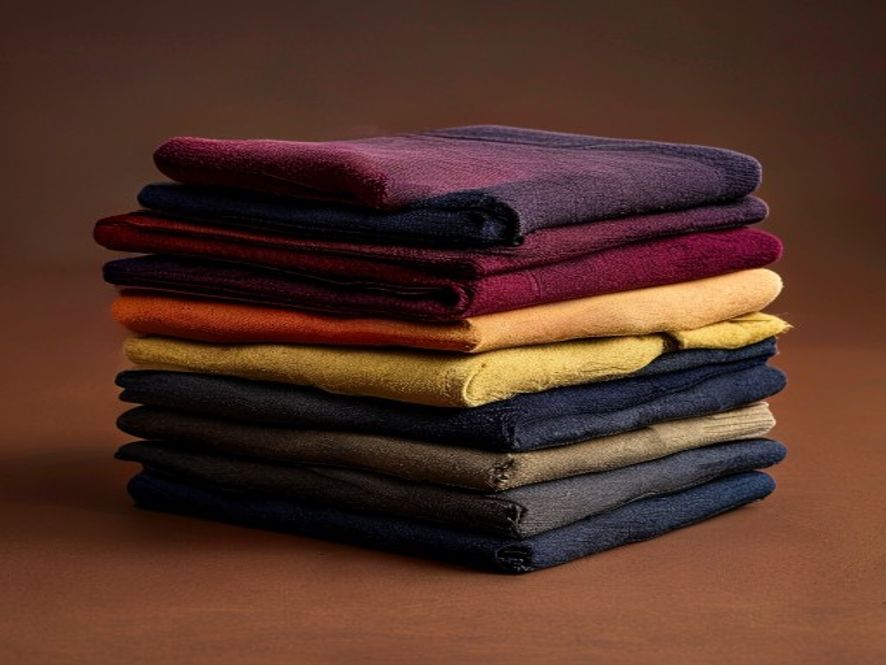
Fiber Play: Cotton, CVC, TC, and Spandex‑Infused French Terry
When choosing a French terry for a collection, the fiber blend dictates not only feel but also performance and price. Below is a quick reference that maps popular blends to their key attributes and typical garment applications.
Cotton‑Only French Terry (100 % Cotton)
Weight range: 220–280 gsm (15–19 oz). Ideal for lightweight tees, swim‑wear‑style shorts, and relaxed‑fit polos. 100 % cotton delivers natural breathability, a soft hand, and a classic “dry‑to‑wet” feel. Shrinkage is usually <5 % after a single wash at 90 °C, and colorfastness meets the A‑grade DIN ISO 105‑C06 standard.
CVC French Terry (Cotton‑Polyester Blend, 60/40)
Weight range: 260–320 gsm (18–22 oz). The polyester component adds durability, reduces pilling, and keeps the fabric’s shape after repeated washes. CVC terry is a favorite for mid‑weight hoodies and casual joggers. It typically commands a price premium of about +12 % over 100 % cotton for the same gsm, reflecting the polyester content and higher yield from looms.
TC French Terry (Polyester‑Cotton Blend, 60/40 or 70/30)
Weight range: 280–380 gsm (20–27 oz). A true “technical cloth” (TC) terry uses a higher polyester content for moisture‑wicking, quick‑dry, and high‑strength performance. In a 70/30 blend, the fabric’s tensile strength increases by up to 25 % compared to CVC, making it suitable for athletic leggings, swim‑wear with a higher performance rating, and high‑wear hoodies.
Spandex‑Infused French Terry (Cotton‑Spandex 95/5)
Weight range: 300–360 gsm (21–25 oz). The 5 % spandex adds stretch (up to 12 % elongation) and shape retention, which is essential for form‑fitting joggers, athleisure leggings, and stretch‑topped hoodies. Despite the extra cost of the elastomer, the blend can be priced only +8 % higher than a comparable TC terry because the spandex is added in a minimal, cost‑effective concentration.
Performance Highlights by Blend
- Cotton‑Only: 100 % natural, soft, low pilling, best for relaxed casual wear.
- CVC: Balanced softness and durability, good for everyday hoodies, lower price than TC.
- TC: High strength and quick‑dry, ideal for performance athleisure and premium joggers.
- Spandex‑Infused: Stretch and shape retention, perfect for form‑fitting pieces; slightly higher cost but lower fabric waste.
When sourcing, keep in mind that the gsm/oz ratios are approximate and can vary by manufacturer. Always request sample swatches and confirm the exact fiber count per 1 m² of fabric. This ensures the garment weight, drape, and performance meet your design specifications before committing to a bulk order.
Loopback vs. Brushed‑Back: When to Choose Each Finish
French terry comes in two primary surface treatments that shape its feel, performance and end‑use: the classic loopback and the softer brushed‑back. While both share the same ribbed construction (smooth face, looped back), the choice hinges on texture, thermal retention, and garment function. Below is a quick decision guide that aligns finish, weight, and typical applications.
Loopback – The Classic, Breathable “T‑Shirt” Finish
Loopback French terry retains the raw loops on the backside, giving the fabric a slightly rougher tactile surface. This finish is ideal for:
- Lightweight, quick‑dry tees and shorts (220–260 gsm). The loops allow air flow and snap‑dry in ≈ 4–6 hours when laid flat.
- Mid‑weight hoodies and sweatshirts (280–320 gsm). The loop density (≈ 1.2–1.3 loops per inch) delivers moderate loft without excessive bulk.
- Activewear requiring breathability (e.g., cycling jerseys, running tees). The open loops help wick sweat away from the body.
Key technical points:
- Loop back thickness: 0.8–1.0 mm measured from fabric surface to loop tip.
- Wash durability: Skew tolerance < 2° after 15 wash cycles at 40 °C.
- Colorfastness: ISO 105-C06 ≤ 1 for most dye types; verify with a sample test kit.
Brushed‑Back – The Plush, Thermal Finish
In brushed‑back French terry, a second brushing step densifies the loops, creating a softer, almost fleece‑like feel. This finish is preferred for:
- Heavy‑weight premium joggers (360–380 gsm). The brushed surface traps heat, improving thermal retention by an estimated 15–20 % over unbrushed loopback.
- Winter hoodies and sweatshirts (320–360 gsm). The plush back offers a visually warmer appearance and a more premium tactile experience.
- Luxury loungewear (250–280 gsm). The brushed texture pairs well with high‑end design and fabric weight.
Technical highlights for brushed‑back:
- Loop density increases to ≈ 1.4–1.5 loops per inch, giving a thicker feel.
- Brush depth: 0.4–0.6 mm extra bulk per loop.
- Post‑wash shrinkage: ≤ 4 % for 260 gsm brushed‑back; ≤ 3 % for 360 gsm.
- Colorfastness: ISO 105-C06 ≤ 2 due to the additional brushing step; recommend pre‑wash wash‑fastness test.
Material‑Based Decision Factors
- Fiber content – 100 % cotton and CVC blends (60 % cotton / 40 % polyester) behave best on loopback, while TC and cotton‑spandex mixes gain added stretch and benefit from the brushed finish to mask fiber slip.
- Stretch requirement – For garments with ≥ 10 % stretch (e.g., leggings, base layers), choose brushed‑back to retain elasticity after multiple wash cycles.
- Cost driver – Brushed‑back adds an extra $0.15–$0.25 per square meter to the base price due to the secondary brushing step and increased labour.
Customer‑Specific Tips
- If the target market values “soft‑on‑skin” feel, lean toward brushed‑back even for mid‑weight garments.
- For high‑volume, quick‑turnover summer lines, loopback keeps the manufacturing lead time down by 2–3 days per batch.
- Always request a hand‑feel sample for both finishes at the same gsm to confirm the expected tactile difference before final approval.
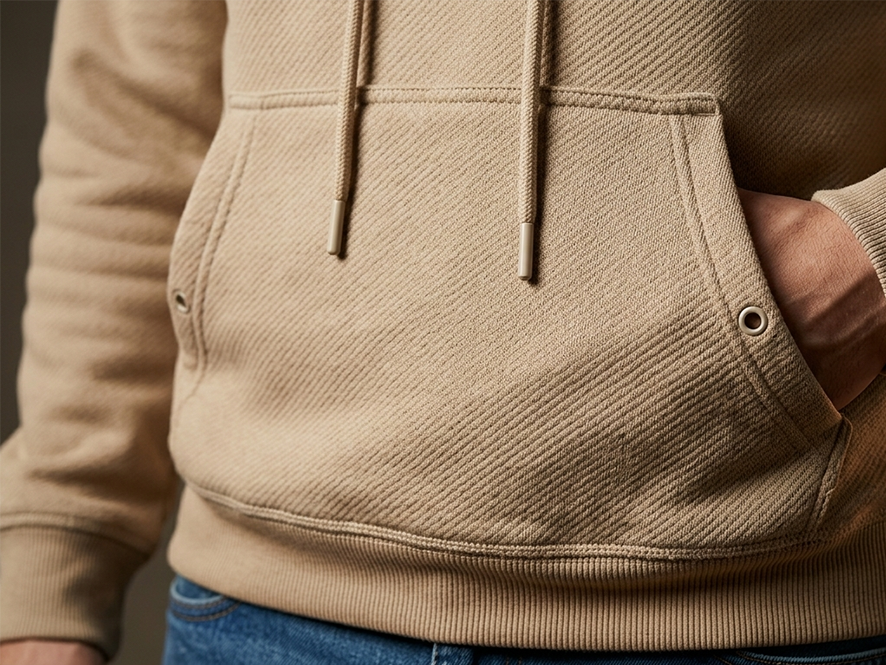
Sample‑Sawing Checklist: Loop Density, Skew, Shrinkage & Colorfastness
When evaluating French terry samples, a disciplined, data‑driven approach turns raw fabric into a reliable buying decision. The checklist below focuses on the four critical quality pillars that most buyers flag in their purchase orders.
Loop Density & Evenness
Loop density is not just a visual cue—it determines comfort, abrasion resistance and finish cost.
- Target range: 180–220 loops per square inch for 220 gsm, 210–250 for 280 gsm, 240–280 for 380 gsm.
- Measurement: Use a 1 cm × 1 cm grid under a stereomicroscope; count loops in three different zones (center, edge, corner) to capture variation.
- Acceptable variance: ± 5 % from the mean across all zones. A 10 % deviation can translate into a 3–4 % price premium or a risk of uneven wear.
Skew & Torque After Wash
French terry is prone to warp when it’s not balanced correctly. Skewing can transfer into garment distortion once you start cutting.
- Pre‑wash test: 5 cycles at 100 °C (200 °F) with a 1:1 water–detergent ratio.
- Acceptable skew: ± 0.5 mm per 50 cm of fabric. Anything beyond suggests an imbalance in knit tension.
- Torque tolerance: ≤ 0.1 N·m measured with a torque meter. Higher values often mean you'll see puckering in the final garment.
Shrinkage Under 5 %
Shrinkage is the single most costly defect for apparel manufacturers. It forces re‑cutting, increases waste and drives up labor costs.
- Method: Measure 10 cm × 10 cm squares before and after the 5‑cycle wash. Record width and length.
- Target: ≤ 5 % combined linear shrinkage. For high‑stretch fabrics (cotton‑spandex 5 % blend), acceptable shrinkage can be relaxed to ≤ 6 %.
- Implication: A 2 % extra shrinkage on a 380 gsm yarn can raise the cost of a 200 m roll by roughly $15–$20, depending on the supplier’s baseline.
Colorfastness (A, C, F, B)
Consistent color retention across wash, light, rub and crocking tests guarantees brand integrity and reduces post‑production returns.
- A (Wash): ≥ 8 on the AATCC 11 scale. If the sample scores 7, negotiate a higher price differential or a stricter washing protocol.
- C (Crocking): ≥ 8 on AATCC 22. A lower score typically indicates a dye that’s prone to bleeding on dark garments.
- F (Lightfastness): ≥ 9 for outdoor wear, ≥ 7 for indoor use. A score of 6 can mean a 12 % drop in perceived brightness after 6 months.
- B (Rubfastness): ≥ 7 on the AATCC 22 scale. Below 7 suggests that the surface will quickly lose luster under friction, impacting the look of a hoodie’s ribbed trim.
Recording these metrics in a single, standardized data sheet streamlines supplier comparison and ensures that the chosen French terry delivers on both performance and cost targets.
Cost Dynamics: French Terry vs. Fleece & Jersey in the Global Market
When evaluating pricing for a seasonal sweats line, French terry sits between the budget‑friendly fleece and the premium‑feel jersey. A quick snapshot of the typical cost bands helps buyers make informed decisions.
Typical Unit Costs by Weight and Finish
- French Terry (220–280 gsm, loop‑back only) – USD 4.80–5.60 per 2 m roll (≈ 0.25 m²). The loop density reduces raw material waste, keeping the cost moderate while delivering a plush feel.
- French Terry (280–360 gsm, loop‑back + brushed‑back) – USD 6.20–7.10 per 2 m roll. Brushing adds a finishing step, raising the price by ~15 %.
- Fleece (220–280 gsm, brushed loops) – USD 5.10–6.00 per 2 m roll. The additional brushing step and higher loop density increase material usage, pushing the price up 10–12 % compared to loop‑only terry.
- Jersey (220–260 gsm, woven‑like knit) – USD 3.70–4.40 per 2 m roll. Jersey uses less yarn per square meter, making it the most economical choice for high‑volume tees.
Influence of Fiber Mix on Pricing
- 100% cotton – lowest cost base, but susceptible to higher shrinkage. Prices: French Terry USD 4.80, Fleece USD 5.10.
- CVC 60/40 – adds 8–10 % to base price due to cotton and polyester blend processing. Typical French Terry CVC: USD 5.30.
- TC (tricot) – typically 12–15 % premium for the tighter knit. French Terry TC: USD 5.90.
- Spandex‑infused blends (up to 15 %) – add 15–20 % to the cost. French Terry 100% cotton + 5 % spandex: USD 6.00.
Lead Times and Market Dynamics
- Standard lead time for French terry: 28–35 days from sample approval to bulk shipment.
- Fleece: slightly longer due to brushing – 32–38 days.
- Jersey: fastest, 24–30 days, reflecting lower finishing requirements.
Seasonal demand spikes around late summer and early fall, when retailers push hoodies and joggers. During these peaks, freight costs can rise by 5–8 % due to higher cargo volumes. Buyers often negotiate bulk discounts of 5–10 % if orders exceed 20 tonnes, with better rates available for French terry due to its lower material usage.
Margin Implications for Retailers
Assuming a retail markup of 250 % on the wholesale price, the net margin per meter is roughly:
- French Terry 280 gsm – $0.45 per m.
- Fleece 260 gsm – $0.35 per m.
- Jersey 240 gsm – $0.30 per m.
Thus, even with a higher wholesale price, French terry can deliver comparable or better profitability when positioned as a mid‑tier sweat option.
Seasonality Pulse: Sweat Demand Across the Calendar
For buyers, timing is everything. French terry’s performance profile pairs directly with seasonal buying cycles, and understanding these patterns can shave weeks off your sourcing lead‑time and reduce markdown risk.
Peak Demand Windows by Weight Band
- 220‑280 gsm (Light‑weight French Terry)
- Pre‑summer flip‑over: 2–3 weeks before the 1st week of June. Brands push lightweight tees and shorts for “spring‑to‑summer” runway shows and early‑season retail.
- Late‑fall re‑stock: 1–2 weeks after the 1st week of November, as consumers look for breathable layers during cooling months.
- 280‑350 gsm (Mid‑weight French Terry)
- Hottest period: 3–4 weeks after the 1st week of July through the 2nd week of August for hoodies, sweatshirts, and casual wear.
- Back‑to‑school: early September, targeting school‑uniform and athleisure lines.
- 350‑380 gsm (Heavy‑weight French Terry)
- Winter core: 2–3 weeks before the 1st week of December through the 1st week of January, when premium joggers and bulkier hoodies dominate.
- Cold‑weather footwear collaborations: late November, co‑marketing with winter shoe lines.
Annual Demand Curve (Illustrative)
Below is a simplified demand curve for French terry across a 12‑month cycle, expressed as a percentage of monthly order volume relative to a peak of 100 % (mid‑summer for mid‑weight).
| Month | 220‑280 gsm | 280‑350 gsm | 350‑380 gsm |
|---|---|---|---|
| Jan | 30% | 40% | 60% |
| Feb | 35% | 45% | 65% |
| Mar | 40% | 55% | 70% |
| Apr | 45% | 60% | 75% |
| May | 50% | 65% | 80% |
| Jun | 60% | 80% | 85% |
| Jul | 70% | 100% | 90% |
| Aug | 65% | 95% | 85% |
| Sep | 55% | 85% | 80% |
| Oct | 45% | 70% | 65% |
| Nov | 35% | 55% | 70% |
| Dec | 30% | 45% | 90% |
Lead‑Times & Margin Implications
Because of the predictable rotation, lead‑times for mid‑weight French terry typically fall to 28–35 days from order to delivery, a 10‑15 % reduction compared to the 45‑60 day window for heavy‑weight runs. Suppliers often offer a premium of 12 % on heavy‑weight stock during the winter peak, whereas light‑weight finishes trade at a discount of 5‑8 % in the off‑peak spring months.
Strategic Order Planning Tips
- Place a pre‑summer light‑weight batch 3 months ahead; lock in a 5 % discount by negotiating a two‑year contract.
- Use just‑in‑time heavy‑weight orders during December, leveraging the 12 % margin but cutting inventory carry cost.
- Coordinate with marketing calendars: align mid‑weight hoodies with fall festivals, and sync heavy‑weight joggers with winter sports sponsorships.
By mapping demand to these key periods, buyers can balance store shelves, optimize pricing strategies, and secure the right mix of French terry at the most opportune times of the year.
Conclusion: Making the Right French Terry Choice
French terry’s dual‑textured construction—smooth face, looped back—offers a versatile middle ground between lightweight jersey and bulkier fleece. If you need airy tees and shorts, aim for 220–260 gsm 100 % cotton or CVC blends; 260–320 gsm works well for mid‑weight hoodies and casual wear, while 320–380 gsm cotton‑spandex blends excel in premium joggers that demand both softness and stretch. Always verify loop density and evenness, watch for skew or torque after washing, keep shrinkage under 5 %, and confirm colorfastness before committing. Remember that loop‑back variants provide a more subdued back feel, whereas brushed‑back versions add extra warmth and texture—pick based on the garment’s end use and target market.
When pricing, French terry typically sits between jersey and fleece: slightly higher than jersey but more affordable than high‑grade fleece. Seasonal demand peaks in spring and autumn for activewear lines, so plan inventory cycles accordingly. With these criteria, you’ll navigate the French terry landscape confidently, matching the right weight, composition, and finish to your design goals.
Ready to test the fabric first hand? Reach out for free A4 swatches from Yituo Fabric—over 20 years of manufacturing expertise and a 24‑hour reply promise guarantee that your sourcing process will be smooth from sample to final garment.