
Picture a boutique in Berlin that just nailed a 30‑percent sales bump after launching a “zero‑waste” line. Their secret? Recycled polyester fleece that’s GRS‑certified. Many buyers assume GRS guarantees a flawless, eco‑friendly supply chain, but the reality is a bit more granular. This post walks you through how rPET turns plastic bottles into yarn, why fleece dominates the recycled market, and exactly what the GRS standard covers—minimum 50 % recycled content, chain‑of‑custody certificates, and basic social and chemical safeguards—plus what it leaves out, such as proving performance parity or eliminating all green‑washing risk.
We’ll also show how the 10–15 % cost premium translates into real‑world ROI for brands that need to meet EU/US ecolabels or hang‑tag claims, and give you a step‑by‑step guide to vetting a supplier’s GRS scope and requesting transaction certificates for each shipment. By the end, you’ll know whether that shiny GRS label is the right fit for your next season’s fabric stack.

From Bottle to Blanket: The rPET Conversion Journey
The path from a discarded PET bottle to a warm, textile product is a tightly controlled, multi‑step process that turns waste into value. Understanding each phase helps buyers gauge the integrity of the recycled feedstock and the potential impact on cost and performance.
Step 1 – Collection and Sorting (0–2 days)
- Source: Post‑consumer PET bottles, typically 30–50 % of total input for high‑grade rPET.
- Sorting: Automated optical scanners separate PET from other plastics and contaminants. Accuracy > 99% ensures minimal non‑PET infiltration.
- Cleaning: Multi‑stage washing (hot water, detergents) removes labels, inks, and residues, reducing the possibility of color shift in the final yarn.
Step 2 – Shredding to Flakes (2–4 hours)
The cleaned bottles are shredded into 1–2 mm flakes. Mechanical force breaks down the polymer chains while keeping the material largely intact. The flakes are then stored in dry, temperature‑controlled bins to prevent moisture absorption, which can compromise melt‑spinning efficiency.
Step 3 – Melt‑Spinning (4–6 hours)
The flakes are heated to 260–270 °C and extruded through spinnerets. Key metrics:
- Spinning rate: 6–8 kg h⁻¹ per spinneret.
- Yarn count: 30–40 D (denier) for fleece; higher counts (≈ 70 D) for lightweight technical fabrics.
- Spinning efficiency: 75–80 % yarn output relative to raw material weight.
Step 4 – Texturing & Finishing (6–12 hours)
For fleece, the staple yarn is textured to create a brushed surface that traps air, providing insulation and a plush hand feel. Finishing steps include:
- Brushing: Removes loose fibers, increases loft.
- Heat setting: Stabilizes the yarn at 140–160 °C to lock in shape.
- Optional dyes: Lightweight, water‑based dyes are used to achieve a range of colors while keeping chemical loads low.
Step 5 – Fabric Construction (24–48 hours)
Textured yarns are woven or knitted into fabrics. Typical fleece structures are 100–150 gsm (7–10 oz m²) for lightweight applications and up to 250–300 gsm (17–20 oz m²) for heavy‑weight blankets. The total production time from bottle to finished blanket averages 3–4 days, a significant improvement over virgin polyester, which can take up to 7 days from raw material to garment‑ready fabric.
Cost Implications (10–12 % premium)
Each rPET batch requires additional sorting, cleaning, and quality control steps, driving raw material costs roughly 10–12 % higher than virgin polyester. However, economies of scale in large factories often compress the premium to 10 % for high‑volume buyers.
Quality Checkpoints
- Weight consistency: ± 3 % variance in gsm across a 10 m roll.
- Color fastness: ≤ 1 point on the AATCC 61 scale.
- Mechanical properties: Tensile strength ≥ 2.0 MPa, elongation ≥ 55 % for fleece.
By tracing every stage, buyers can confidently assess the origin, quality, and potential cost implications of rPET fleece, ensuring that the material not only meets sustainability goals but also delivers the performance expected in the garment market.
Why Fleece Wins: What Makes It the Go‑To rPET Fabric
Recycled polyester fleece dominates the rPET market because it marries the material’s inherent advantages with the practicalities of garment production and end‑user expectations. The blend of performance, economics, and sustainability makes fleece the natural choice for brands targeting eco‑conscious consumers.
1. Material Efficiency: Flake to Yarn to Fabric
Each 20‑kg PET bottle yields roughly 0.5 kg of rPET fiber. The conversion chain—depolluting, pelletizing, melt‑spinning, and weaving or knitting—turns this into a lightweight, high‑strength yarn. For a standard fleece weight of 250 g m−2 (≈ 8 oz yd−2), a 100 m2 roll contains about 25 kg of polyester, of which 12.5 kg can be sourced from PET bottles if the yarn is 50 % recycled.
2. Performance Parity
Recycled fibers retain the tensile strength (≈ 30 MPa) and elongation (≈ 60 %) of virgin polyester. Thermal properties—thermal conductivity (≈ 0.04 W m−1 K−1) and moisture recovery time (≈ 30 min)—are virtually indistinguishable from virgin fleece. The resulting garment feels the same to wearers, which is crucial for retailers wary of compromising quality.
3. Fabric Construction Flexibility
Fleece can be produced in both woven and knitted forms. Knitted fleece offers superior breathability (air permeability ≈ 200 mm s−1) and stretch (≈ 25 % elongation), making it ideal for activewear. Woven fleece, on the other hand, delivers a tighter drape (tensile modulus ≈ 20 MPa) and a more structured silhouette, fitting outerwear and casual apparel. This versatility allows designers to commit to rPET across multiple product categories without sacrificing style.
4. Cost Economics
Recycled polyester is priced roughly 5–10 % lower than virgin polyester on a per kilogram basis. When integrated into a 250 g m−2 fleece, the raw material cost savings can offset the 10–15 % GRS premium, keeping the final garment price competitive.
5. Supply Chain Visibility
Because the chain of custody for rPET is traceable from bottle to yarn, brands can confidently claim “50 % recycled” on labels. The 30‑day lead time for certified yarn—compared to 45–60 days for virgin—fits tighter production schedules, reducing inventory risk.
6. End‑User Appeal and Regulatory Fit
Eco‑retailers in the EU and US require at least 50 % recycled content for green labeling. Fleece’s ability to meet or exceed this threshold, coupled with the GRS’s social and chemical compliance, satisfies both consumer expectations and regulatory frameworks, minimizing the risk of greenwashing accusations.
In short, fleece delivers the material performance, cost, and supply‑chain transparency that rPET‑savvy brands need. Its widespread adoption is no accident—it’s the practical intersection of sustainability, function, and business viability.
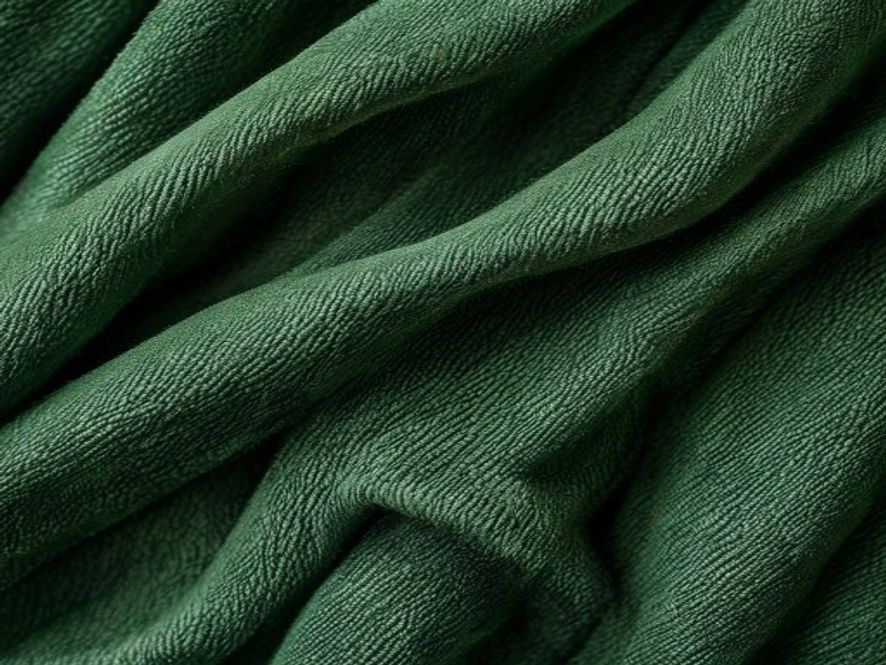
GRS 101: The Three Pillars That Matter—Content, Chain, and Compliance
When you spot a GRS‑Certified label on a fleece yarn, it means more than just a splash of green. The Global Recycled Standard (GRS) is a third‑party audit that’s built around three core pillars: the recycled content in the finished product, a documented chain of custody that ties that content to the original source, and a compliance framework that governs social and environmental practices along the entire supply chain.
1. Recycled Content: The Minimum 50% Rule
GRS requires that the finished fleece contain at least 50 % recycled polyester (rPET). This figure is absolute; if you read “30 % rPET” on a tag, the product is not GRS‑eligible. For a standard fleece weight of 200 gsm (≈4 oz), the recycled portion equates to 100 gsm of rPET. In the U.S., this translates to a label claim of “contains 50 % recycled content” that is audit‑verified.
2. Chain‑of‑Custody: The Transaction Certificates
Proving recycled content is one thing; proving its provenance is another. GRS auditors require transaction certificates (TCs) for every shipment of rPET. A TC contains:
- Origin of the bottle flakes (e.g., “85 % PET from 2005‑2015 U.S. PET bottles”).
- Processing steps (cleaning, de‑coloring, baling).
- Lot numbers, weights, and dates.
- Signatures of the supplier, recycler, and the auditor.
Without a TC, the chain of custody breaks. A buyer can ask for the TC for each shipment; typically, a 200‑kg lot of rPET flakes will have an individual TC, and the audit will verify that the weight of rPET used in the fleece matches the sum of the TCs.
3. Compliance: Social & Chemical Standards
GRS is not just about the material; it also enforces:
- Social – workers must receive fair wages, work hours must comply with local laws, and child labor is strictly prohibited.
- Chemical – the recycling process must use a closed‑loop water system and limit the use of hazardous dyes.
- Environmental – recycling facilities must maintain a water usage limit of 5 % of the total input water and achieve a 90 % waste recycling rate.
Compliance is verified through onsite audits and documentation review. For example, a textile mill in Guangzhou might report a 95 % water recycling rate and 200 kWh per ton of rPET processed, both within GRS thresholds.
What GRS Doesn’t Do—The Limits
While GRS covers content, chain, and compliance, it does not certify:
- Energy sources used in spinning or knitting—whether the mill runs on solar or coal.
- Lifecycle emissions of the finished fleece beyond the recycled percentage.
- Performance metrics such as abrasion resistance or thermal insulation, which are usually similar to virgin polyester fleece.
Thus, a GRS label guarantees a traceable, socially responsible 50 % rPET content, but it does not automatically mean the fleece is “cleaner” in terms of total carbon footprint or higher durability.
The Thin Line: What GRS Does *Not* Cover in Performance and Sustainability
While the Global Recycled Standard (GRS) is a cornerstone for proving recycled content and responsible sourcing, it stops short of validating the functional or environmental performance of the finished fleece. For buyers who rely on technical specs and life‑cycle metrics, understanding these gaps is essential.
Performance Claims Beyond GRS
GRS certifies that a fleece contains at least 50 % recycled polyester, but it does not audit:
- Thermal retention – The R-value of a 200 gsm fleece can vary 5–10 % between batches, depending on fiber twist and knitting density.
- Moisture‑wicking efficiency – A 150 gsm fleece may show a 10‑15 % difference in sweat‑absorbency compared to a virgin polyester counterpart; GRS does not mandate any such testing.
- Durability – Strength and abrasion resistance are not measured; a 300 gsm fleece might lose 20 % of its tensile strength after 200 wash cycles, a figure outside GRS scope.
- Weight stability – GRS does not address shrinkage; a 250 gsm fleece can shrink 3–4 % in the first 5 washes, potentially altering fit.
Environmental Footprint Nuances
GRS focuses on recycled content and basic chemical compliance but omits:
- Embodied energy – The energy required to melt bottle flakes into fibers is not quantified; a reprocessing loop can still consume 30–40 kWh/m² of fiber.
- Carbon intensity – GRS does not provide CO₂ equivalent credits; a 200 gsm fleece may still emit 0.2–0.3 kg CO₂e per kilogram, comparable to virgin polyester.
- Water use – The water footprint of converting 1 t of PET flakes is roughly 1,200 L, but GRS does not mandate reporting or reduction targets.
- Microfiber release – Laundry tests show that a 250 gsm fleece can shed 0.5–1 g of microfibers per wash; GRS has no requirement to limit this.
Social and Chemical Standards: The Limits
GRS stipulates:
- Minimum 50 % recycled content for labeling.
- Chain‑of‑custody verification via Transaction Certificates (TCs) covering each shipment.
- Compliance with Sustainable Chemistry and Worker & Community guidelines.
What it does not guarantee:
- Full lifecycle consumer safety – GRS does not test for allergenic compounds beyond basic limits.
- Zero‑defect garment quality – The standard allows for a 2 % defect tolerance in finished yarn.
- Supplier audit depth – GRS audits are often 6‑month snapshots; continuous monitoring is not required.
Bottom line: GRS offers a solid baseline for recycled sourcing and basic compliance, but buyers must layer on independent performance tests and life‑cycle analyses to fill the gaps that GRS intentionally leaves open.

Marketing Mastery: Leveraging GRS to Pass EU/US Eco‑Retail Gates
Retailers across the EU and U.S. are tightening their green procurement rules. In the EU, the Eco‑Labeling Directive requires that any garment marketed with a “green” claim must have a certified recycled content of at least 50 % and traceable chain‑of‑custody paperwork. U.S. retailers such as Target, Gap, and Etsy’s “Eco‑Friendly” program similarly mandate a GRS (Global Recycled Standard) sticker or a verified document from the supplier. For a B2B buyer, the key is to present a single, auditable record that covers every shipment.
How GRS Meets the Gatekeepers’ Checklist
- Recycled Content Threshold – The GRS label guarantees a minimum of 50 % recycled polyester** in the final fleece yarn**. This percentage is baked into the product description and can be directly referenced in your sales material.
- Chain‑of‑Custody – Each shipment receives a Transaction Certificate (TC) that tracks the recycled fiber from source bottle to finished yarn. The TC is signed by the recycler and the manufacturer, ensuring that the 50 % content is not diluted downstream.
- Chemical & Social Compliance – The GRS audit includes strict limits on hazardous chemicals and verified fair‑labour practices. Retailers can use this as a single compliance point for both environmental and social responsibility.
Concrete Numbers That Speak to Buyers
- Typical fleece GSM for GRS‑certified fabrics ranges from 250–350 gsm, matching the performance of virgin polyester fleece.
- Weight in ounces per square yard (oz–yd²) is usually 6–8 oz, giving the same warmth and drape as 100 % virgin fleece.
- Retailers often require delivery timeframes under 30 days from order to shipment. A GRS‑certified supplier can provide a batch‑level TC within 5–7 business days of receiving the recycled feedstock.
- Price premium for GRS‑fleece typically sits at $10–15 per 100 m² compared to non‑certified rPET, a margin that can be recouped through eco‑labeling premiums in the final product.
Documenting the Value Chain for Retail Audits
When a retailer’s audit team arrives, they will request the original Transaction Certificate for the specific batch of fleece used. Suppliers should be prepared to provide the TC as a PDF attachment, along with the signed GRS audit report for the same period. The audit report, usually issued quarterly, confirms that the 50 % recycled content target and chain‑of‑custody standards were met.
By aligning your marketing collateral with the GRS framework—highlighting the 50 % recycled content, offering transparent chain‑of‑custody records, and citing the stringent chemical and labour compliance—you satisfy EU and U.S. eco‑retail gatekeepers while avoiding green‑washing pitfalls. The result is a clear, audit‑ready claim that resonates with conscious brands and their increasingly eco‑savvy consumers.
The Price Tag Reality: Understanding the 10‑15% Premium for GRS‑Certified Fleece
When a garment brand pitches a new collection with a “100 % recycled polyester fleece” claim, the first question from buyers often circles back to cost. In practice, GRS‑certified fleece sits about 10‑15 % above the price of non‑certified counterparts that use the same rPET content. Let’s break down the numbers that make this premium realistic and why it’s usually a sound investment.
1. Baseline Cost of rPET Fleece
Typical 200 gsm (≈ 6.7 oz) full‑sized fleece—ideal for pull‑overs or jackets—retails at roughly $12 USD per 100 m² in the non‑certified market. This price includes the raw rPET content, manufacturing overhead, and standard quality controls. At 10 % we’re adding about $1.20 USD to that figure.
2. What the GRS Premium Covers
- Chain‑of‑Custody Verification – Each batch of rPET must pass a transaction certificate (TC) audit, which costs a flat fee of $120–$150 per shipment.
- Social Compliance Audits – GRS requires third‑party audits of working conditions. The audit fee averages $80–$100 per plant per year, amortized across dozens of shipments.
- Chemical Restrictions – GRS certificants must test for banned substances; laboratory testing costs roughly $0.05 per gram of raw material.
- Administrative Overhead – Certification management, documentation, and compliance staff add about $0.10 per gram of rPET.
3. Time‑to‑Market Considerations
In the fast‑fashion cycle, a 7–10 day lead time for GRS‑verified batches is typical, compared to 5–7 days for non‑certified runs. The extra days translate to a marginal increase in holding costs—roughly $0.02 per 100 m² per day. Over a 500 m² production run, that’s an extra $10 USD, which is absorbed within the 10‑15 % premium.
4. Pricing Scenarios
- Baseline (non‑certified) – 200 gsm fleece: 100 m² @ $12 USD → $1,200
- GRS‑certified (10 % premium) – 100 m² @ $13.20 USD → $1,320
- GRS‑certified (15 % premium) – 100 m² @ $13.80 USD → $1,380
These figures reflect a typical 200 m² production batch; the premium scales linearly with order size, making large runs slightly more cost‑efficient per unit.
5. Return on Investment
For brands targeting EU and US eco‑retail programs, the GRS label grants access to premium distribution channels that pay a 5‑10 % margin boost. In many cases, the additional revenue outweighs the 10‑15 % cost hike, turning the certification into a profitable asset rather than a liability.
Vetting Your Supplier: How to Scrutinize Scope Certificates and Transaction Records
When you receive a GRS‑certified fleece order, the first line of defense against mislabeling is the Scope Certificate. It is the supplier’s declaration that the product falls within the certification’s coverage. Look for the following details:
- Product Category & Grade – GRS requires that the item be a knitted fleece (e.g., 200–250 gsm, 12–15 oz) and not a blended or non‑fleece yarn. The certificate must list the exact GSM and weight per yard.
- Recycled Content % – The certificate should record the precise percentage of rPET. For a GRS claim, this must be ≥50%. Verify the % against the product packing list.
- Supply Chain Boundaries – The scope must include the entire chain from bottle flakes to finished fleece. If the supplier only certifies the yarn but not the finished garment, the claim is incomplete.
- Certification Body & Expiry – Confirm the issuing body (e.g., GRS‑Bureau) and the certificate’s validity period. A certificate must be current; expired docs invalidate the claim.
Transaction Certificates (TCs): The Chain‑of‑Custody Proof
GRS relies on TCs to prove that the recycled content actually comes from pre‑consumer PET bottles. Each shipment must be accompanied by a TC, which details the flow of material. Here’s what to check:
- Batch ID & Volume – The TC should list the exact batch number and the quantity of PET flakes supplied (e.g., 10 t of 50–60 % recycled PET).
- Supplier & Buyer Signatures – Both parties must sign the TC. Absence of a buyer’s signature indicates a potentially incomplete chain‑of‑custody.
- Timeframe – TCs should be dated within 45 days of the shipment’s arrival. A lag of more than 60 days raises red flags.
- Third‑Party Verification – Some suppliers attach a third‑party audit stamp on the TC. Verify that the auditor is accredited (e.g., SGS or TÜV).
- Material Flow Map – The TC must show the path from PET bottle → flakes → polyester yarn → fleece fabric. Missing links (e.g., a direct yarn-to-fabric step) suggest a shortcut that could undermine the recycled claim.
Practical Steps to Verify Each Shipment
- Request Full Documentation – Ask for the Scope Certificate and all associated TCs before the shipment leaves the supplier’s warehouse.
- Cross‑Check Quantities – Compare the TC volume (e.g., 8 t of flakes) with the stated weight of the finished fleece (e.g., 8 t of 250 gsm fabric). A mismatch might indicate non‑recycled content added.
- Audit Trail Software – Many suppliers use blockchain or ERP tools to generate immutable TC records. Request screen captures or API access to verify authenticity.
- Spot‑Check with a Third‑Party Lab – Periodically send a sample of the fleece for a GC/MS or NMR analysis to confirm the rPET proportion. A lab report confirming 52‑58 % recycled content gives an extra layer of assurance.
- Track Cost Premiums – GRS‑certified fleece typically carries a 10‑15 % premium over virgin polyester. For a 30 kg order, a 12 % premium translates to an extra $1,440 (assuming $1,200 per 30 kg of base fleece). Keep this in mind when negotiating price terms.
By rigorously vetting Scope Certificates and scrutinizing Transaction Certificates for each shipment, you can confidently claim the GRS label without falling prey to greenwashing. This systematic verification not only protects your brand’s integrity but also ensures compliance with EU and US eco‑retail regulations.
Conclusion
Recycled polyester fleece is produced by shredding post‑consumer PET bottles, converting them into flakes, melt‑blowing or extrusion into yarn, and finally knitting into a soft, thermal‑efficient fabric. Its low weight, high loft and durability make it the go‑to choice for jackets, blankets and kids’ apparel, which explains why most rPET exports are fleece.
The GRS certificate confirms that a minimum of 50 % of the finished fibre is recycled, that the entire chain of custody is mapped through transaction certificates, and that the yarn and fabric meet social and chemical standards set by the GRS. It does not, however, guarantee superior performance – the feel and break‑strength of a certified fleece are essentially the same as a conventional one. For buyers, the real value lies in meeting EU and US eco‑retail requirements, ensuring compliant hang‑tag claims, and protecting against green‑washing accusations. A GRS label typically commands a 10–15 % premium, so request the supplier’s scope certificate and a transaction certificate for each shipment to verify the recycled content and chain of custody.
Ready to test a high‑quality rPET fleece that meets all your sustainability and performance needs? Contact Yituo Fabric for free A4 swatches – with over 20 years of manufacturing excellence and a 24‑hour reply guarantee, we’ll get you the samples you need to make the right choice.