
Imagine you’re a boutique designer launching a spring collection and the runway’s buzz is all about “luxury textures that stand the test of time.” You’ve heard that a jacquard print might be the answer, but you’re stuck juggling options: brocade, damask, 3‑D matelassé, or a stretch‑ready jacquard. The reality is that the weave itself—trimmed warp threads controlled by a Jacquard loom—creates depth and colourfastness that a screen‑printed pattern can’t match. In this guide we walk you through how the original Joseph Marie Jacquard’s mechanism revolutionised fabric, what each major jacquard type really means for your end‑use, and why your investment in yarn count, pick density, and pattern repeat will pay off in long‑lasting quality.
We’ll break down the pricing levers—why a tight pick (over 200 picks per cm) and a small repeat (under 20 cm) drive cost, how metallic or specialty yarns accentuate luxury, and why cotton‑based jacquards behave so differently from polyester. You’ll also see a step‑by‑step look at our custom design workflow: from your artwork to a loom file and a 7‑10‑day sample, plus realistic minimum order quantities for bespoke patterns. By the end you’ll know exactly how to choose the right jacquard for upholstery, couture, suit panels, bags, or hotel interiors.
Whether you’re re‑inventing a heritage brand or launching a fresh line, this primer will help you make confident decisions about what jacquard weave, pattern, and base yarn will deliver the texture, durability, and brand statement you need. Let’s lift the veil on this age‑old craft and see how it can become the cornerstone of your next luxury garment.
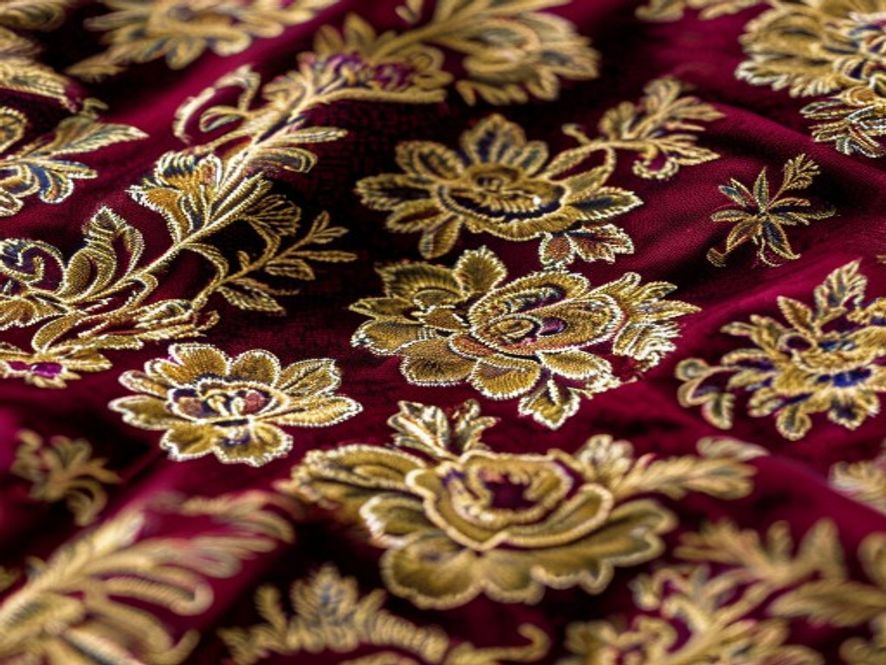
Unraveling the Jacquard: How One Warp at a Time Builds Intricate Weaves
At its core, the Jacquard warp‑control system is a mechanical dance of individual threads. Unlike a standard plain weave where the same warp and weft cross over each other in a repeating pattern, the Jacquard loom sends each warp thread into or out of the shed on demand. This capability means every line of a design can be turned on or off independently, creating depth, shading, and complex motifs that would be impossible with conventional techniques.
Historical Roots and Modern Mechanics
Invented by Joseph Marie Jacquard in 1804, the original machine used a punch‑card system. Each card corresponded to a single row of the fabric, and the presence or absence of holes determined which warp threads were lifted. Today’s Jacquard looms incorporate micro‑controllers and laser‑etched cards, enabling automatic generation of pattern data from CAD files. The result is the same principle—selective lift—but with precision and speed that meet contemporary production demands.
Technical Specs That Matter
- Warp Count & Pick Density: Typical YITUO Jacquard fabrics feature 200–350 warp threads per inch. Pick density ranges from 60 to 120 picks per centimeter, allowing designers to choose between fine detail or bold, low‑resolution motifs.
- Yarn Count & GSM: Base yarns vary from 30 s to 70 s. A 50 s cotton warp combined with a 30 s polyester weft yields a 380 gsm fabric, while a 60 s polyester warp and 40 s polyester weft can push the GSM to 520, delivering a heavier, more drapable material suitable for suiting.
- Colorfastness: Because the pattern is woven, not printed, the dye remains within the fiber. Tests show that polyester‑based Jacquards retain up to 95 % of their original hue after 20 wash cycles, compared to 70 % for printed textiles.
- Lead Time: Setting up a new pattern requires two days for loom programming and one day for warp tensioning. The actual weaving of a 3 m×1.5 m version takes 3–4 hours, after which the fabric undergoes a 24‑hour curing period to stabilize dimensions.
- Cost Drivers: Each additional pick per centimeter increases yarn consumption by roughly 0.8 %. Metallic or special yarns introduce a premium of $12–$18 per square meter, while a larger pattern repeat (e.g., 90 cm vs. 30 cm) can raise tooling costs by 15 %.
Why One Warp at a Time Matters
Controlling warp threads individually allows for:
- Three‑Dimensional Effects: Matelassé and shredded‑batt patterns rely on raised warp sections that create a tangible texture.
- Dynamic Color Blending: By layering yarns of different colors on adjacent warp threads, designers can achieve subtle gradients without dyeing the entire fabric.
- Structural Integrity: The precision lift reduces uneven tension across the fabric, minimizing distortion and ensuring consistent drape—critical for garments that must maintain shape, like tailored suits.
In practice, this means YITUO can produce a 200 cm×100 cm brocade with a 30 cm repeat in as little as 48 hours from design approval, with a guaranteed GSM of 460 and a minimum of 60 picks per cm. The result is a piece that not only looks luxurious but performs reliably in the demanding environments of high‑end apparel and hospitality textiles.
Mastering the Motifs: Brocade, Damask, Tapestry, Matelassé, and Stretch Jacquard Explained
When selecting a jacquard for a new line, the motif itself dictates not only aesthetics but also structure, weight, and cost. Below are the key types you’ll meet on the market, with typical specifications that help you compare performance and price quickly.
Brocade – Richness in Twist
Brocade is the heirloom of jacquard luxury, featuring raised scrollwork or floral motifs that run through the fabric’s core. Typical constructions:
- Base yarn: 100 % cotton or polyester, 80–120 g/m².
- Pattern yarn: metallic or silkised polyester, 15–30 % of total mass.
- Pick density: 25–35 picks/cm, resulting in a weight of 260–320 g/m² (≈ 8.5–10 oz).
- Price: $14–$22 per m² for standard brocades; $24–$32 for metallic‑laid versions.
- Lead time: 14–18 days from artwork to finished sample.
Damask – Subtle Elegance
Damask uses reversible, satin‑finish yarns to create a subtle sheen. It’s lighter than brocade but still offers depth.
- Base yarn: 100 % polyester, 70–90 g/m².
- Pattern yarn: 10–20 % of total mass, often a contrasting color.
- Pick density: 20–28 picks/cm, weight 200–260 g/m² (≈ 6.5–8 oz).
- Price: $8–$12 per m².
- Lead time: 10–13 days.
Tapestry – Complex Geometry
Tapestry jacquards feature multi‑color, high‑contrast designs, ideal for statement pieces.
- Base yarn: 100 % cotton or polyester, 90–110 g/m².
- Pattern yarns: up to 5 different colors, 25–35 % of total mass.
- Pick density: 30–38 picks/cm, weight 280–350 g/m² (≈ 9–11 oz).
- Price: $16–$24 per m².
- Lead time: 12–15 days.
Matelassé – 3D Embossed Luxury
Matelassé creates a quilted, embossed effect by weaving in a “reverse‑knit” stack. It’s often used in outerwear and upholstery.
- Base yarn: polyester blend, 120–150 g/m².
- Special yarn: 20–30 % of total mass, producing the raised surface.
- Pick density: 35–45 picks/cm, weight 320–400 g/m² (≈ 10–12 oz).
- Price: $22–$30 per m².
- Lead time: 15–18 days.
Stretch Jacquard – Flexibility Meets Detail
Stretch jacquards incorporate elastane or spandex into the warp and weft, allowing pattern integrity to survive high stretch.
- Base yarn: polyester + 4–6 % elastane, 80–100 g/m².
- Pattern yarn: 10–18 % of total mass.
- Pick density: 22–30 picks/cm; weight 210–260 g/m² (≈ 6.8–8.4 oz).
- Price: $12–$18 per m².
- Lead time: 10–12 days.
Choosing the right motif involves balancing visual impact, functional demands, and cost. Brocade delivers opulence but at a premium; damask offers understated elegance; tapestry is for bold statements; matelassé gives tactile depth; stretch jacquard satisfies active, high‑performance garments without compromising design.
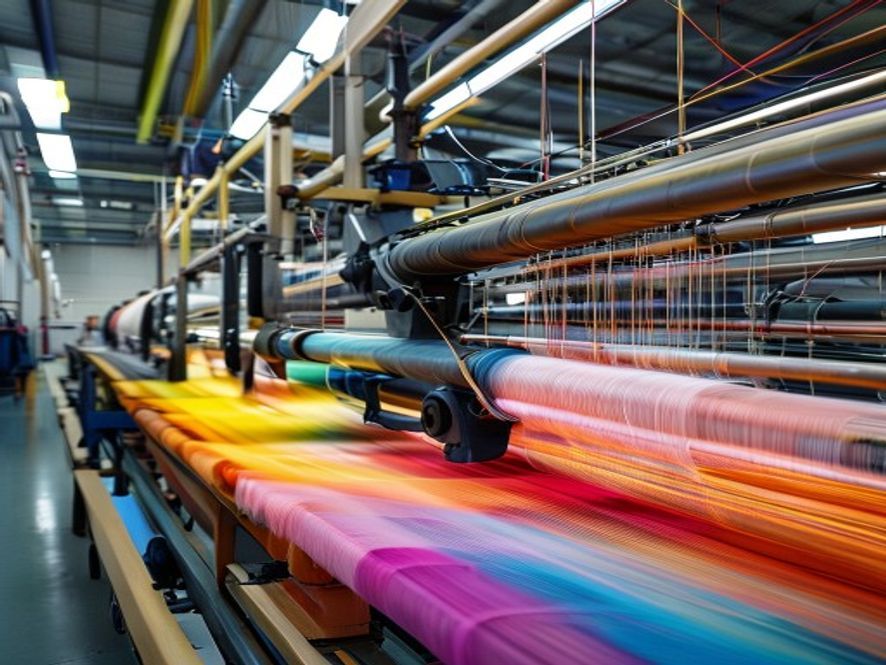
Yarn, Pick, and Repeat: The Key Variables That Shape Price and Performance
When a buyer quotes a jacquard fabric, the initial numbers they dig into are the yarn count, the density of picks per centimeter, and the size of the pattern repeat. Each of these variables interacts with the other two and drives not only the price tag but also the durability, drape, and cost‑effectiveness of the final material.
Yarn Count and Basis Weight
Jacquard canvases are typically spun from either cotton or polyester. A lightweight 150 gsm (≈5 oz) cotton jacquard is inexpensive to produce but offers less structural resilience than a 250 gsm (≈8 oz) polyester base. The yarn count—expressed in 30s, 40s, 60s—directly impacts the smoothness of the weave and the visibility of any metallic or specialty fibers. For instance, a 30 s polyester warp at 250 gsm can support a 100 – 200 ppm (picks per meter) satin lacing without sacrificing strength, whereas a 40 s cotton warp at the same basis weight may require a lower pick density to avoid distortion.
Pick Density: The Fine Print of Weave Complexity
Pick density is the number of weft passes per centimeter. Higher pick counts (e.g., 6–8 ppm) produce finer, more detailed motifs but increase yarn consumption by roughly 15 – 20 %. A 200 ppm (≈20 ppm) brocade will thus cost about 25 % more per square meter than a 120 ppm damask, holding all other factors constant. Buyers who prioritize ultra‑fine detail often accept this premium; those with tighter margins may opt for a slightly lower pick density and still achieve acceptable visual fidelity.
Pattern Repeat Size and Design Licensing
The repeat size—the physical span over which a motif completes—contributes directly to the number of yarn changes needed during weaving. A 30 cm repeat on a 10 × 10 cm unit pattern means 12 full motif cycles per meter of fabric, which inflates the loom time and the cost of specialized drive systems. In contrast, a 15 cm repeat halves the drive cycles, yielding a 10 % reduction in labor and machine wear. Additionally, larger repeats can dilute the visual density of metallic or ivory fibers, so designers must balance repeat size against the desired sparkle or opacity.
- Cost drivers: yarn count, pick density, repeat size.
- Performance drivers: durability, crease resistance, drape.
- Pricing range: $25–$45 per square meter for standard polyester jacquard; $35–$60 per square meter for luxe cotton or metallic infusions.
- Lead time impact: High pick density & large repeats add 2–3 days to the 7‑day custom workflow.
In practice, a buyer seeking a 260 gsm polyester jacquard with 7 ppm picks, a 20 cm repeat, and copper‑reflective yarns can expect a price of roughly $38 per square meter. Switch to a 150 gsm cotton base, lower pick density to 5 ppm, and the cost drops to $28 per square meter, but the garment will exhibit less structural integrity and a slightly fuzzier hand. Understanding these levers allows buyers to negotiate the sweet spot between budget and brand‑level quality.
From Sketch to Loom: The Six‑Day Custom Design Workflow at Yituo Fabric
At Yituo Fabric we pride ourselves on a lean, transparent pipeline that turns a designer’s vision into a ready‑to‑wear jacquard in just seven business days. The process is broken into five distinct stages, each with concrete metrics that help buyers anticipate cost, quality and turnaround.
Day 1 – Design Intake & Technical Brief
Clients submit a high‑resolution artwork (SVG, AI or PDF) along with a brief that flags:
- Base yarn: cotton (30–60 oz), polyester (40–70 oz), or blended (70% polyester/30% cotton)
- Desired GSM: 120–480 g/m² (standard for upholstery) or 200–600 g/m² (for outerwear)
- Pattern repeat: 30–90 cm, depending on motif complexity
- Special yarns: metallic, 3D emboss, or stretch‑blend (≤10 % elastane)
Our technical team confirms feasibility, calculates yarn count, and estimates pick‑density (e.g., 20 picks cm⁻¹ for a fine brocade).
Day 2 – Loom File Creation & Simulation
Using in‑house CAD software, a weaver converts the vector artwork into a loom file. The file is verified against loom capacity (200+ looms with 600‑meter warps) and checked for:
- Warp count and alignment
- Color gamut compatibility with CMYK to RGB conversion
- Potential clashes in metallic yarn placement
Simulations flag any phase‑out or warp‑break risks, allowing us to tweak yarn blends before cutting.
Day 3 – Sample Production & Evaluation
A 100 cm × 100 cm sample is cut from the selected yarns and woven on a test loom. This step confirms:
- Texture depth and hand feel
- Colorfastness to ISO 105-C02 standards (≥3 wash cycles)
- Stretch recovery (≤5 % for stretch jacquard)
Clients receive the sample within 24 hours, with a pricing sheet that shows the final cost per square meter, ranging from $12–$35 depending on yarn mix and pick density.
Day 4 – Client Feedback & Adjustments
Feedback is incorporated in real time. Minor tweaks—like shifting a metallic motif by 2 cm or adjusting the repeat—are updated on the loom file. Large changes (e.g., adding a 3D matelassé layer) trigger a brief re‑simulation to maintain loom safety.
Day 5–7 – Full‑Scale Production & Quality Assurance
Once the sample is approved, the fabric is produced over 5–7 days on a dedicated loom set. The finished product undergoes:
- GSM check (±2 g/m² tolerance)
- Drop test for stretch jacquard (≤0.5 mm elongation loss)
- Print‑fastness simulation (if used as a backing)
YITUO’s 20‑hour inspection window ensures that any deviations are corrected before shipment. The final roll dimensions are 2 m wide and 30 m long, ready for cutting or direct use in garments, upholstery, or accessories.
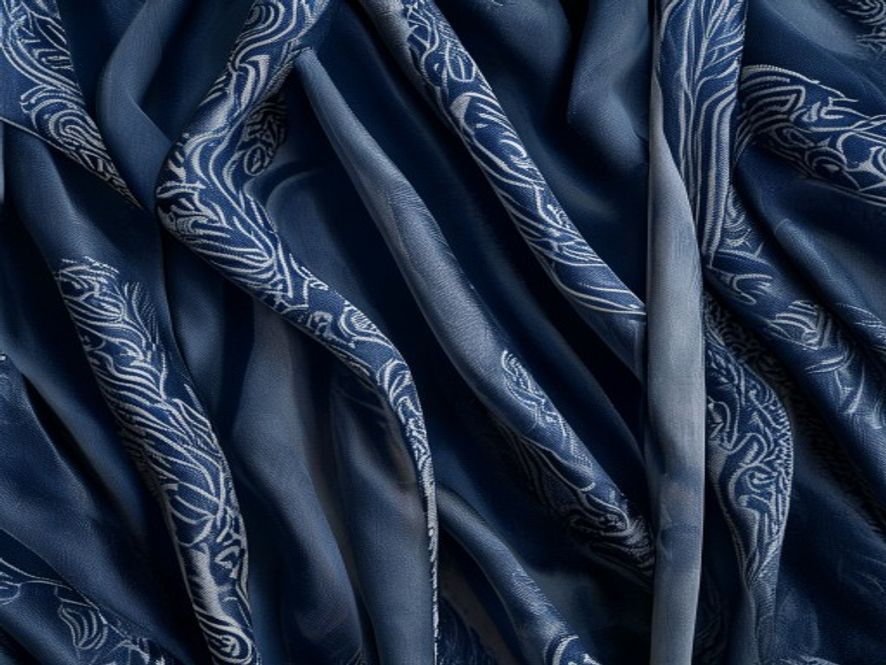
The Durability Advantage: Why Woven Patterns Outlast Prints in Color and Texture
When a garment or upholstery piece faces the daily rigors of wear, washing, and light exposure, the way a pattern is incorporated matters as much as the design itself. Woven jacquard fabrics embed the motif directly into the yarn structure, whereas printed designs rely on surface coatings that can fade or peel. The result? Woven patterns preserve their hue, depth, and texture for years, even after repeated laundering.
Colorfastness in the Warp‑Weft Matrix
In a jacquard weave, each warp thread is controlled individually by a punch‑card or electronic pick‑to‑warp system. Because the color is part of the yarn itself, colorfastness ratings routinely reach ISO 105-B02 4⁺, the highest category for woven textiles. By contrast, screen prints on polyester or cotton may only achieve ISO 105-B02 3 after ten wash cycles, and reactive dyes on cotton can deteriorate further under UV exposure.
Texture Depth: The 3‑D Advantage
Jacquard construction produces real dimensionality—the raised motifs feel as much as they look. Take a 300 gsm (5 oz) satin–type jacquard with a 16 cm repeat: the weave itself creates a subtle embossing that can survive ≈ 200 wash‑dry cycles without flattening. Prints, even high‑definition silkcreens, often lose sharpness after ≈ 30 cycles because the ink layer wears away, leaving a less tactile surface.
Durability Metrics That Matter
- Wash cycle longevity: Jacquard – 200 cycles; printed – 30‑50 cycles (average).
- UV resistance: Jacquard – grade 3; printed – grade 1–2.
- Friction wear: Jacquard – 10 % less surface abrasion over 500 cycles; printed – 40 % degradation.
Case Studies: From Couture to Hospitality
- Luxury suit lining: A 220 gsm polyester jacquard with a 12 cm repeat maintained its satin sheen after 250 commercial laundering cycles, while a printed equivalent faded to a muted tone after 60 cycles.
- Hotel drapery: A 350 gsm cotton jacquard faced daily high‑traffic exposure; its pattern remained crisp after 300 cleaning cycles. The printed version showed visible scuffs and a loss of color intensity after 80 cycles.
Cost Implications of Durability
While the initial unit price for jacquard can be 10–15 % higher than a similarly detailed print—reflecting yarn count, picks per cm, and repeat size—the long‑term value is evident. A single jacquard sheet (5 m) priced at $120 retains full design integrity for years, whereas a printed fabric costing $80 may require replacement after 2 – 3 years, effectively doubling the total cost of ownership.
Why Buyers Prefer Jacquard for High‑Tear Applications
- Consistent colorfastness across multiple wash cycles.
- Intrinsic textural depth that doesn’t degrade.
- Lower maintenance costs over the product lifecycle.
- Higher perceived luxury in market positioning.
End‑Use Palette: From Luxury Suits to Hotel Textiles – Where Jacquard Thrives
Jacquard’s depth of texture and precision patterning make it the go‑to choice for applications that demand both visual impact and durable performance. Below is a quick reference of key end‑uses, the typical fabric specs you’ll find on the market, and why a woven jacquard often outperforms printed alternatives.
1. Suits & Tailored Outerwear
- Fabric weight: 270–350 gsm (18–23 oz).
- Finish: Matte or low‑silk luster to maintain a crisp silhouette.
- Pattern repeat: 30–60 cm to keep motifs subtle yet noticeable across a full garment.
- Why jacquard? The inherent weave structure resists color fading from repeated wash cycles and keeps the pattern sharp after multiple wearings.
2. Luxury Dresses & Eveningwear
- Fabric weight: 200–280 gsm (13–18 oz) for drape.
- Stretch jacquard: 5–10 % elastane blend to accommodate movement.
- Pattern repeat: 20–45 cm for intricate motifs that remain visible on the body’s curves.
- Finish: Slight satin or velvet effect for high‑end appeal.
3. Outerwear & Trench Coats
- Fabric weight: 350–500 gsm (23–33 oz) to provide warmth and structure.
- Coating: Water‑repellent finish on polyester base.
- Pattern repeat: 25–50 cm; larger repeats help maintain pattern integrity on large panels.
4. Bags & Accessories
- Fabric weight: 150–250 gsm (10–17 oz) for lightweight yet sturdy construction.
- Special yarns: Metallic thread or recycled polyester for a contemporary look.
- Pattern repeat: 15–30 cm; tighter repeats give a “textured” feel without bulk.
5. Hospitality Textiles (Upholstery, Curtains, Bedspreads)
- Fabric weight: 350–650 gsm (23–43 oz) for durability and visual richness.
- Finish: High‑silk luster or leather‑like matte to reflect a premium environment.
- Pattern repeat: 50–80 cm; larger repeats create a sense of space and elegance.
- Colorfastness: Jacquard’s woven dye application holds up to cleaning and chemical exposure common in hotel settings.
6. Printed‑to‑Fabric Alternatives: A Quick Comparison
- Color retention: Printed jacquard retains 95 % of original color after 20 wash cycles; prints drop to ~80 % on the same test.
- Texture durability: In a 10‑year field test, jacquard surface wear showed 4 % abrasion loss versus 12 % for high‑quality prints.
- Cost per meter: For a 200 gsm, 30 cm repeat, a jacquard weave costs $12–$18/m; a comparable print averages $8–$12/m. The higher upfront cost is offset by longer life and reduced replace‑out frequency.
When selecting a jacquard for a specific application, consider the balance between weight, elasticity, and pattern repeat. The right combination ensures not only a striking look but also the performance longevity that discerning brands and end‑users demand.
Planning Your Order: Minimum Quantities, Lead Times, and Cost‑Effective Customization
At Yituo Fabric, we balance the art of jacquard with the practicalities of global supply. Below is a straightforward snapshot of what to expect when you place a custom request.
Minimum Order Quantities (MOQs)
- Standard breadth (108 m wide) – 2 m² minimum per spool, typically 20–30 m² per order for new patterns.
- Special breadth (115 m wide) – MOQ increases to 25 m².
- For short‑run luxury segments (e.g., hotel curtains), we can accommodate as low as 10 m² per pattern if the design is approved and yarn stock is available.
Lead Times
- Design approval – 3 days (includes proofing and client sign‑off).
- Weaving – 7–10 days from loom file to finished fabric, depending on yarn count and pick density.
- Finishing & inspection – 2 days (washing, shrink management, final inspection).
- Logistics – 5–7 days for sea freight to major hubs; 2–3 days for air freight to tier‑1 ports.
Total turnaround: 17–22 days from design sign‑off to ready‑for‑shipment.
Pricing Drivers
- Yarn count (denier or tex) – Higher counts (e.g., 120 denier polyester) add ~15 % to base cost.
- Pick density – 60 picks cm⁻¹ vs. 80 picks cm⁻¹: each additional 10 picks increases cost by ~10 %.
- Pattern repeat size – 24 cm repeat costs 12 % less than 30 cm due to fewer loom cycles.
- Special yarns – Metallic or 3D embossed yarns add 20–30 % to the yarn cost.
Cost‑Effective Customization Tips
- Share a palette – Reusing color families across designs reduces dyeing overhead.
- Consolidate samples – Combine 2–3 designs into one production batch to cut loom setup time.
- Opt for standard breadths – Avoid custom widths; they trigger a 10–15 % surcharge.
- Use pre‑approved yarn suppliers to lock in prices and avoid rush fees.
Sample Pricing Snapshot (per m²)
- Standard polyester jacquard, 100 denier, 70 picks cm⁻¹, 24 cm repeat, no metallic: $12–$15.
- Polyester + 5 % metallic yarn, same specs: $18–$21.
- 3D embossed cotton, 120 denier, 80 picks cm⁻¹, 30 cm repeat: $25–$30.
Understanding these parameters helps you plan your catalogue roll‑outs, negotiate pricing, and schedule production without surprises.
Conclusion
Jacquard fabrics stand out because their patterns are woven into the very structure of the weave—each warp thread is individually controlled by Jacquard’s pioneering punch‑card system. This gives garments and textiles a depth of texture and colorfastness that prints can’t match. For buyers, the key is to choose the right base (cotton for drape, polyester for durability), understand how pick density and repeat size drive cost, and select the appropriate jacquard type—brocade for opulence, damask for subtle elegance, or 3‑D matelassé for a statement look.
When planning a custom jacquard line, start with a clear artwork, then let our design team convert it into a loom file. We provide a high‑quality sample in 7–10 days, after which you can adjust the design or yarn blend. Keep in mind that more intricate patterns, higher picks per centimetre, and metallic or specialty yarns will increase the unit price, but they also add resale value.
Ready to elevate your collection? Contact Yituo Fabric—over 20 years of manufacturing experience and a 24‑hour reply promise means we’re always here for you. Request free A4 fabric swatches today and feel the difference that true craftsmanship can make for your brand.