
Imagine the chaos when your latest capsule collection hits the runway and the first batch of jackets arrives with a faint green tint that’s off by two shades, a weight that’s 12 % heavier than spec, and a wool blend that shrinks 8 % in wash. That’s the reality of 25 % of Chinese orders that slip past the quality gate because buyers skip the basics. This article will walk you through the seven most costly slip‑ups—why they happen, the hidden price tag, and a one‑liner fix that turns risk into certainty.
From ordering bulk without a lab dip or hand‑feel sample, to naming a color “Royal Blue” instead of a Pantone or swatch; from giving a GSM tolerance of ±5 % on a 400 gsm fleece, to ignoring shrinkage and colorfastness reports; from comparing prices per kilogram without checking the actual composition, to leaving lead time and penalty terms unsigned; and finally, skipping a third‑party inspection on your first order—each mistake can cost thousands in rework, returns, or brand damage. The fix for every pitfall is a single sentence: “Confirm, test, document, and verify.”
Use the quick‑reference checklist at the end to keep these safeguards in mind for every purchase: 1) Lab dip & hand‑feel sample approved; 2) Pantone/physical swatch for color; 3) Tight GSM tolerance (±1 %); 4) Shrinkage & colorfastness reports required; 5) Compare unit price after confirming composition; 6) Written lead time & penalty clauses; 7) Third‑party inspection before first delivery. Stay ahead of costly surprises with these one‑liner safeguards.

Ordering Bulk Without Lab Dips or Hand‑Feel Samples
Many buyers rush straight to the price sheet and overlook the basic step of approving lab dips and hand‑feel samples. It’s tempting—especially when the quotes look good—to skip the “trial run” and lock in a bulk order of 10 000 m² of fleece or 5 000 m² of jacquard. But the hidden costs can outweigh the savings.
Why the mistake happens
- Time pressure. A campaign launch or seasonal collection leaves little room for what seems like a “technical” step.
- Confidence in the supplier’s reputation. A long‑standing relationship can create a false sense of security.
- Misunderstanding of lab dips. Some buyers think the lab dip is only for color, not fabric performance.
Real cost of skipping samples
Here’s a quick snapshot of the typical damage:
- Unexpected GSM deviation. If a polyester knit is marked 300 gsm but the actual batch is 330 gsm, you’ll end up with heavier garments that exceed weight limits by 10 %. For a 5 000 m² order, that’s an extra 1 500 kg, raising shipping and production costs by roughly $2 500.
- Wrong hand‑feel. A 12‑oz cotton blend meant to feel “smooth” arrives with a rough surface and leads to a 15 % defect rate in sewing. For a batch of 2 000 pieces, that translates to about $3 000 in re‑work and waste.
- Color mismatch. A navy fabric that actually looks slate gray forces you to redesign graphics, adding another $1 200 in design fees.
- Supply chain delay. Detecting a defect after the fabric is shipped to the workshop can halt the entire line for 10–14 days, costing roughly $4 000 in idle labor and expedited shipping for replacements.
In total, a single overlooked lab dip can push the hidden cost of a bulk order into the five‑figure range.
One‑line fix
Always request lab dips + hand‑feel samples before committing to a minimum order quantity. Verify GSM, weight, color, texture and performance of the exact lot you’ll receive.
Practical checklist for the next bulk order
- Request lab dip for each color and fabric type.
- Ask for a hand‑feel sample from the same production line.
- Confirm GSM and weight tolerance (±2 %) in the purchase order.
- Set a deadline for sample approval (ideally 7–10 days).
- Include a clause in the contract that the final delivery must match the approved samples.
By treating lab dips and samples as non‑negotiable prerequisites, you protect your bottom line and keep your production schedule on track.
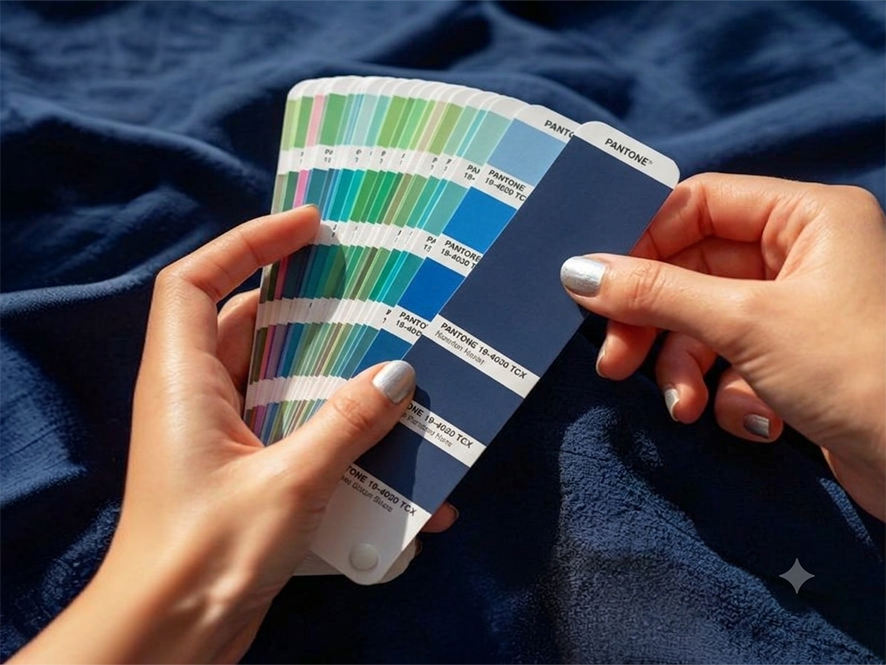
Using Pantone and Physical Swatches Instead of Naming Colours
When a buyer simply specifies “scarlet” or “forest green,” the Chinese supplier often interprets it through the lens of their own dye catalogues. Colour names are subjective, culture‑specific, and can vary between dye houses. The result? A batch that looks like a different shade to the buyer, leading to returns, re‑runs, and a mess of unsold inventory.
Why It Happens
- Time pressure. Rushed pitches often skip the step of sourcing a Pantone or physical swatch.
- Assumption of equivalence. Buyers think a name guarantees the same hue, not realizing that colorants differ across manufacturers.
- Communication gaps. Language barriers mean a colour described in Chinese may not match the English name the buyer expects.
The Real Cost
Imagine a 5,000‑kg run of 200 gsm polyester fabric. The buyer pays $3.20 per kg, totaling $16,000. If the colour is off by even one shade, the brand may reject 20 % of the batch:
- Rejected quantity: 1,000 kg
- Cost of rejected stock: $3,200
- Additional re‑run cost: supplier charges an extra $0.50 per kg for dyeing and quality control, adding $500
- Logistics & storage for returned stock: $300
- Total hidden loss: $4,000 (25% of the original order)
That’s a simple, single colour mistake adding a 25% hit to the budget—without touching the core product or lead time.
One‑Line Fix
Always supply a Pantone reference or a physical swatch that the supplier can match in the lab.
Practical Steps for Buyers
- Choose Pantone. Provide the Pantone code (e.g., P 2025‑C) and a digital image of the desired shade.
- Optional Send a swatch. A 10 cm × 10 cm piece from a current supplier or a prototype run is ideal.
- Ask the manufacturer to produce lab dips with the specified Pantone before committing to the full order.
- Get lab dip approval** in writing**—no “looks good” emails.
- Include a clause that compensates for any colour deviation beyond a 2 % ± hue tolerance.
Leaving GSM Tolerances Vague—±5% Is Too Wide
When a buyer specifies a fabric weight of 250 g/m² with a “±5 %” tolerance, the acceptable range opens to 237.5 g/m²–262.5 g/m². That 25 g/m² window can translate into a dozen practical headaches.
Why the 5 % Slip‑Through Happens
- It feels “flexible” for level‑1 negotiation.
- Buyers assume the manufacturer will always hit the target.
- Manufacturers push the limits to maximize yarn usage.
But every gram counts when you’re building a seasonal collection.
The Real Cost on the Bottom Line
Take a 10 k m³ order of a lightweight knit for a $150,000 collection. If the actual weight slips to 262.5 g/m² (5 % over), you’re producing 1 % more fabric than needed. For a 10 k m³ order that equates to $1,200 – $1,500 in excess material, plus the cost of re‑spinning or disposing the surplus. If the weight drops to 237.5 g/m² (5 % under), you’ll need to re‑order 1 % more fabric to meet the design specifications, pushing the purchase price by another $1,200 – $1,500 and delaying the launch.
Beyond the monetary hit, a 5 % variance can affect:
- Garment drape and fit—especially in structured suits or tailored jackets.
- Cost of secondary finishing (e.g., bleed‑in, shrinkage control).
- Supplier relationship confidence—frequent deviations erode trust.
Concrete Fix: Pinpoint the Tolerance
Replace the generic “±5 %” with a specific ±1 % GSM tolerance. That translates to a 247.5 g/m²–252.5 g/m² window for a 250 g/m² order—half the wiggle room, less material waste, and tighter lead‑time control.
- Align the tolerance with the design team’s fit requirements.
- Include a weight verification clause in the contract, stipulating that any deviation beyond the agreed tolerance requires a written credit or debit note.
- Set up a pre‑shipment weight audit—a quick lab measurement on a 100 m sample before full production.
By tightening the GSM tolerance, you turn a vague “good enough” into a concrete performance metric that protects both budget and brand integrity.
Skipping Shrinkage and Colour‑Fastness Test Reports
In the rush to lock in a price, many buyers overlook the necessity of shrinkage and colour‑fastness test reports. These documents, often provided by accredited labs, guard against hidden quality risks that can cost a brand thousands of dollars after the first production run.
Why the Oversight Occurs
1. Perceived Redundancy – A brand may assume that a supplier’s reputation alone guarantees performance. 2. Budget Constraints – Lab testing adds a nominal fee (~$200–$400 per sample set), and buyers may want to keep the order cost as low as possible. 3. Time Pressure – Shipping a quick sample for visual approval feels like a faster route to production.
Real Cost of Missing the Reports
- Shrinkage – A 12% shrinkage on a 200 gsm knitted fleece can translate into a 24 gsm loss, equating to an additional 2–3 % in fabric procurement cost. For a 10 kg order, that’s an extra $6–$9.
- Colour Fastness – A fabric that loses 30% of its hue after a single washing cycle may require re‑coloring, recollection, or even replacement. The cost of reworking a 1 kg batch of polyester lace can run $15–$25, not including lost production time.
- Returns & Warranty Claims – Even a 5% color shift in a 100 kg garment line can trigger return shipments, warranty payouts, and reputational damage. For premium brands, this can amount to $1,000–$2,000 in direct and indirect losses.
One‑Line Fixes
- Order a lab dip and test report for every new material before approving bulk purchase.
- Set a minimum shrinkage threshold (e.g., ≤5%) and a colour‑fastness rating (≥4 on a 5‑point scale) as hard requirements in the RFQ.
- Request the supplier to provide the test certificate alongside the sample shipment.
Practical Checklist for Buyers
- Confirm lab dip approval before placing bulk order.
- Verify shrinkage percentage meets your tolerance (≤5%).
- Check colour‑fastness rating (Wash, Light, Wear) is ≥4.
- Ensure the lab report is signed by an accredited lab.
- Store a digital copy in your procurement system for future reference.
Comparing Prices Per Kilogram Without Confirming Composition
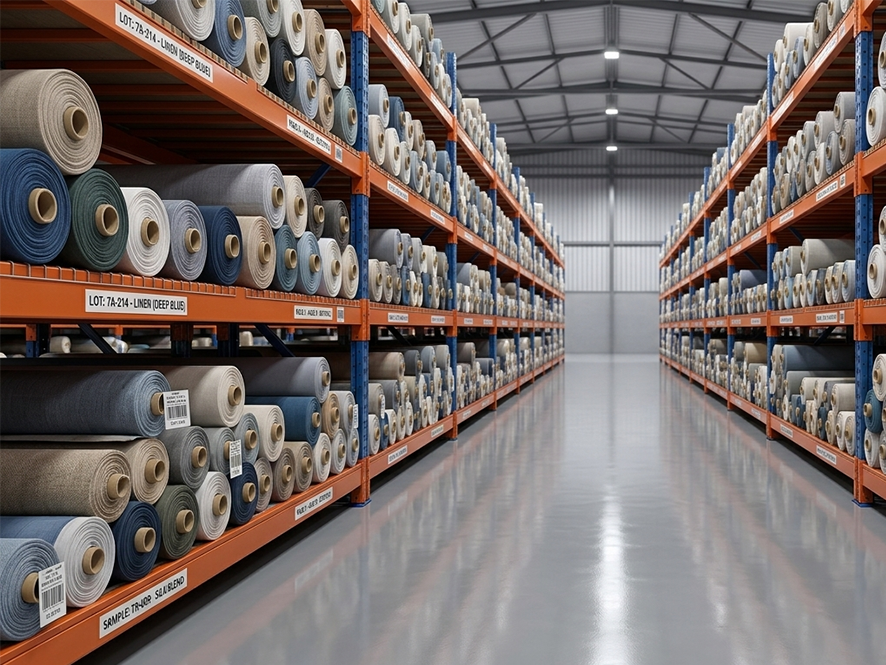
When you see a price tag of $4.50 per kilogram on a sheet of product data, it’s tempting to assume that’s the best deal you’ll get. In the textile trade, that assumption can backfire if you don’t verify what’s actually in the fabric. Composition—polyester, nylon, blends, additives—drives cost, durability, performance, and, ultimately, consumer acceptance.
Why buyers get fooled? The global fabric market is saturated with “high‑grade” labels that hide lower‑cost fibers behind a luxury veneer. Suppliers sometimes offer a price that looks competitive, but the actual material may be a lower‑grade polyester or a 70/30 nylon blend that doesn’t meet the application’s strength or wash‑fastness requirements. A small change in composition can shift the cost per kilogram by 10‑25%, which translates into thousands of dollars over a large order.
The real cost shows up in three ways:
- Higher Production Costs – A 70/30 nylon blend can require more energy to produce, raising your cost per kilogram by up to $0.60 compared with pure polyester.
- Warranty and Returns – Fabric that fails to meet promised tensile strength or abrasion resistance will be returned, adding $0.80 per kilogram in handling and rework fees.
- Brand Reputation – If the garment falls apart in just a few washes, the brand faces negative reviews and potential recall costs that dwarf the initial price difference.
How to avoid the trap:
- Ask for a material composition certificate. The document should list each fiber percentage, additives, and the test method used.
- Verify the certificate against the bill of materials. Cross‑check the stated GSM and weight per meter with the reported composition.
- Request a mill sample that matches the exact blend. Even a small batch—around 2–3 m of fabric—will show real‑world performance.
- Compare the cost per kilogram against known benchmarks. Pure polyester typically ranges $4.20–$4.80/kg; a 70/30 nylon blend can hit $5.50–$6.00/kg.
- Ask for a price adjustment clause. If the supplier can’t confirm the composition, reduce the unit price by 10% until proof is supplied.
Practical Numbers to Keep in Mind
Suppose you need 10 000 kg of fabric for a seasonal line. A mispriced blend at $5.80/kg instead of the expected $4.50/kg adds:
- Price differential per kilogram: $1.30
- Total over 10 000 kg: $13,000
Add the potential return cost ($0.80/kg) and you’re looking at an extra $8,000 in logistical overhead. In percentage terms, that’s a 25% blowout over your original budget. By confirming composition upfront, you keep that margin intact.
Securing Lead‑Time and Penalty Clauses in Your Contract
Many buyers slip past the moment to lock in a delivery window, assuming the manufacturer’s “quick turnaround” is a given. In practice, that assumption often translates into a 10–15% cost bump on the very next order when a delay slips through.
Why the Silence Happens
- Overconfidence – “We’ve worked together for two years; schedules will be fine.”
- Informal Communication – “Can you ship 10 000 m² in 30 days?” without a written clause.
- Complex Production Chains – “We’ll adjust the design, so timelines can shift.”
When the contract lacks a hard deadline, the supplier can push the finish date by 5–7 days. That delay may force you to source a backup from a different factory or rush shipping, costing you roughly $150–$250 per 10 000 m² plus the operational disruption.
Key Elements to Include
- Specific Lead‑Time – e.g., “Final delivery to port by May 15, 2026.”
- Penalty Clause – “For every day late, a penalty of $0.50 per meter of fabric.” This translates to $2,500 for a 5‑day delay on 10 000 m².
- Force Majeure Definitions – Clear exclusions for natural disasters, pandemics, and labor strikes.
- Escalation Procedure – Immediate written notice within 48 hours of a potential delay, followed by a 24‑hour response window.
- Delivery Confirmation – Signed bill of lading or electronic delivery receipt.
Illustrative Example:
Negotiated lead time: 28 days
Contracted penalty: $0.50/meter/day late
Fabric order: 10 000 m² (average GSM 210)
Potential delay: 7 days
Penalty cost: 10 000 m² × $0.50/m² × 7 days = $35 000
Even a single day’s slip can quickly snowball into a sizable hit against profit margins, especially when the margin per meter is slim (often $0.30–$0.50 for mid‑tier fleece).
One‑Line Fix
Include a written lead‑time and penalty clause before any payment or shipment is scheduled; treat it as non‑negotiable.
Skipping Third‑Party Inspection on First Order—A Costly Oversight
When launching a new fabric line, many buyers jump straight from the quotation to the payment, assuming the factory’s self‑certification is enough. In reality, the first batch often hides hidden defects that can blow up the bottom line after the product reaches the consumer.
The Hidden Risk
Factories pride themselves on quality, yet without an independent audit the buyer bears the risk of:
- Warped or uneven yarn distribution, causing 10–15% of the fabric to fall outside the specified GSM.
- Hidden contamination or foreign fibers that compromise colorfastness (≤ 70% lightfastness) and lead to costly returns.
- Inconsistent stitch density in knit fabrics, risking 20% excess shrinkage during washing.
These issues translate into direct and indirect costs: rework or disposal fees, shipping delays, damaged brand reputation, and the administrative burden of recalling garments.
Real‑World Cost Example
Consider a buyer ordering 500 m² of 200 gsm polyester fleece (≈ 5 kg per 100 m²). A 15% GSM variance inflates the bill by 75 kg, adding approximately $1,200 to the invoice. Add an unforeseen 10% colorfastness failure rate: the buyer must either source an alternative batch (extra $2,500 in expedited shipping) or absorb a 25% retail loss.
One‑Line Fix
Mandate an independent third‑party inspection before the first shipment.
Implementation Steps
- Choose a reputable inspector. For example, Intertek or SGS provide tailored fabric audits.
- Define the audit scope. Include GSM, color consistency, fiber composition, shrinkage, and colorfastness tests (ISO 105-2). Set a strict tolerance: ±3 % GSM, ≥80% lightfastness.
- Schedule the visit. Coordinate with the factory’s production calendar; a pre‑production audit typically takes 1–2 days.
- Review the report. The inspector delivers a signed certificate and a Non‑Conformance Report (NCR) if deviations exceed tolerance.
- Negotiate corrective actions. Use the NCR to negotiate rework or discounts.
By integrating this step, buyers convert a risky assumption into a measurable standard. The upfront cost of a third‑party audit—usually $300–$500 per site—far outweighs potential post‑delivery losses.
Conclusion: Turning Mistakes Into Mastery
When sourcing from China, a single slip can ripple into costly overruns, delayed launches, and brand damage. The seven pitfalls we uncovered all share a common thread: they stem from rushed decisions or assumptions that skip the essential “ground truth” of fabric quality. Each mistake has a clear, one-line fix—an actionable rule that can be added to your procurement playbook before you hit the “Place Order” button. By consistently applying these fixes, you shift from reactive problem‑solving to proactive risk mitigation, saving time, money, and reputational capital.
Here’s the quick‑reference checklist you can keep in your shared drive or print for your sourcing team:
• Approve lab dips and hand‑feel samples before bulk.
• Quote Pantone or supply a physical swatch, not just a name.
• Specify weight with strict tolerances (e.g., 350 ± 3 g/m²).
• Require shrinkage and colorfastness reports.
• Verify full composition—cheap weight doesn’t equal cheap material.
• Secure written lead‑time and penalty clauses.
• Engage a third‑party inspection for the first order.
Follow this routine, and you’ll transform sourcing from a gamble into a controlled, data‑driven process.
Ready to put these lessons into practice? With over 20 years of experience and a 24‑hour reply promise, Yituo Fabric is eager to share our expertise. Request free A4 fabric swatches today and step into a partnership that values precision as much as you do.