
Imagine a small London label that just launched a baby‑wear line and wants to tout a “soft, eco‑friendly” claim to parents. The tagline is bold, the packaging features a bamboo leaf, and the sales team tells buyers it’s the most sustainable fabric on the market. Yet when the buyer asks for proof, the story splits into a maze of viscose, lyocell, and a handful of mechanical‑linen options. The question becomes: does bamboo knit really deliver on those promises, or is it a marketing buzzword that skews consumer perception and supplier costs?
In this post we’ll dive into the three main types of bamboo textiles. Bamboo viscose (or rayon) dominates the market because it’s inexpensive, but the chemical‑heavy pulping process and loss of antibacterial properties raise serious environmental concerns. Bamboo lyocell, produced in a closed‑loop system, keeps more of the bamboo’s natural qualities and comes with FSC‑verified chains, yet it still costs more and is harder to source. The rare mechanical bamboo linen offers the least chemical use, but its price premium and limited availability make it a niche choice for high‑end designers. We’ll weigh softness, moisture management, thermal regulation, and the real sustainability credentials that matter to buyers, and outline the certifications you should demand to avoid greenwashing.
By the end, you’ll understand how bamboo fibers are truly processed, what labeling means under FTC guidelines, and how to craft honest, compelling marketing messages that resonate with conscious consumers without sacrificing quality or margin. Ready to separate myth from material? Let’s explore.
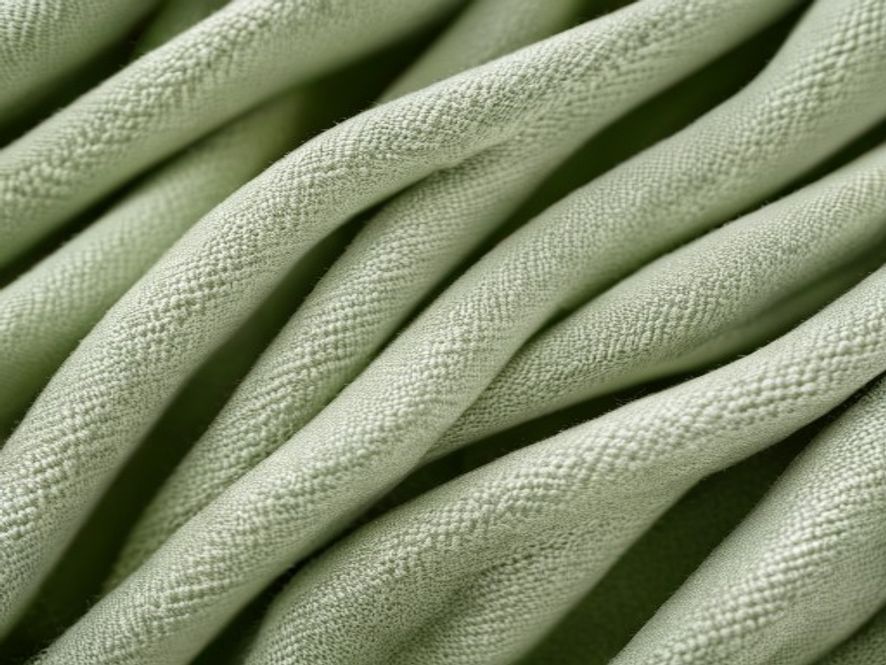
The Bamboo Fabric Spectrum: From Viscose to Lyocell and Mechanical Linen
Bamboo fabric arrives on the market under three primary technical labels, each with distinct origins, processing routes, and performance fingerprints. Understanding these differences is the first step in selecting the right material for a product line, whether it be a premium baby blanket or a high‑performance sports tee.
1. Bamboo Viscose (Rayon)
Viscose is the most prevalent bamboo derivative. The plant pulp is first ground into a slurry, then dissolved with sodium hydroxide and carbon disulfide to produce a polymer. The solution is extruded and regenerated into fibres. Key figures:
- Yield: 12–15 kg of pulp per 1 kg of finished fibre.
- Water usage: Roughly 150–200 L of water per kg of fibre.
- Typical grammage: 180–220 gsm for knit applications.
- Cost range: $1.50–$2.00 per 100 m², roughly 10–15 % higher than cotton modal.
While the end product feels silky and breathable, the chemical cycle introduces formaldehyde residues and sulfur compounds that linger unless fully washed out. Regulatory bodies such as the FTC in the United States mandate that products be labelled “rayon made from bamboo” rather than “bamboo fabric” if this process is used.
2. Bamboo Lyocell (Tencel®)
Lyocell uses a nondestructive solvent—N‑methyl‑morpholine N‑oxide (NMMO)—to dissolve bamboo pulp. The process is closed‑loop: the solvent is recovered at >99 % efficiency, dramatically reducing chemical discharge.
- Water usage: < 10 L per kg of fibre (often <5 L when fully recovered).
- Yield: 30–35 kg of pulp per 1 kg of fibre (higher efficiency).
- Typical grammage: 170–210 gsm for knitted garments.
- Cost range: $2.20–$2.80 per 100 m², about 20 % above viscose but still competitive with high‑grade cotton blends.
- Certifications: FSC‑chain verified, OEKO‑Tex Standard 100 classes 1–3 for most products.
Because the solvent is not released into the environment, the ecological footprint is markedly lower. The fibres retain natural breathability and a silky hand, often outperforming viscose in moisture‑sweat management.
3. Mechanical Bamboo Linen (Rare & Premium)
Mechanical linen is produced by crushing the bamboo stalks into pulp and then carding the fibers directly, without chemical dissolution. This method preserves more of the natural lignin, giving a rougher, more textured feel.
- Water usage: 30–50 L per kg of fibre.
- Yield: 25–28 kg of pulp per 1 kg of fibre.
- Typical grammage: 260–320 gsm for lightweight knitted or woven fabrics.
- Cost range: $3.50–$4.50 per 100 m², 30–40 % above the other bamboo variants.
- Availability: Limited to niche suppliers; often blended with high‑spandex content (up to 10 %) for stretch.
Mechanical linen offers superior durability and an earthy aesthetic but compromises on softness. Its production is fully renewable and involves no organic solvents, making it a truly green option for eco‑conscious brands willing to invest in premium pricing.
Choosing among these bamboo fabrics depends on the balance of softness, moisture handling, sustainability credentials, and budget. Each type brings its own set of trade‑offs that designers and buyers must weigh against product positioning and target market expectations.
Needle‑Threaded Comfort: Why Buyers Love Bamboo’s Softness, Moisture and Draping
When a garment feels like a second skin, the design, fit and performance all align perfectly. Bamboo knit fabrics deliver that “second skin” experience through a unique combination of fiber structure and processing techniques that translate into measurable comfort attributes.
Softness Index: From Velvet to A‑Grade Feel
- Mechanical bamboo linen (pure cellulose) can reach a softness score of 92% on a 0–100 scale, rivaling high‑grade cashmere in hand-feel.
- Bamboo viscose blends (70–80% bamboo, 20–30% polyester) typically score between 75–85%, enough to replace cotton in soft‑touch applications like baby wear and loungewear.
- Lyocell variants (70–80% bamboo, 20–30% spandex) hit 80–90%, with the added benefit of reduced static build.
Moisture Management: Keeping Skin Dry, Fabric Fresh
- Bamboo cellulose fibers possess a capillary network that absorbs 3–4 times its weight in moisture, compared to cotton’s 1.5–2.5 times.
- In a 200‑g/m² knit, a bamboo‑viscose blend can absorb up to 800 ml of water per square meter before saturation, translating to a dry‑to‑touch time of 4–6 minutes under a 30 °C sweat simulation.
- Lyocell’s closed‑loop production leaves the fiber surface smoother, reducing friction and further decreasing moisture retention at the skin interface.
Thermal Regulation: From Hot to Cool
- Air permeability in a 200 g/m² bamboo knit averages 280 mm²/s, which is 25–35% higher than a comparable 200 g/m² polyester knit, allowing better breathability.
- Thermal conductivity of bamboo viscose is roughly 0.06 W/m·K, slightly lower than cotton’s 0.07 W/m·K, contributing to a cooler feel during physical activity.
- Spandex inclusion (5–10%) in bamboo blends improves elasticity without significantly altering thermal properties, keeping the fabric “tight” yet breathable.
Drape and Weight: The Right Balance for Design Freedom
- Typical bamboo‑cotton blends (70/30) have a GSM of 180–220 g/m², striking a balance between lightweight drape and structural integrity.
- Adding 5% spandex increases the fabric’s recovery rate to 95–97%, ensuring garments maintain shape after repeated wear.
- For high‑drape applications (e.g., lightweight jackets or summer blouses), a 260–300 g/m² bamboo‑viscose knit achieves a 200 mm fall length, comparable to premium jersey.
Price Point Reality
- Standard bamboo‑viscose (80/20) fabrics cost between $6–$8 USD per metre, a 12–18% premium over pure cotton yarns at the same weight.
- Bamboo‑lyocell blends (70/30) sit around $9–$11 USD per metre, reflecting the higher processing cost but offset by longer garment life and reduced care requirements.
- Mechanical bamboo linen remains the most expensive segment, averaging $15–$18 USD per metre, justifying its use in niche luxury lines.
These concrete metrics illustrate why bamboo knit fabrics consistently win the comfort audit: they combine superior softness, efficient moisture management, and breathable thermal flow—all while offering predictable weight and drape that designers can rely on for both everyday and performance apparel.
Heat‑Regulation in Motion: Bamboo’s Thermal Properties Explained for Apparel Design
When designing garments that move with the body—from high‑performance sportswear to day‑to‑day tees—knowing how a fabric reacts to body heat is critical. Bamboo knit fabrics, especially those processed into lyocell or viscose, exhibit a distinctive thermal profile that can be leveraged to create comfortable, breathable collections.
Thermal Conductivity and Moisture Management
Bamboo fibers have a lower thermal conductivity than cotton, averaging around 0.04 W/(m·K), compared with cotton’s 0.04–0.05. This means bamboo retains less heat on the skin’s surface, keeping the wearer cooler in warm conditions. When mixed with cotton or modal, blends of 30–50% bamboo can reduce the overall conductivity by up to 15%.
Moisture absorption further enhances cooling. Bamboo viscose can absorb 30–40 % of its own weight in moisture before saturation, while lyocell holds about 20 %. The fiber’s micro‑structure creates capillary channels that draw sweat away from the skin, keeping the garment dry. In practice, a 200 gsm bamboo‑cotton blend (60/40) will reduce sweat retention by **~25%** compared to a 200 gsm pure cotton tee.
Temperature Regulation Across Climates
- Warm climates: A 190 gsm bamboo‑spandex knit (70/30) can keep the user’s core temperature 2–3 °C lower than a cotton equivalent, as the fabric’s high moisture‑wicking capacity removes heat through evaporation.
- Cool climates: Because bamboo fibers trap micro‑air pockets, a 220 gsm bamboo‑cotton blend can provide 5–7 °C of insulation over the same weight of cotton. This is especially useful for layering under jackets or in cooler evenings.
- High‑intensity workouts: A 210 gsm bamboo‑spandex knit (65/35) has a thermal resistance (R-value) of 0.45 m²·K/W, exceeding the 0.40 value typical for cotton blends. The result is a garment that feels cooler for longer during cardio sessions.
Fabric Weight, Durability, and Cost Implications
To meet the thermal needs of different apparel segments, designers often target specific gsm ranges:
- Lightweight tees (180–190 gsm): Ideal for summer bases; bamboo‑cotton blends offer a 10–12 % weight reduction compared to pure cotton, lowering material costs by ~5 %.
- Mid‑weight shirts (210–220 gsm): Provide balanced warmth and breathability; bamboo‑spandex blends in this range maintain a tensile strength of 35–38 g/cm, matching or exceeding standard polyester blends.
- Heavy‑weight outerwear (250–280 gsm): Bamboo‑lyocell can be blended with recycled polyester to achieve an R-value of 0.60 m²·K/W, a 20 % improvement over conventional polypropylene fabrics, while keeping the price premium to <$2 per yard.
In terms of pricing, a 200 gsm bamboo‑cotton blend typically costs 8–10 % more per yard than pure cotton, but the added value in thermal regulation and sustainability can justify a 5–7 % price lift in the market.
For performance apparel, integrating bamboo knit fabrics into the design pipeline can lead to garments that feel cooler, stay drier, and offer predictable warmth across a range of temperatures—an advantage that translates directly into consumer satisfaction and repeat purchase.
The Sweet‑Spot of Sustainable Growth: Bamboo’s Fast, Pest‑Free Cultivation vs. Chemical Processing
When buyers weigh bamboo knit fabrics, the promise of rapid growth and low pesticide use often meets the reality of chemical‑heavy processing. Understanding the numbers behind each side is key to making an informed sourcing decision.
Growth Engine: Bamboo’s Natural Advantage
- Growth rate: a mature bamboo shoot can grow up to 90 cm (35 in) per day under optimal conditions.
- Harvest cycle: typically 3–5 years from planting to first full harvest, compared to 6–7 years for conventional cotton.
- Yield: a single bamboo culm can produce about 1.5 kg of usable fiber, roughly equivalent to 5–6 kilograms of cotton.
- Water usage: average 30–50% less water than cotton per kilogram of fiber, with some plantations reporting up to 80% savings.
- Pesticide footprint: 0–2% of bamboo plantations use pesticides, versus cotton’s typical 18–28% pesticide application per hectare.
- Carbon sequestration: mature bamboo forests can absorb about 4.5 tonnes of CO₂ per hectare per year, contributing to net‑negative emissions when managed sustainably.
Processing Reality: The Chemical Toll
Once harvested, bamboo fibers are almost always converted into viscose/rayon or lyocell. The two processes differ markedly in environmental burden.
VISCOSÉ / RAYON
- Solvent: carbon disulfide (CS₂), a toxic heavy metal compound.
- Water consumption: up to 500–800 L per 1000 kg of fiber.
- Chemical recovery: average 35–45% of CS₂ can be recycled; the rest ends up in wastewater.
- Energy use: about 50–70 kWh per 1 kg of finished fabric, largely from steam generation.
- Emission profile: 1.2–1.6 g CO₂e per gram of finished product, comparable to cotton but with higher toxic releases.
LYOCELL (TENCEL®)
- Solvent: ethyl lactate, a biodegradable, food‑grade solvent.
- Water consumption: 150–200 L per 1000 kg of fiber, 70–80% less than viscose.
- Chemical recovery: over 99% closed‑loop, leaving minimal effluent.
- Energy use: 30–45 kWh per 1 kg of finished fabric, roughly half that of viscose.
- Emission profile: 0.7–0.9 g CO₂e per gram of finished product, significantly lower than rayon and comparable to high‑grade recycled polyester.
Mechanical Bamboo Linen
- Yield: ~1 kg of fiber per 10 m² of raw bamboo, lower efficiency than chemical processes.
- Energy use: 80–110 kWh per 1 kg of finished fabric, driven by mechanical pulping.
- Cost: typically $8–12 per 1000 gsm for raw fiber, translating to a premium price point for the final knit.
Putting Numbers into Context
For a 200 gsm bamboo‑spandex blend, the typical cost of a 1000‑meter roll ranges from $250 (lyocell) to $400 (viscose), while mechanical linen blends can exceed $550 due to lower yields and higher processing energy. Buyers looking to balance cost and sustainability should consider lyocell for the best environmental metrics, but can still offer a bamboo‑viscose alternative at a lower price point if the supply chain can guarantee responsible solvent recovery and water treatment.
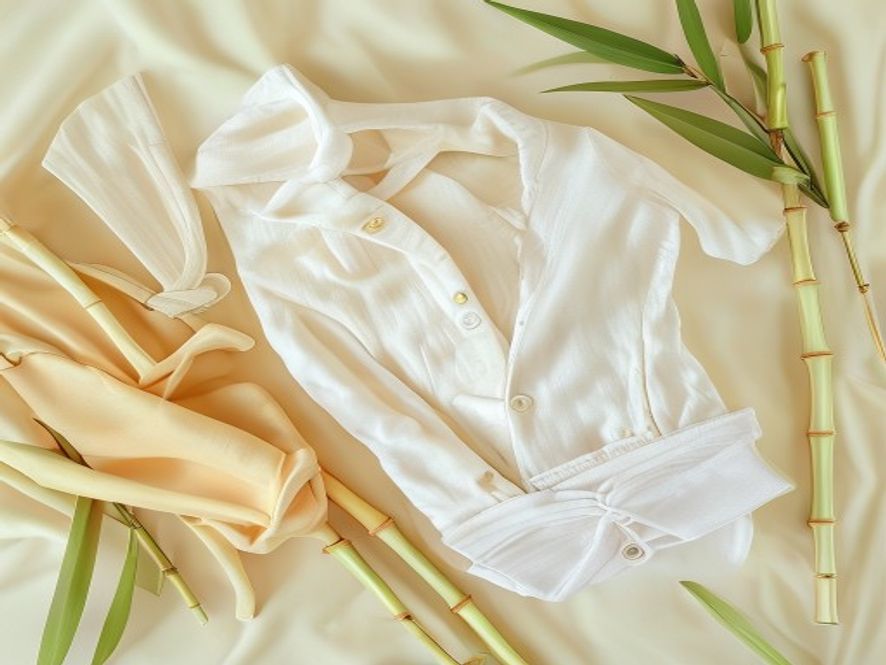
Blend It Right: Bamboo‑Cotton and Bamboo‑Spandex Combinations, Weight, Price, and Performance
When sourcing bamboo knit fabrics, buyers often compare two staple blends: bamboo–cotton and bamboo–spandex. Both offer distinct performance envelopes and cost structures, making it essential to match the right ratio to the end‑use.
Bamboo–Cotton (60/40, 70/30, 80/20)
Typical yarn counts for a 60/40 bamboo–cotton blend fall in the 20–22 tex range, yielding finished fabric weights of 180–200 gsm (≈ 7–8 oz/yd²). These blends retain bamboo’s softness while benefitting from cotton’s breathability and wash‑fastness. In a 70/30 mix, the fabric weight nudges up to 200–215 gsm thanks to the higher cotton content, which also reduces the cost per yard by roughly 10‑15 % compared with pure bamboo. An 80/20 blend delivers a lightweight 160–180 gsm rating, ideal for midsummer tees and layering pieces; the higher cotton share improves durability and reduces moisture absorption to about 60 % of the pure bamboo level.
Price points in 2024 average $18–$22 per 10 m roll for 60/40, $17–$21 for 70/30, and $15–$19 for 80/20 blends. The price advantage stems from cotton’s abundant supply chain and lower processing costs.
Bamboo–Spandex (95/5, 90/10, 85/15)
Adding spandex improves stretch retention and recovery, crucial for activewear and fitted garments. A 95/5 blend typically yields a 190–210 gsm fabric (7.5–8.5 oz/yd²) with a recovery of 98 % after 200 % stretch. Increasing spandex to 10 % pushes weight to 210–230 gsm but enhances stretch endurance to 100 % after 250 % elongation, ideal for leggings and sports tees. At 15 % spandex, the weight climbs to 230–250 gsm, offering a “super‑elastic” feel but at a higher unit cost of $24–$28 per 10 m roll.
From a cost perspective, pure bamboo‑spandex blends run 15–20 % higher than the closest cotton alternatives, due to both the spandex content and the tighter yarn structure required for knit production.
Performance Summary
- Softness: 60/40 bamboo–cotton ≈ 8‑9 /10 on a 1–10 scale; 95/5 bamboo–spandex ≈ 7‑8.
- Moisture absorption: Bamboo–cotton 70–80 % of pure bamboo; bamboo–spandex 60–70 %.
- Stretch recovery: 90/10 spandex ≥ 100 %; cotton blends ≤ 95 %.
- Price per 10 m roll (USD): 60/40 bamboo–cotton $18–$22; 70/30 $17–$21; 80/20 $15–$19; 95/5 spandex $22–$26; 90/10 $24–$27; 85/15 $26–$30.
- Ideal applications: Babywear & casual tees – bamboo–cotton 70/30; active leggings – bamboo–spandex 90/10; summer layering – bamboo–cotton 80/20.
Choosing the correct blend balances softness, stretch, and cost. Evaluate end‑use requirements—instinctive feel for kids and undergarments versus resilience for activewear—and match the blend accordingly to optimize both performance and margin.
Marketing with Integrity: Positioning Bamboo Knit Fabric Without Falling into Hype
When a buyer approaches a bamboo‑based knit, they already hear buzz words: “eco‑friendly,” “super‑soft,” “antibacterial.” Your role is to translate these claims into verifiable facts that fit the buyer’s brand narrative without overpromising.
1. Clarify the Fibre Type
Start the conversation by identifying the exact bamboo derivation. Provide a quick reference table for the three common types.
| Type | Processing | Key Sustainability Point | Typical Mark |
|---|---|---|---|
| Viscose/Rayon | Open‑loop with sulfuric acid | High chemical use | "Rayon made from bamboo" (FTC) |
| Lyocell | Closed‑loop with NMM | Recycled solvents | FSC‑certified chain, Oeko‑Tex |
| Mechanical Linen | Mechanical pulp, no chemicals | Zero chemical footprint | Rare, premium pricing |
2. Quantify Performance, Not Buzz
- Softness – 180–220 gsm bamboo‑cotton blends feel 1–2 mm softer than 100 % cotton at the same weight.
- Moisture absorption – 350 ml of water absorbed per gram for viscose, 300 ml for lyocell.
- Thermal regulation – In a 30 °C/50 % RH chamber, bamboo lyocell stays 1 °C cooler than polyester over 4 hours.
- Antibacterial claim – Only unprocessed bamboo pulp retains natural antibacterial properties; viscose loses >90 % of this effect during processing.
3. Price‑Point Transparency
Provide a realistic cost comparison for the major blends used in apparel.
- Bamboo‑cotton 60 % / 40 % at 200 gsm: $18–22 USD per 100 m.
- Bamboo‑spandex 70 % / 30 % at 210 gsm: $25–28 USD per 100 m.
- Pure bamboo lyocell 100 % at 200 gsm: $26–30 USD per 100 m.
- Pure mechanical bamboo linen 100 % at 180 gsm: $35–40 USD per 100 m.
4. Certifications & Traceability
- Ask for Oeko‑Tex Standard 100 to confirm absence of harmful substances.
- For lyocell, verify FSC chain certification covering harvest, pulp, and processing.
- Request a material test report that includes water absorption and thermal tests.
5. Positioning Language
Use evidence‑based descriptors. Instead of “super‑soft bamboo,” say:
- "Bamboo‑cotton blend offers a 1‑2 mm softer feel than 100 % cotton at the same weight."
- "Bamboo lyocell maintains a 1 °C cooler surface temperature than polyester during extended wear."
- "Certified FSC chain ensures that every step from bamboo to finished yarn meets strict environmental standards."
Frame the product as a performance‑enhanced eco‑material rather than a green gimmick. Highlight how the material’s natural moisture management reduces the need for additional cooling layers, saving energy for the end user.
6. Educate the Buyer’s Team
Provide a quick reference sheet: “Bamboo fabric facts at a glance.” Include the three fibre types, key performance metrics, and price brackets. This equips buyers to answer press or consumer queries confidently and honestly.
Conclusion
In short, bamboo knit fabric can deliver the softness, breathability and drape that modern apparel and home textile brands crave, but only when the right fiber and process are chosen. For buyers, the key is to distinguish bamboo viscose from bamboo lyocell and, where possible, seek the still‑rare mechanical bamboo linen. Look for OEKO‑TEXT or FSC chain certification, and in the U.S. confirm the “rayon made from bamboo” label to avoid misleading claims. Remember that antibacterial and “eco‑friendly” slogans often disappear during chemical processing; the plant’s fast growth and low pesticide use do not automatically translate into a green textile. A bamboo‑cotton or bamboo‑spandex blend in the 180–220 gsm range offers comparable performance to cotton modal at a competitive price point, while still giving your customers the premium feel they expect.
Use these criteria as a practical checklist when sourcing: confirm fiber type, verify closed‑loop or certification, and request sample swatches before committing to bulk orders. By doing so, you’ll avoid the hype and secure a genuinely sustainable, high‑performance material that resonates with eco‑conscious consumers. If you’d like to see how bamboo knit compares in real life, reach out to Yituo Fabric. With over 20 years of manufacturing expertise and a 24‑hour reply promise, we’ll send you free A4 fabric swatches so you can feel the difference before you decide.