
Picture yourself on the brink of a $10 million order for a fall line when the spec sheet you receive looks nothing like the glossy brochures of last year. A single misread line—say, “polyester 98%” versus “polyester 100%” with a ±2% tolerance—could push weight, cost, and shrinkage outside acceptable ranges, forcing a redesign and delaying shipment. That’s where the skill of reading a spec sheet becomes a buyer’s secret weapon. This article will walk you through every line from composition to packing, decode the jargon, and point out the red flags that can save you time, money, and a perfect fit.
We’ll dissect a real‑world spec sheet: a 120 mm wide fleece with 350 g/m² GSM, 100% polyester (±1%), 2×2 twill knit, brushed finish, anti‑pill rating 4/5, and a 5% shrink tolerance. We’ll explain why a ±5% GSM tolerance matters on a 10‑ton order, how width influences cut‑and‑sew cost, what yarn count and denier reveal about hand feel, and how colorfastness ratings on the 1–5 grey scale translate to retail performance. Along the way we’ll flag missing test standards, vague “good quality” claims, and absent tolerances that could trip up even seasoned buyers.

Decoding the Composition Line: From “100 % Polyester” to Blend Tolerances
When a spec sheet lists “100 % Polyester”, it’s straightforward: every gram of the yarn comes from polyamide fibers. However, the real nuance lies in how much leeway the manufacturer gives you and what that means for cost, performance, and compliance.
Understanding Blend Labels
Blend labels such as “Polyester / Nylon (80 % / 20 %)” tell you two things: the dominant fiber and the secondary. The secondary often provides specific attributes—nylon adds abrasion resistance, while cotton can improve breathability.
- Percentages are weight‑based. A 20 % nylon blend will weigh 20 g per 100 g of finished fabric.
- Small shifts in blend can affect cost per yard. For example, replacing 5 % nylon with polyester typically drops unit cost by roughly $0.02/yd on a 10‑ton order.
- Blends also influence performance claims. A 70 % polyester / 30 % spandex blend will typically register a 30 % stretch rating, impacting fit and durability.
Tolerances: Why ±5 % Matters
Manufacturers usually quote a tolerance range for each component. If the spec states “Polyester (95 % ± 5 %)”, the actual content can vary between 90 % and 100 %. On a 10‑ton (10,000 kg) order:
- 90 % polyester = 9,000 kg of polyester.
- 100 % polyester = 10,000 kg of polyester.
- The difference of 1,000 kg can translate to a cost swing of around $1,500–$2,000, depending on fiber market prices.
Moreover, tariff classification can shift if the actual composition deviates beyond the tolerance. A spec that lists “Polyester (90 % ± 5 %)” but delivers 96 % polyester may inadvertently move the fabric into a higher HS code, exposing you to increased duties.
Real‑World Example
Consider a spec for a fleece lining:
Composition: Polyester (85 % ± 3 %) / Polyurethane (15 % ± 3 %)
Colorfastness (ISO 105-C06): 4/5
GSM: 280 ± 10
Lead Time: 45 days
In practice:
- With 3 % tolerance, the polyester could be as low as 82 % or as high as 88 %. On a 12‑ton order, that’s a variance of 360 kg.
- Since polyurethane is a specialty coating, its price is roughly $3.50/ton. A 3 % shift could raise or lower the coating cost by $12–$15, affecting the final garment price.
- The 280 g/m² GSM with ±10 g/m² tolerance means you might end up with 270 g/m², which could reduce the insulation performance by up to 10 %.
Practical Tips for Buyers
- Always confirm the exact % tolerance for each fiber. If it’s not specified, request a written clarification.
- Request certified test reports (e.g., ISO 105-C06 for colorfastness) to verify claims.
- In negotiations, use the tolerance range to calculate a price buffer. For example, if the base cost is $10.00 per yard, a ±5 % fiber variance could justify a ±$0.50 adjustment.
- When ordering large volumes, factor in potential penalty costs for non‑compliance with blend specifications—often a flat fee of $0.20/yd per 0.1 % deviation.
GSM and Thickness: How ±5 % Tolerance Affects Price, Performance, and Order Size
When a mill lists a fabric at 250 gsm with a ±5 % tolerance, it means the actual weight can range from 237.5 gsm to 262.5 gsm. That seemingly small band can ripple through every part of the supply chain.
Cost Impact
- Assuming a price of $5.00 per 10 m² at 250 gsm, a 5 % lower weight (237.5 gsm) drops the cost to $4.75 per 10 m².
- Conversely, a 5 % higher weight (262.5 gsm) pushes the cost to $5.25 per 10 m².
- For a 10‑ton order (≈39,000 m²), the price swing is $4,725 in favor of lighter fabric or $5,225 if heavier.
Performance Consequences
Thickness directly influences drape, hand feel, and durability.
- Lower GSM (≈237 gsm): Softer drape, lighter garments, but increased susceptibility to pilling and reduced abrasion resistance.
- Higher GSM (≈263 gsm): Rigid construction, better protection against wear, but heavier garments that may be uncomfortable in hot climates.
In a 70 % polyester / 30 % cotton blend where the cotton fibers provide bulk, a 5 % weight increase can raise the product’s bulk index by 4 %, altering the final shape of a fitted coat.
Order Size and Cutting Efficiency
The weight tolerance also affects how much usable fabric fits into a roll.
- A 20 m wide roll at 250 gsm yields 8,000 kg of usable fabric. If the actual GSM is 237.5 gsm, the roll weighs 7,600 kg, giving 200 kg less fabric per roll.
- When cutting garment panels, a lighter fabric may require more seams to achieve the same structural integrity, slightly increasing labor time.
- For designers who rely on exact cut lengths (e.g., a 2‑meter sleeve), a 5 % weight variance can translate to a 10 cm difference in panel weight, affecting the garment’s overall balance.
Lead Time Considerations
Manufacturers often adjust production plans when a spec sheet lists a ±5 % tolerance. If the tolerance leans toward heavier weights, the mill may need to allocate an extra 2–3 days to ensure yarn tension and dye consistency.
- Lightweight runs may reduce dye bath time, cutting 1–2 days off the lead time but requiring tighter yarn handling to avoid breakage.
- Heavier runs increase dye bath volume, extending the process by 2–3 days and potentially pushing the ETA beyond the quoted 30–45 days.
Practical Takeaway
When negotiating, ask the mill for a spec sheet with explicit tolerance margins and confirm the cost differential per unit weight. This transparency turns a ±5 % GSM range from a vague risk into a calculable variable that can be factored into your pricing, design, and inventory decisions.
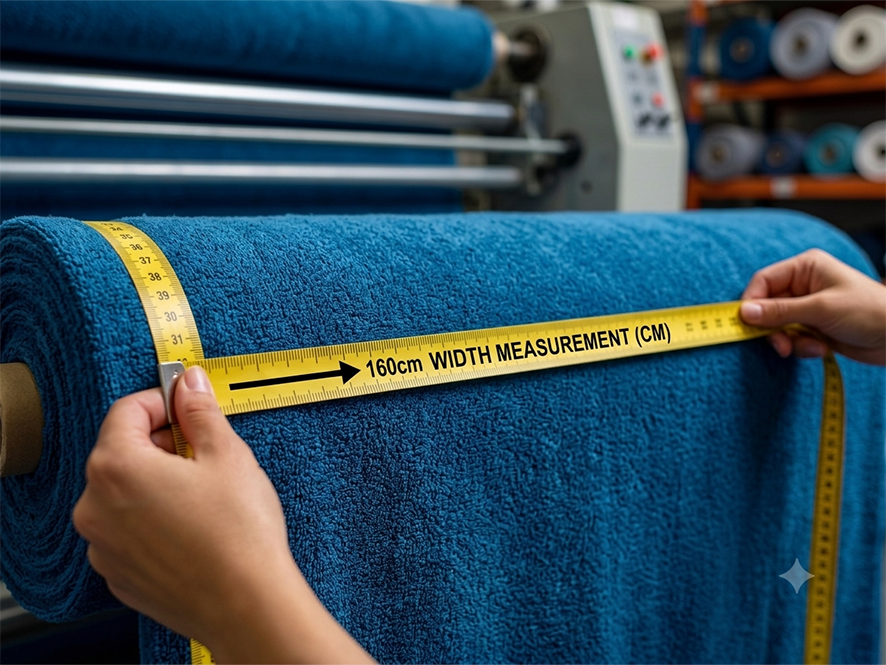
Width Matters: Usable vs Cuttable Width, Roll Length, and Their Impact on Unit Cost
When you flip through a mill spec sheet, the width entries are often one of the first lines that can trip up a buyer who hasn’t kept a mental ledger of the numbers that drive cost. In practice, the width you’ll see on the sheet is usually split into two distinct figures: usable width and cuttable width. The difference between them translates directly into how many garment panels you can get from a roll and, ultimately, how much you pay per unit.
Usable Width vs Cuttable Width
- Usable width (e.g., 140 cm) is the part of the fabric that is free of defects, hems, or printing that cannot be used for cutting.
- Cuttable width (e.g., 135 cm) is the actual width available for pattern placement after trimming off the unusable edges.
- Manufacturers often add a margin of error—typically 5 cm on each side—to accommodate uneven hems or test swatches; this margin eats into the usable width.
In a real‑world example, a 10‑ton order of 135 cm cuttable width, 500 gsm polyester fleece, yields a roll of 2 km length. If you need a garment that requires a 60 cm panel, you can expect roughly 3.5 panels per meter of fabric (because 135 cm ÷ 60 cm ≈ 2.25 panels; but accounting for seam allowances reduces it to 3.5). The more panels you can squeeze, the lower your per‑garment cost.
Roll Length and Unit Cost Implications
- Assume each roll is 2,000 m; at 500 gsm, the roll weighs 1 t. If the price quoted is $1,800 per ton, the roll cost is $1,800.
- Divide $1,800 by the number of panels per roll (2,000 m × 3.5 panels/m = 7,000 panels). Cost per panel ≈ $0.26.
- Drop the cuttable width to 120 cm: panels per meter drop to 2.5, panels per roll to 5,000. Cost per panel rises to $0.36. A mere 15 cm width reduction lifts the unit price by 38 %.
Lead Time vs Width Consistency
When a mill offers a 15‑day lead time for a roll that’s 140 cm wide but only 135 cm cuttable, the buyer must factor in the potential for width variance. If the mill’s quality control is lax, a batch may actually deliver 130 cm cuttable width, forcing you to cut fewer panels and increasing waste.
For high‑volume orders, even a 2 % width variance can translate to a $5–$10 increase per dozen garments. That’s why you should always ask for a width tolerance line—e.g., “Cuttable width ±2 cm” under the mill’s specifications. If that line is missing, the mill might be using a non‑standard measuring approach, which can be a red flag for hidden cost increases.
Practical Checklist for Buyers
- Verify usable vs cuttable width twice: ensure the difference matches mill’s margin allowance.
- Confirm roll length is consistent with the quoted GSM and target garment panel count.
- Request width tolerance and lead time guarantees when negotiating large batches.
- Use the panel‑per‑meter calculation to check whether a price quote is realistic before signing.
Yarn Count & Denier Demystified: What Numbers Mean for Fabric Texture and Strength
When you flip through a spec sheet, the yarn count and denier figures are the first clues to the feel and durability of a garment. For knit fabrics, yarn count is usually expressed in “tex” or “dtex”, while denier is the weight in grams per 9,000 m of yarn. A higher denier indicates a thicker, stronger yarn, which translates to a heavier GSM but also a less airy, more plush texture.
Understanding Tex, Dtex & Denier
1 tex = 1 g per 1,000 m. 1 denier = 1 g per 9,000 m. Because 9,000 m is 9 × 1,000 m, a 100 denier yarn is equivalent to 11.11 tex. Many mills list both to accommodate different regional preferences.
- Lightweight knit: 12 tex (≈ 108 denier) → GSM ~ 130 g/m, ideal for summer tees.
- Mid‑weight knit: 16 tex (≈ 144 denier) → GSM ~ 200 g/m, common for pull‑overs.
- Heavyweight knit: 22 tex (≈ 198 denier) → GSM ~ 280 g/m, suited for winter sweaters.
Impact on Texture and Strength
Higher yarn counts give smoother, tighter fabric surfaces with less crimp, reducing pilling and improving resistance to abrasion. However, they also increase the cost per yard by roughly $0.02–$0.05 per yard for a 10‑ton order, because thicker yarns demand more raw material and longer processing times.
Calculating GSM from Yarn Count
For a six‑coil per 1 m² knit, GSM ≈ yarn tex × 6. In practice, this formula is a quick rule of thumb but always cross‑check with the supplier’s provided GSM to spot anomalies.
Example: 14 tex yarn × 6 coils = 84 g/m. If the spec sheet lists 100 g/m, the coil count is likely 7.14, hinting at a higher density construction.
Denier vs. Performance in Technical Fabrics
Polyester fleece with 300 denier yarns will weigh ~400 g/m, offering excellent warmth but a higher shrinkage risk (~4 % pre‑wash). In contrast, a 150 denier fleece (~200 g/m) balances warmth and drape while keeping shrinkage down to ~2 %.
Tolerance and Cost Implications
Suppliers often specify a ±5 % tolerance on yarn count. For a 10‑ton order of a 16 tex knit, this means the yarn could range from 15.2 to 16.8 tex. A 0.5 tex increase translates to roughly 0.5 g/m GSM increase, which at $0.05 per yard adds $0.25 per 100 yard roll—significant over large volumes.
Common Red Flags
- No explicit tex/denier stated, only “medium” or “heavy” yarn—leads to cost overruns.
- Denier listed without corresponding GSM; 200 denier could mean anything from 12 tex to 20 tex depending on coil count.
- Large variance in yarn count across different lots without a clearly defined tolerance.
By parsing these numbers and understanding their relationships, you can gauge texture, durability, and even predict how a fabric will behave in the supply chain and on the retail floor.

Construction Codes (Knit, Woven, Jacquard): Interpreting the Technical Language
When a spec sheet lists a construction code, it’s the quickest route to understanding how a fabric will behave on the cutting table, in the wash, and on the finished garment. A well‑defined code usually appears in the format Type/Thickness/Finish—for example, DK/3/BR or LW/1.2/TP. Below is a practical guide to decoding the most common abbreviations and what they mean for your procurement decisions.
Knit Construction Codes
Knit fabrics are identified by a single letter prefix:
- DK – Double Knitted, typically 3–5 gsm per knit count. Often used for polo shirts.
- SW – Single Woven (a mis‑label; usually indicates a single knit) around 2–3 gsm.
- LC – Lace/Contrast, lightweight, 1.5–2.5 gsm, high stitch density.
- PL – Placket or printed lace, 4–6 gsm, thicker but still flexible.
After the prefix, the numeric value denotes the stitch density per inch. A DK 30 fabric, for instance, has 30 stitches per inch, translating to roughly 75 stitches per cm. Higher stitch counts generally mean tighter, more breathable fabrics but can increase the risk of pilling if the yarn is low‑strength.
Woven Construction Codes
Woven fabrics use a two‑letter code that describes weave type and basic weight:
- LW – Light Weave, ~5–7 gsm. Ideal for summer blouses.
- MW – Medium Weave, ~10–12 gsm. Common for casual shirts.
- HW – Heavy Weave, ~18–22 gsm. Used in workwear and outerwear.
After the weave code, the spec sheet may include a denier or yarn count (e.g., MW 80D). A denier of 80 indicates each yarn weighs 80 g per 9,000 m, giving a predictable feel and tensile strength. For a 10‑ton order of MW 80D, the mill might quote $3.50 per yard, but if the yarn count shifts to 70D (a lighter yarn), the price could drop to $3.20 per yard while the GSM stays within the ±5 % tolerance.
Jacquard & Specialty Codes
Jacquard designs are often abbreviated as JX with a subsequent numeric design level:
- JX‑10 – 10–level design, moderate detail, ~12–15 gsm.
- JX‑20 – 20–level, highly detailed, ~18–22 gsm.
- JX‑30 – 30–level, intricate patterns, ~22–26 gsm.
These codes help buyers gauge the visual complexity and potential cost. A JX‑30 garment is usually priced $0.80 higher per yard than a JX‑10 of the same weight due to the extra yarn loops and labor.
Construction‑Specific Lead Time & MOQ
Knitted constructions typically have shorter lead times—DK 30 can be ready in 12 days, whereas MW 70D woven requires 18 days because of the looms’ setup. Jacquard pieces often hit the 22‑day mark due to the complexity of the warp‑tying process.
Minimum order quantities also vary: a DK 30 knit may have a MOQ of 3 tons, while a JX‑30 woven might require 5 tons to cover the labor overhead. Understanding these nuances prevents surprise costs and aligns expectations before the purchase order is signed.
Finishing & Performance Specs: Brushing, Anti‑Pill, Waterproof Coatings, and Shrinkage %
When a spec sheet lists finishing treatments, those details dictate end‑use suitability and cost. Below is a quick decode of the most common attributes you’ll see in a YITUO spec.
Brushed & Softening Treatments
Brushing is a post‑process that raises the fiber surface, giving a plush feel. Specs typically read:
- Brush Finish: 1–3 passes; each pass adds ~0.2 g/m² of weight.
- Feel Index: 1–5 (1 = softest). A 3‑pass brush on a 200 gsm fabric usually falls in the 3–4 range.
Consider that each pass slightly increases cost—roughly $0.02 per square meter for the extra handling. For a 100‑m² roll, that’s an extra $2, which matters on large orders.
Anti‑Pill & Durability Ratings
Anti‑pill ratings are usually 1–5, with 5 being the highest resistance. Sellers often cite the TopSpec standard:
- 1 = Pills after 15 wash cycles
- 3 = Pills after 30 cycles
- 5 = No visible pilling after 45 cycles
If your spec lists “Pill Grade: 4” but no cycle count, that’s a red flag. Always request the exact test protocol.
Waterproof Coatings and Barrier Coefficients
Coatings are quantified by the Water Vapor Transmission Rate (WVTR) and Water Drop Test values:
- WVTR: < 10 g/m²/h for light‑to‑midweight garments; < 5 g/m²/h for heavy outerwear.
- Drop Test: 500 mL within 20 s for basic protection; 1000 mL within 30 s for high‑performance skinsuits.
Coatings come with a cost premium—typically $0.05–$0.10 per square meter. A 250 gsm fleece with a 3-layer PU coating might push the price from $3.20 to $3.45/m².
Shrinkage % and Resizing Tolerance
Shrinkage is usually expressed as two figures: Initial Shrinkage (post‑wash) and Long‑Term Shrinkage (after 5–10 washes). Full spec examples:
- Initial: 2–3 % (recommended 1–2 % for high‑end apparel).
- After 10 washes: < 5 % (acceptable for casual wear).
For a 500 gsm knit, a 3 % shrinkage means a 15 cm width reduction on a 300 cm roll—a visible shift that can affect cutting plans and cost. If the spec says “Shrinkage: < 5 %” without specifying the test cycle, you’ll need to ask for a certificate.
Certifications and Test Standards
Validating the finishing claims requires the right test reports. Look for:
- ASTM D5034: Water resistance.
- ISO 105-B02: Colorfastness to washing, which indirectly reflects friction‑induced pilling.
- ISO 6330: Washing durability (cycle counts for pilling).
Missing these references or vague statements like “good quality finish” are red flags that warrant a deeper inquiry before pricing.
Red Flags and Quality Assurance: Spotting Missing Standards and Vague Descriptions
When you skim a spec sheet, the first thing to check is whether the technical data is backed by recognized test standards. Buyers who skip this step risk ending up with a fabric that fails performance tests or has unapproved chemical levels.
Missing Test Standards
- Colorfastness: Look for ISO 105-C06 or AATCC 61. A spec that only says “colorfast” without a rating (1–5) or a test method is a red flag.
- Wash & Shrink: Standards like ISO 6330 or AATCC 4 give shrinkage % after washing. A sheet that merely states “shrink <10%” but no method is ambiguous.
- Pilling: ASTM D4966, AATCC 61, or ISO 105-B01 provide pilling grades. An empty “pilling grade” field or a vague “good quality” note is suspect.
- Waterproofing: ASTM D5034 or ISO 21994 detail penetration resistance. A spec that lists “waterproof coating” with no thickness measurement or test result is incomplete.
Vague Quality Descriptors
- “Good quality” or “high grade”: These terms give no measurable benchmark. Ask for numeric values such as tensile strength (e.g., 150 g/denier) or hand feel score.
- “Durable” or “soft”: Pair these adjectives with quantitative data like abrasion resistance (e.g., 2000 cycles) or 3‑point bend tear.
- “Eco‑friendly” or “organic”: Verify with certifications such as GOTS, OEKO‑Tex 100, or USDA BioPreferred, not just a headline.
Supplier Tolerance Issues
When the spec lists:
- Composition ±5% tolerance: On a 10 t batch of a 570 gsm fleece, a ±5% variance means a 29 gsm swing, potentially raising the unit cost by $1–$2 per garment.
- GSM ±3%: For a 250 gsm knit, a 5 gsm difference can affect fit, especially in high‑density panels.
- Width tolerance: A 1.5 in difference in usable width can increase cutting waste, raising material cost by an estimated $0.20/yard.
Lead Time and MOQ Discrepancies
- Lead time listed as “30–45 days”: If the production schedule is not tied to a specific date or batch number, pricing negotiations become uncertain.
- MOQ “x rolls” with no roll length specified: A 300 m/roll vs 150 m/roll can double the cost of the order.
- Packing information missing: No roll length, tube size, or polybag thickness leaves you guessing about shipping weight and handling charges.
Concrete Red Flag Checklist
- Absence of ISO, ASTM, or AATCC references.
- Use of subjective adjectives without numeric backing.
- Missing or vague tolerance ranges.
- Lead times stated as ranges without clear production dates.
- Unsupported MOQ or packing details.
In practice, a buyer should ask for the original lab reports or a third‑party audit when any of these flags appear. Skipping that step can cost you in product recalls, returns, and brand damage.
Conclusion: Master the Spec Sheet, Master Your Procurement
By treating a spec sheet like a blueprint, you can cut through ambiguity and lock in the exact performance you need. Always double‑check the composition field for hidden blends, note the GSM tolerance to avoid volume mismatches on large orders, and verify that width, yarn count, and construction details match your design specifications. Don’t overlook finishing claims—brushed, anti‑pill, or waterproof—because they directly affect garment care and brand perception. Use the colorfastness and pilling grades as quick quality barometers, and insist on visible test standards and clear tolerance statements. When a spec sheet feels vague or lacks critical data, flag it as a red flag and seek clarification before committing.
Ready to put these insights into action? Reach out to Yituo Fabric for complimentary A4 swatches—our 20‑plus years of manufacturing expertise and 24‑hour response guarantee ensure you receive the right fabric, on time, and with the confidence you need to excel in the global market.