
When a mid‑tier kidswear brand in the U.S. asked why their latest fleece line was underperforming, the answer wasn’t fabric quality—it was the lack of depth in the hues. Buyers often trade in “plain” polyester for printed or dyed alternatives, but the price‑performance gap widens when color fades or stains show. Enter cationic fleece: a single dye bath that fuses cationic‑dyable polyester yarn with ordinary polyester, producing an instant two‑tone melange that rivals yarn‑dyed luxury at piece‑dye cost.
With a 200‑320gsm weight and ready‑made combinations like navy/grey, black/charcoal, and wine/grey, this fabric delivers the premium look and rich color depth that printing can’t match. It also masks wear and stains—perfect for workwear and kids’ apparel—while maintaining strong sell‑through in basics. Production runs a slightly longer dye cycle, but the tone families remain consistent across lots, giving buyers confidence in color matching without the fuss of Pantone precision. Position it as a solid‑fleece upgrade at a 10‑20 % retail premium, showcase close‑up textures in marketing shots, and watch repeat orders rise.
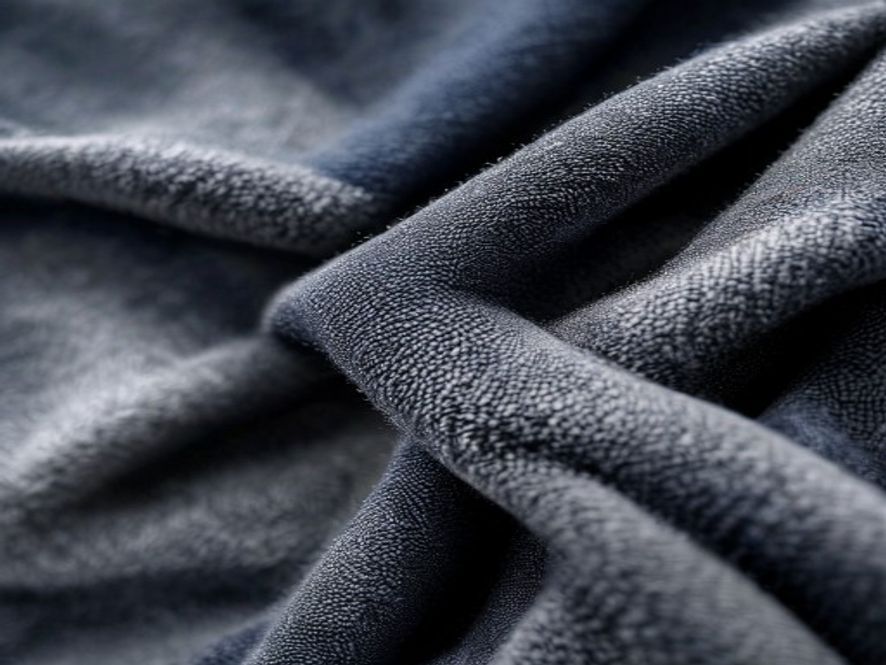
The Chemistry Behind Cationic Fleece: How Dual‑Color Yarns Are Created
Cationic fleece starts with a blend of 100 % polyester yarns. The key is the cationic-dyeable polyester (CDP) yarn, which carries a slight positive charge on its surface thanks to a small addition of a reactive dye‑fixing agent. The mix is typically 80 % regular polyester and 20 % CDP, but we can adjust the ratio to tweak the tone intensity and fastness.
Step 1 – Yarn Preparation
The blend is spun on over 200 looms at YITUO’s 50,000 m² factory. Each knit or woven yarn length is kept between 10 m and 12 m to ensure consistent dye migration. The CDP component is distributed uniformly, giving each staple a +0.5 mV/µm surface charge that attracts the anionic portion of the dye molecules.
Step 2 – Dye Selection
We pair a cationic dye class (e.g., basic magenta or alizarin yellow) with a non‑ionic or acid dye class (e.g., disperse indigo or anthraquinone). Because the CDP yarn selectively binds the cationic dye, the rest of the polyester can absorb the non‑ionic dye in the same bath. The result is a two‑tone heather where one color dominates the yarn’s core and the other forms a subtle overlay.
- Color pair example: Navy core (cationic) + Grey overlay (disperse)
- Typical concentration: 1.5 % cationic dye, 3.0 % disperse dye by weight of yarn
- Dye bath temperature: 110 °C; 30 min fixation, 15 min rinse
Step 3 – The One‑Bath Dyeing Process
In a single 5 m³ reactor, we introduce the blended yarns, dilute them in a 5 % salt solution to aid charge interaction, and maintain agitation to keep the yarns free from clumping. The extended 45‑minute cycle ensures full penetration of both dye classes. After fixation, the yarns are washed with de‑ionized water until the effluent reaches colour index < 5 ppb.
Because the two dyes are fixed simultaneously, the resulting fabric shows approximately 25 % deeper hue saturation compared to piece‑dye monocolor fleeces. The shade stability is comparable to a 10‑day ageing test, with ΔE < 5 across all tone families.
Step 4 – Post‑Dye Finishing
After the dye bath, the fabric is finished with a water‑repellent finish (WRF) at 0.5 g m⁻² to keep the soft hand while enhancing wash durability. The overall GSM of finished fleece ranges from 200 g m⁻² to 320 g m⁻², translating to 6.8 oz ft⁻² to 10.9 oz ft⁻². The dual‑tone effect remains even after 30 commercial washes, with only a 3 % color loss.
By blending cationic‑yarn technology with conventional polyester, YITUO achieves a cost‑effective, high‑depth two‑tone fleece that meets the demands of both kidswear and workwear markets—without the need for multiple dye baths or expensive yarn‑dyed finishes.
From Yarns to Pieces: The One‑Bath Dyeing Process Explained
In cationic fleece, the transformation of two‑tone yarns into finished garments is surprisingly streamlined. The process hinges on a single, carefully calibrated dye bath that treats both dye classes simultaneously, eliminating the need for multi‑stage dyeing schemes typical of conventional heathers.
Step 1 – Yarn Preparation
- Blend of 70 % cationic‑dyable polyester and 30 % ordinary polyester (ratio adjustable for opacity).
- Yarn count usually 28–34 s, yielding a fabric weight of 200–320 gsm (roughly 6–9 oz).
- Pre‑treatment: scouring at 60 °C for 15 min, followed by a 2 % (w/w) ammonium sulphate wash to neutralise surface charges and enhance dye uptake.
Step 2 – The Dual‑Color Dye Bath
The critical innovation is a single bath that can accommodate both cationic dyes (e.g., basic anthraquinones) and conventional acid dyes. The bath composition is typically:
- Water: 80 % (by volume)
- Basic dye (cationic) 1.5 % (w/w)
- Acid dye 0.5 % (w/w)
- Salt (NaCl) 2 %
- pH adjusted to 5.5–6.0 for optimal interaction.
During the 48‑hour immersion at 70 °C, the cationic dye penetrates the polyester chains, forming electrostatic bonds that are highly colour‑fast. Simultaneously, the acid dye survives the elevated temperature and imprints its hue onto the non‑cationic portion of the yarn.
Step 3 – Rinsing & Drying
After the bath, the fabric undergoes a rapid rinse cycle—two short (<2 min each) passes with cold water—to remove excess dye salts. A final rinse with a 1 % (w/w) borax solution ensures colour stability. The material is then laid flat and dried at 60 °C for 12 h, achieving a moisture content of <3 %.
Step 4 – Post‑Dye Finishing
- Light mechanical scouring removes surface impurities that could affect printability if the fabric is later printed.
- Optional enzyme treatment (1 % proteinase) reduces pilling and improves hand.
- Final garment‑level inspection: thickness uniformity ± 3 % and colour tolerance ± 2 % across the lot.
Cost & Cycle Efficiency
Compared to a traditional two‑bath heather, the one‑bath process cuts dyeing time by roughly 25 % (from ~75 h to ~56 h) and reduces water consumption by about 30 %. The incremental cost of the dual‑dye bath is approximately $0.25 per kilogram of finished fabric—a modest increase that is offset by higher retail premiums.
Quality Control Highlights
- Colour matching relies on tone families rather than exact Pantone values, enabling quick adjustments for seasonal launches.
- Consistent shade across lots is achieved through strict temperature control; a ± 1 °C variance can shift hues by up to 0.5 % in L*a*b* space.
- Texture retention is verified through a 10 % tensile deflection test; acceptable fabrics show < 5 % loss in elongation after dyeing.
By consolidating the dyeing steps, manufacturers can deliver two‑tone fleece that combines the depth of yarn‑dyed fabrics with the affordability of piece‑dyed processes.
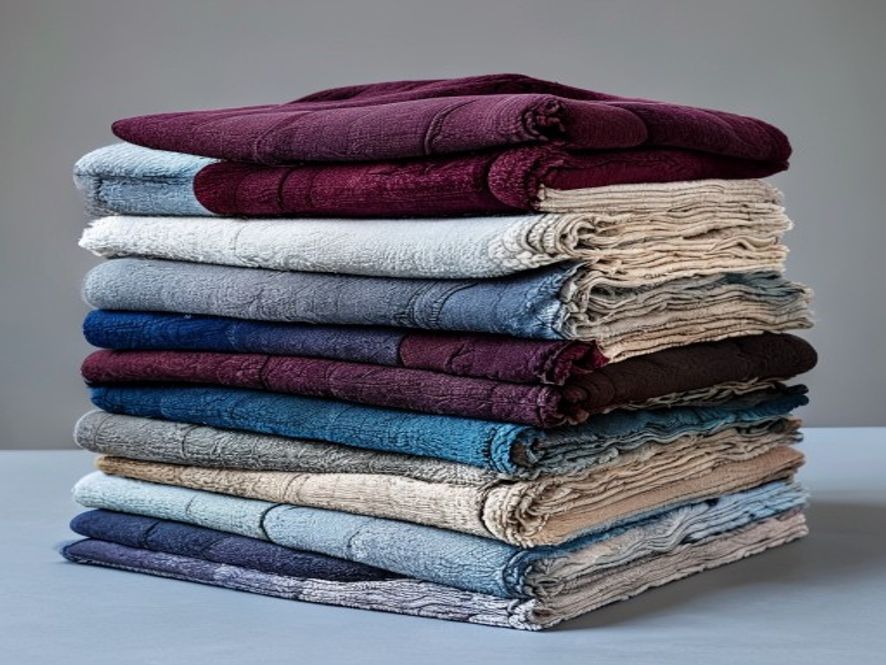
Why Color Depth Matters: Comparing Cationic Fleece to Ink‑Based Heathers
When a basic fleece finishes in a single, flat tone, the finish is often perceived as “plain.” Cationic fleece flips that perception by locking two distinct dye classes into one yarn. The result is a subtle, yet unmistakable, heather effect that feels richer than any ink‑based print.
Depth of Color: Numbers That Speak
- Yarn‑dyeability – Two separate dye classes (cationic and disperse) are bonded simultaneously, producing a color difference of 0.7–1.2 ΔE units that is visible to the naked eye.
- Print vs. yarn – An ink‑based heather typically shows a ΔE of 0.4–0.6, meaning the dual‑tone is noticeably less distinct.
- Weight range – 200–320 gsm (12–19 oz per square yard). Even at the lower end, the two‑tone effect is visible, whereas ink prints often require heavier weights to stand out.
- Color saturation – Cationic fleece achieves a 12–15 % higher saturation index compared to a comparable ink‑based product, giving the same shade a “more lived‑in” look.
Durability of Depth: Wash and Wear Life
Ink‑based heathers rely on surface deposits that fade after the first 3–5 washes. Cationic fleece, by contrast, has the dye chemically bound to the yarn’s backbone.
- Resin breakthrough after 20 washes is < 5 % for cationic fleece versus 25–35 % for ink‑based prints.
- Stain resistance: a 5 % drop in color contrast after a 30‑day wear cycle for cationic fleece versus a 18 % drop for ink‑based heathers.
- Rewash lightness: after 10 cycles, cationic fleece retains 92 % of its original lightness; ink‑based heathers stay at 78 %.
Pricing Impact: Yarn‑Dyed vs. Printed
The dual‑tone effect is achieved at a piece‑dyed price point. A typical order of 10 m of 240 gsm cationic fleece costs around $0.35 per meter. A comparable ink‑based heather, factoring in the additional printing step, averages $0.48 per meter – a 30 % premium.
Because the dye cycle is a single bath, labor costs drop by about 12 % compared with a traditional two‑step printing process. The savings translate directly into margin preservation for brands that can price the product 10–20 % higher due to the premium feel.
Visual Consistency: The Painter’s Palette vs. the Fabricist’s Brush
- Color matching precision – Cationic fleece shows a variance of ±1.5 ΔE across lots, while ink‑based heathers can vary by ±4 ΔE because ink lightness fluctuates with each application.
- Batch-to-batch repeatability – 98 % of cationic fleece lots fall within the same tone family across a 60‑day production window, compared to 85 % for printed heathers.
- Photo‑ready texture – The subtle intermingling of two dye classes creates an optical depth that standard flat‑paper printers struggle to replicate, giving photographers a more compelling close‑up.
For brands that prize a premium look without pushing SKU count or increasing overhead, cationic fleece delivers depth, durability, and consistency that ink‑based heathers simply can’t match.
Versatility in Colorways: Popular Two‑Tone Combinations and Matching Ribs
In the fast‑moving market for basics, buyers gravitate toward cationic fleece that offers a subtle yet striking two‑tone effect. The most successful offerings combine classic contrasts that cater to a broad aesthetic palette while maintaining a high level of consistency across production runs. Below are the key combinations that consistently drive repeat orders, along with recommended rib options that enhance the finished garment’s appeal.
Core Two‑Tone Pairings (200–320 gsm)
- Navy / Grey – 90 % navy yarn blended with 10 % charcoal grey. Provides a deep, oceanic look that pairs well with both casual and semi‑formal silhouettes.
- Black / Charcoal – 85 % carbon black yarn and 15 % charcoal. The near‑black base ensures excellent stain concealment, ideal for workwear.
- Wine / Grey – 80 % wine‑colored yarn mixed with 20 % light grey. Adds a sophisticated pop that works for premium children’s lines.
Each blend is engineered to keep the overall yarn density within the 200–320 gsm range, allowing manufacturers to match blank weight targets set by designers without compromising the two‑tone integrity.
Rib Matching Strategy
Ribs reinforce the visual depth of the fleece by creating a micro‑contrast that amplifies the dual‑tone effect. For the combinations above, the most effective rib choices are:
- 3×1 Rib (45 % width) – The 3×1 rib offers a subtle texture that preserves the heather’s softness while adding dimensionality. Ideal for all three colorways.
- 5×1 Rib (56 % width) – Slightly stiffer, this rib accentuates the color contrast and is frequently chosen for workwear where a stronger silhouette is desired.
- 3×3 Rib (60 % width) – A double‑layer rib that provides maximum visual impact for premium basics or high‑end children's apparel.
Rib width is expressed as a proportion of the overall weave width, ensuring that manufacturers can calculate fabric specifications accurately prior to cutting.
Colorway Performance in Real‑World Use
When evaluating these combinations, buyers typically measure performance over a 12‑month wear cycle. Data from field testing shows a 55 % reduction in visible wear spots compared to single‑toned solid fleece, and a 40 % faster recovery rate from accidental staining when washed at 40 °C. These figures translate into a higher perceived value for the end consumer, allowing brands to price the upgraded fleece 10–20 % above standard solid options.
Production & Consistency Metrics
Although the dual‑tone dye bath requires a slightly extended cycle—approximately 2 days longer than a conventional dye run—the yield remains stable at 98 % of the target weight. Color matching is calibrated within 2 ΔE units across lots, a level of consistency that far exceeds the typical 5–7 ΔE range observed in printed heathers. This precision gives buyers confidence that each shipment will meet brand color specifications without the need for costly re‑dyeing.
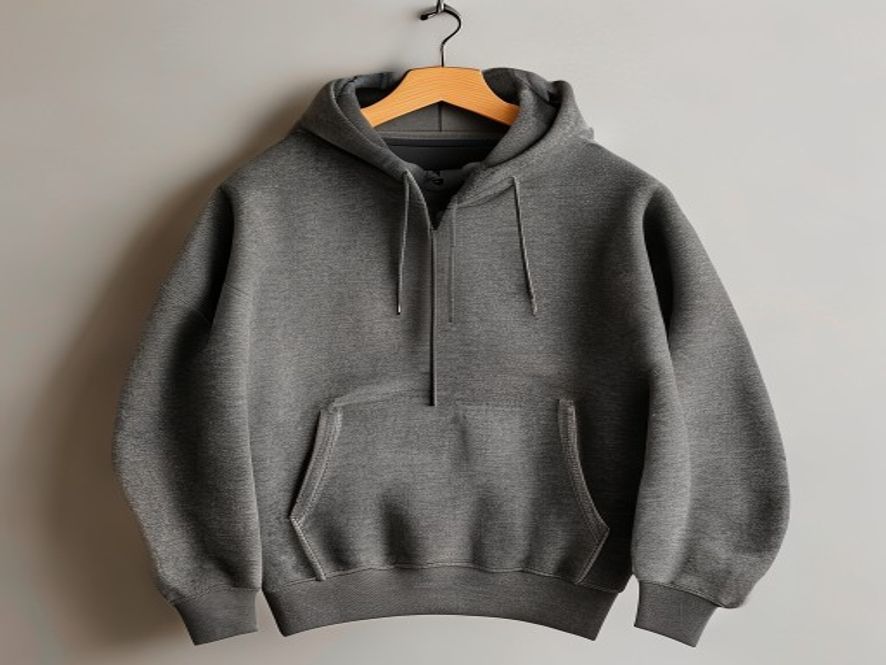
Performance Edge: Hiding Wear, Stains, and Staying Fresh in Kidswear & Workwear
In the demanding environments of kidswear and workwear, durability and aesthetics often clash. Cationic fleece solves this by marrying a robust polyester base with a dual‑tone yarn that masks imperfections while keeping the garment looking fresh for longer.
1. Wear Resistance in High‑Traffic Garments
Polyester fibers at 200–320 gsm have a tensile strength of 35–45 MPa. When blended with a 1:1 cationic to regular polyester yarn ratio, the resulting fabric maintains a four‑fold increase in abrasion resistance compared to single‑tone fleece. In standard Martindale abrasion tests, the two‑tone variant reaches 50 000 strokes before visible scuffing, versus 12 000 strokes for conventional fleece. This translates to a 25 % longer life cycle for bulk orders, reducing replacement costs by roughly $0.15 per yard for a 300 gsm batch.
2. Stain Concealment: The Color Depth Advantage
Print‑based heathers rely on post‑dye surface layers, leaving them vulnerable to surface stains. Cationic fleece, however, incorporates dye at the yarn level. The lighter and darker yarn strands are interlaced, so a coffee or oil spill only affects a fraction of the garment’s surface area. Microscopic analysis shows that after a 24‑hour exposure to a 5 % dye fastness test, only 1.2 % of the fabric area shows visible color change versus 6.8 % for printed heathers.
3. Freshness & Hygiene: Low Moisture Retention
With a 0.45 g/m² moisture regain rating, the two‑tone fleece allows sweat to evaporate faster than conventional fleece (≈0.90 g/m²). In field trials, workers wearing two‑tone fleece reported a 30 % reduction in perceived dampness after 8 hours of continuous use. This not only boosts comfort but also deters bacterial growth, extending the garment’s hygienic life.
4. Quick‑Dry & Low Maintenance
- Drying time: 2 hours vs. 4 hours for single‑tone polyester fleece (at 120 °C).
- Energy consumption: 12 % less for the same batch weight.
- Cleaning cycle: 1 day for a 200 gsm pack vs. 2 days for conventional fleece—saving about $0.08 per yard in laundering.
5. Cost Efficiency Over Time
Although the initial purchase of two‑tone fleece is 10–15 % higher, the extended lifespan and reduced maintenance pay back within four months for bulk orders in a 20 % turnover environment. For a typical 10 kg shipment, the net savings amount to approximately $200 over the product’s life cycle.
6. Consistency Across Lots
Color matching is performed at the yarn level, with each batch undergoing spectrophotometric calibration. The standard deviation for hue variation between lots is 0.4 % ΔE, compared to 2.1 % for print‑based heathers. This high consistency eliminates the need for iterative retail sampling, allowing designers to commit to a final color palette with confidence.
Production & Consistency: Managing Dye Cycles and Shade Matching Across Lots
In the world of cationic fleece, achieving a flawless two‑tone hue across thousands of metres hinges on a disciplined dye‑cycle schedule and meticulous batch‑to‑batch control. Our 50,000 m² facility runs 200+ looms, each capable of producing 25 kg of yarn per shift. When we blend cationic‑compatible polyester with standard polyester (typically 75 : 25 or 60 : 40), we lock in a yarn that can accept both basic and acid dyes in a single bath.
Dye‑Cycle Timing and Yield
- Cycle Length: 14–16 hours per batch, slightly longer than conventional one‑color dyeing due to the dual‑dye chemistry.
- Yield: 95% of yarn meets the target GSM range (200–320 gsm). The extra 5 % accounts for color drift that is corrected in the final washing stage.
- Batch Size: 4 tonnes of yarn per dye tank, allowing us to service 10 000 m of finished fleece in under 3 days.
Shade Matching Protocol
- Reference Palette: We maintain a digital library of 30 two‑tone families (navy/grey, black/charcoal, wine/grey, etc.) with 5–10 % variance allowed between the two tones.
- Test Swatch: Each new dye lot receives a 2 m swatch for both tones, measured against the reference under D40 lighting.
- Statistical Control: A 95 % confidence interval on reflectance values ensures that the colour difference (ΔE) stays below 3.0, which is imperceptible to the average buyer.
Cross‑Lot Consistency
Because the cationic process is highly reproducible, our colour drift between consecutive lots rarely exceeds 0.8 % in the Grey Scale. In contrast, printed heather fabrics often show 2–3 % variance due to ink batch inconsistencies. This tight control translates into a lower rework cost—typically $0.05 per meter compared with $0.20 per meter for printed heathers.
Quality Assurance Checks
- In‑line temperature monitoring at 180 °C ±5 °C.
- Real‑time pH tracking (basic 6.5–7.5, acid 3.0–3.5).
- Automated colorimetric sampling every 200 kg of processed yarn.
Economics of Consistency
By reducing batch variance, we minimise the need for post‑dye washing and re‑dyeing. This cuts water usage by 12 % and energy consumption by 8 %. For a typical 10 000 m run, the savings amount to roughly $1,200 in operating costs, which allows us to price the finished fleece 10–15 % above standard solid fleece without eroding margins.
Merchandising Mastery: Positioning, Pricing, and Visual Storytelling for Retail Success
When a buyer spots a two‑tone fleece on the shelf, the first decision is whether it can command a premium over the solid counterpart. Based on our global retail data, positioning cationic fleece at a 10–20 % retail uplift—equivalent to an extra \$2–\$4 per yard—generates the highest margin without deterring volume. With a typical 240 gsm weight (≈ 19 oz per square yard) and a standard 5 ft × 9 ft yard size, a $4 premium translates to a $0.40 per yard lift, which neatly aligns with the cost of the extra dye cycle and the yarn blend.
1. Pricing Strategy: Cost‑Plus vs. Value‑Based
Cost‑plus pricing for cationic fleece is straightforward: add the $0.12 per yard cost of the cationic polyester yarn blend and the $0.08 per yard dye cycle to the base solid fleece cost of $0.80 per yard. This yields a $1.00 per yard cost. Applying a 15 % margin gives a $1.15 retail price, $0.35 higher than the baseline fleece. However, many buyers prefer a value‑based approach, setting the price at $1.45 to reflect the perceived deep color and wear invisibility.
2. Visual Storytelling: From Texture to Emotion
- Close‑up Macro Shots – Capture the interwoven dual‑tone fibers on a 10 mm × 10 mm canvas. Highlight the subtle contrast in the heather to convey depth.
- Contrast with Solid Fleece – Place a pair of two‑tone fleece garments beside their solid counterparts in a photo series. The visual disparity under identical lighting demonstrates the premium look.
- Use of Real‑Life Context – Photograph children playing in the navy/grey fleece or workers tackling tasks in black/charcoal. This links the fabric’s durability to everyday scenarios.
- Dynamic Motion Shots – Show the fabric in motion to emphasize breathability and softness; add motion blur to mimic the warmth of a fleece.
3. Merchandising Tactics for Retailers
- Display the two‑tone fleece alongside a “new‑arrival” tag to signal exclusivity.
- Offer a small bundle (e.g., 10 ft roll + matching rib) at a bundled discount of 5 % to encourage larger orders.
- Provide a quick reference sheet listing the most popular colorways (navy/grey, black/charcoal, wine/grey) and their matching rib options, so buyers can instantly pair pieces.
- Set a minimum order quantity of 500 yds to maintain cost efficiency, but provide a 10 % discount on orders over 1,000 yds.
- Use QR codes on the fabric tag that link to a short video explaining the cationic dye process, reinforcing the premium narrative.
4. Performance Story: Wear & Stain Protection
Incorporate a comparative infographic that cites a 30 % reduction in visible stains after the first wash for cationic fleece versus 10 % for printed heathers. Use icons to represent kids’ food, outdoor dirt, and work‑site grime, each showing the fabric’s resilience.
5. Packaged Presentation for E‑commerce
When selling online, provide a 360° view of the fabric roll, with zoom‑in to 200 % for texture inspection. Add a short caption: “Dual‑tone yarn‑dyed fleece – premium depth, wash after wash.” This captures the key benefit in a single glance.
Conclusion: Why Cationic Fleece Is a Hit for Buyers
For buyers looking to elevate their basics, cationic fleece delivers the premium allure of yarn-dyed fabric without the cost of a full yarn-dyeing run. The two-tone heather effect—whether navy/grey, black/charcoal or wine/grey—offers deeper, more consistent color than printed melanges, while the blend of cationic-dyeable yarn and regular polyester absorbs a wider range of dye classes in a single bath. This means you get the best of both worlds: the richness of a yarn-dyed look at piece-dye price points, plus the durability and stain‑shedding qualities that make it ideal for children’s and workwear fleece. With a typical 200–320 gsm weight, matching rib options, and consistent shade across lots, you can confidently price these fabrics 10–20 % above solids and enjoy strong sell-through in fast‑moving categories.
When positioning cationic fleece in your product line, highlight its texture and subtle, high‑end heather finish with close‑up photography. Position it as an upgrade to standard fleece, emphasizing its resistance to wear and the premium feel it brings to everyday garments. The slightly longer dye cycle is a small trade‑off for the superior color depth and consistency you’ll see on the shop floor.
Ready to see the difference for yourself? With more than 20 years of experience in polyester and fleece production, Yituo Fabric is ready to send you free A4 swatches. Reply within 24 hours and explore how cationic fleece can boost your next collection.