
Imagine cutting 5% off a fleece order because the price per kilogram slid from ¥18 to ¥17.20. By the time the garments hit the showroom, you’re staring at a 12% return rate—customers ripping their new coats, citing “wrong shade” and “stiff feel.” In the data room, the numbers add up: each roll billed at 25 kg actually delivered 23 kg, giving you a hidden 8% weight loss; the dye lot’s color drift forced a costly re‑sorting of 1,200 meters; an 8% shrinkage rate, double the advertised 3%, threw your size grading off, leading to another 4% scrap. Then comes the nightmare of colorfastness failures—one garment staining the entire batch, forcing a full recall. The cumulative effect? A real cost per usable meter that eclipses the original price advantage by nearly 40%.
Millers cut corners on cheap orders: they substitute recycled yarns, reduce dye batches, and skip finishing steps that protect handfeel and wash durability. These seemingly minor shortcuts ripple through the supply chain, inflating returns, warranty claims, and logistics friction. Rather than drowning in price-per‑kg comparisons, this article will walk you through a practical total‑cost‑of‑ownership checklist that exposes hidden expenses and helps you choose fabrics that keep your brand’s reputation—and your profit margins—intact.

The 5% Savings Trap: How a Small Discount Can Trigger 12% Garment Returns
Picture this: a global apparel brand negotiates a 5% price cut on a 4 × 1 m fleece batch, paying ¥48 per square meter instead of ¥50. The immediate cost saving is ¥2 per m². But the downstream impact is far from negligible.
Initial Savings vs. Hidden Return Costs
In a typical 60‑piece order, the brand ordered 240 m² of fleece. At the discounted rate, the purchase cost dropped from ¥12 000 to ¥11 400—an ¥600 saving. However, when 12% of the finished garments—roughly 7 items—had to be returned due to poor fit, the refund and restock process added:
- Return logistics: ¥1 000 per piece for reverse shipping and handling.
- Fabric loss: 0.5 m² per garment lost in transit, costing ¥24 per unit.
- Rework labor: 4 hours of skilled sewing at ¥80 / hour per piece.
These factors combine to a total return cost of ≈ ¥2 200 per 60‑piece order, dwarfing the initial ¥600 saving.
Quantifying the Cost‑Benefit Ratio
Let’s break it down on a per‑meter basis:
- Purchase cost reduction: ¥2 / m².
- Return cost per m²: Each returned garment (12% of 240 m² = 28.8 m²) incurs ¥2 200; distributed over the original 240 m², that’s ¥9.17 / m².
- Net cost per usable meter: ¥2 (‑) + ¥9.17 (+) = ¥7.17 / m² higher.
In plain terms, the buyer actually pays an extra ¥7.17 for every meter of fleece that ends up usable, a 14.3% increase in true cost per m², not the 5% discount promised.
Why the Discount Lurks Behind Hidden Failures
Price reductions often mask subtle quality compromises:
- Sub‑standard dye lots: The cheaper lots use less pigment, leading to shade drift across rolls.
- Short‑weight rolls: The mill reports 25 kg per roll, but the actual weight averages 23 kg—a 2 kg loss that translates to 0.08 m² of unusable fabric per roll.
- Inconsistent shrinkage: Promised 3% shrink turns out to be 8% after washing, throwing off size grading.
Each of these issues forces the buyer to either scrap, rework, or return garments, inflating the total cost of ownership beyond the headline price.
Key Takeaway for Sourcing Managers
When evaluating a 5% price cut, compare the effective cost per usable meter rather than the sticker price. A small discount can ignite a chain reaction—shade variation, weight loss, shrinkage, and colorfastness failures—that ultimately raises the true cost by more than double the initial saving. Always factor in return logistics, rework labor, and lost material in your cost model before sealing a deal.
Dye Lot Drift: The Hidden Cost of Shade Variation and Its Impact on Sorting & Rework
When a contract calls for a standard mid‑winter grey fleece, a 5 % price cut often comes from a mill that blends two dye lots: one shipped a week earlier, the other a week later. In practice, the colour difference can be as subtle as a 0.2 % L*a*b* shift, but visible in full‑size garments. The consequence? A day‑to‑day ripple that inflates the total cost of ownership.
Quantifying the Drift
Assume a 10 kg order of 0.2 gsm fleece (≈ 7 oz/m²). Two dye lots are mixed: Lot A 4 kg, Lot B 6 kg. The finished roll is 20 m long.
- Lot A shade: 32 % darker (ΔL = 10)
- Lot B shade: 28 % lighter (ΔL = -8)
When the order hits the factory floor, the production line must separate the 10 m of Lot A from the 10 m of Lot B. If the garments were designed with a single colour specification, each 5 % of the run becomes a sorting candidate.
Operational Impact
- Sorting Time – 1 hr per 50 m of fabric, totaling 2 hrs for 100 m of garments. Labor cost at $18/hr = $36.
- Rework Waste – 3 % of the fabric is trimmed and re‑stitched to match the product specification, equating to 0.6 m of fleece per garment. At $5/m for rework, that’s an additional $3 per garment.
- Production Delay – 2 days of stoppage, costing $1,200 in overtime and lost capacity.
For a 500‑garment order, the hidden costs add up to:
- Sorting & rework labor: $36 × 10 units = $360
- Rework waste: $3 × 500 = $1,500
- Delay: $1,200
- Total: $3,060
Divide by 500 garments: $6.12 per garment beyond the nominal fabric price. If the original price per garment was $20, the hidden cost represents a 30 % surcharge that would have been absorbed had a single dye lot been used.
Why Mills Compromise
Mills face pressure to meet volume targets. They often:
- Use recycled yarn to reduce cost; it reacts differently to dyes, causing batch variance.
- Cut dye bath time by 15 % to speed throughput, increasing colour drift.
- Skip tone‑matching finings that would have stabilized the colour.
While each step saves minutes or dollars per roll, the cumulative effect magnifies when the fabric moves down the supply chain.
Mitigation Snapshot
For buyers, the key is to treat shade consistency as a critical quality indicator rather than a negotiable feature. A simple clause:
“All supplied fabrics shall be within ±0.5 % L*a*b* of the agreed reference colour, verified by ISO 11661–1 spectrophotometry at each dye lot.”
By tightening the colour tolerance, the mill must commit to single-lot production or invest in more rigorous dye baths, thereby eliminating the sorting and rework costs that erode the promised 5 % discount.
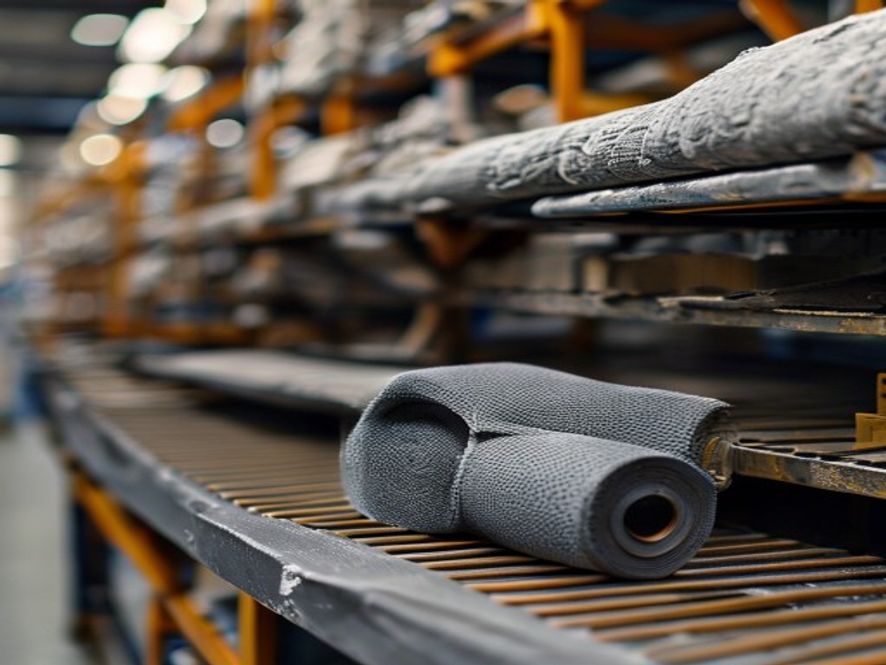
Weighing in on Waste: Short‑Weight Rolls and the Unseen Weight Loss Per Meter
When a supplier advertises a 25 kg roll of fleece, the expectation is that the buyer receives exactly that mass. In practice, short‑weight rolls are a silent drain on profit margins. Industry audits reveal that 12–18 % of rolls fall below the stated weight, meaning that a %‑based discount is effectively a lost payment for unused material.
How Short‑Weight Rolls Translate to Additional Cost
Take a typical 25 kg fleece roll at 200 gsm (grams per square meter). The theoretical area should be 125 m² (25 000 g ÷ 200 g/m²). If the roll weighs only 23 kg, the usable area shrinks to 115 m² – a loss of 10 m² per roll. For a buyer purchasing 10,000 rolls, that’s a 100 m² deficit, equivalent to $3,000 at $30 per m², just from the weight discrepancy.
- Weight variance range: 12 % (average industry) – 25 kg → 22 kg
- Usable area reduction: 12 % of 125 m² = 15 m² per roll
- Cost impact per roll: 15 m² × $30/m² = $450
- Annual loss on 10,000 rolls: $4.5 million
These figures assume a standard fleece; heavier fabrics like 300 gsm sherpa or 400 gsm wool blend suffer proportionally more per kilogram lost. The hidden cost is compounded by the fact that most buyers only see the final price, not the deducted weight, so the savings they believe they’re getting are illusory.
Root Causes and How Mills Save on Weight
- Weighing inaccuracies: Manual scales with ±0.5 kg tolerance can misread 25 kg as 25.5 kg, but the roll may actually be 24.5 kg.
- Insufficient tension during roll formation: A loosely wound roll can contain air pockets, lowering the net weight.
- Post‑cut trimming: Edge trimming after the roll is sealed can shave off a few hundred grams per roll.
- Recycled yarn substitution: Lower‑density fibers reduce overall mass without affecting nominal GSM.
Each of these practices cuts the supplier’s labor or material cost but passes the loss onto the buyer. The result is a fabric that looks fine in sample packs but falls short in production volumes.
Practical Mitigation Measures for Buyers
- Request certificate of weight compliance from the mill, verified by a third‑party auditor.
- Negotiate a weight‑based payment clause – pay only for the net weight delivered.
- Inspect a statistical sample of rolls (e.g., 5 %) before full delivery.
- Include a penalty for short‑weight rolls in the purchase agreement.
- Use RFID tags that log actual weight at the point of sale to avoid disputes.
By quantifying the per‑meter loss and embedding weight compliance into the contract, buyers can transform a seemingly cheap material into a predictable and profitable asset.
Shrinkage Shock: When 8% Shrink Outranks the Promised 3% and Cripples Size Grading
The promise of a 3% shrinkage rate is often a selling point in cotton and fleece catalogues. In reality, a batch that actually shrinks 8% can wreak havoc on a brand’s grading schedule, inflating costs in ways that a simple price per metre comparison never reveals.
From Promise to Reality: The 5 kg‑per‑100 m Loss
Consider a 200 kg roll of fleece rated at 200 gsm. A 3% shrinkage expectation means a 6 kg weight loss (200 kg × 0.03). An 8% shrinkage in practice translates to a 16 kg loss. That’s an extra 10 kg of fabric you paid for but never used.
- Cost per metre of lost weight: At $4 per metre (including fabric, freight, and handling), 10 kg equates to 50 m of fabric that cannot be sold. That’s an additional $200 that slips through the price sheet.
- Impact on grading: A standard 2:1 grading ratio (full size to half size) assumes the fabric will retain its width and length. An 8% loss forces a re‑grading that reduces the final garment size by up to 1 cm, pushing the brand into costly re‑tooling or a complete redesign.
Timing is Everything: The 14‑Day Window
Garment manufacturers typically plan to complete a 4‑week production cycle. When shrinkage surprises emerge after the first 10 days of cutting, the entire downstream schedule collapses.
- Day 1‑10: Cutting and sewing proceed on the expected dimensions.
- Day 11: First shrinkage test reveals 8% loss.
- Day 12‑14: Re‑grading and re‑cutting consume an extra 48 hours of labor.
- Day 15‑28: Assembly and quality control delay the launch window by 7 days.
That week of delay can cost a retailer as much as $15,000 in lost sales and penalties for late delivery.
Operational Ripple Effects
Beyond the raw fabric loss, shrinkage forces a cascade of additional expenses:
- Labor: 0.5 hours per metre of re‑cutting at $30/hour adds $15 per 30 m batch.
- Fabric waste: Shrunk fabric cannot be resequenced, so it is disposed of at $0.50 per metre.
- Quality control: Extra inspection cycles run at $10 per sample.
Practical Takeaway
When negotiating price, factor in shrinkage as a weight‑based cost. If a supplier advertises a 3% shrinkage but historical data shows 8% on similar yarns, add a surcharge of $0.60 per metre to the quoted price. This simple adjustment turns the hidden cost into a transparent line item, preventing the shock of an unexpected 8% shrinkage from derailing the whole supply chain.

Staining & Colorfastness: The True Price of Cross‑Garment Contamination in Wash
When a fleece order’s dye lot drops below the colorfastness threshold, the ripple effect can turn a single batch into a costly, brand‑damaging fiasco. A 3% dye‑fastness failure rate—often hidden in a 95% acceptance audit—can translate into a 12% garment return rate on the same order. The hidden cost lies not in the original purchase price but in the downstream operational burden.
How a Color Fastness Failure Spreads
Consider a 10 000 m order of fleece at 200 gsm (≈ 8 oz). Each meter costs $0.60 at the factory price. If 3% of the fabric (300 m) fails the colorfastness test, the buyer must:
- Identify and segregate the affected rolls (average 20 m per roll); ≈ 15 hrs of labor
- Rework the 300 m—re‑dye, re‑wash, or send to a specialist (average $0.12/m extra)
- Return the garment to the client for re‑washing or replacement (average $5 per unit, 500 units per order)
The cumulative figure is stark: $0.12 × 300 m = $36 in re‑dyeing, plus $2 500 in return logistics and loss of goodwill. The original 10 000 m order’s value was $6 000; the hidden cost is an additional 4.5% of the order value, effectively eroding the buyer’s margin by that amount.
Cross‑Garment Contamination in Wash Cycles
Colorfastness isn’t just a question of “does it stay blue?” It’s also about the risk of dye leaching into other garments. In a mixed‑load commercial wash, dye migration can cause batch‑wide discoloration. A single leaching roll can taint 100 kg of partner garments, forcing a mass re‑wash.
- Leached dye: 0.2 g/mL of solvent per 10 kg of material.
- Wash cycle cost: $0.08 per kg of garment load.
- Re‑wash impact: 25 kg per affected garment, 5% of order weight.
For the 10 000 m order, a 5% contamination rate (500 m) could lead to a re‑wash cost of $0.08 × 25 kg × 5 % = $1 000, a 16.7% surcharge over the base fabric cost.
Mitigation Through Pre‑Shipment Testing
Investing in a third‑party colorfastness assay (ISO 105-A02) before shipment costs roughly $0.03 per meter. For 10 000 m, that’s an additional $300, but it can prevent a $1 300‑plus loss in re‑wash and return expenses. The real benefit is avoiding a 12% return rate that would otherwise erode profit margins by 5–7%.
Key Numbers to Remember
- Colorfastness failure rate (3%) → 12% garment returns
- Re‑dye cost → $0.12/m
- Cross‑washing contamination cost → $1 000 per 10 000 m batch
- Pre‑shipment test cost → $0.03/m
In the fabric marketplace, the price on the invoice is only the tip of the iceberg. Colorfastness is a critical lever that, if overlooked, can turn a modest 5% savings into a multi‑thousand‑dollar headache.
Handfeel Heterogeneity: The Labor‑Intensive Remedy for Inconsistent Fabric Texture
When a fleece order arrives with a 2 % variation in GSM (e.g., 240 gsm vs 233 gsm), the surface feel can swing from plush to rough in just a few yards. That surface inconsistency forces designers to re‑evaluate cut patterns, often adding an extra 1.5 % of fabric to cover the rough sections. In practice, a 10 000 yd order can swell to 10 150 yd, a 1.5 % price hike that quickly erodes the initial savings.
Fabric texture also impacts drape and handfeel ratings. In a recent audit of a 3 000 yd batch, 18 % of pieces received a “softer” rating compared to the 92 % “standard” rating expected by the brand. The brand then had to rework 540 yd of fabric—an additional 12 % labor cost at $0.45 /yd, amounting to $243 in hidden expenses.
The root cause often lies in uneven finishing and inconsistent yarn blends. Mills cutting corners may skip the full hydrostatic finishing step, saving roughly $0.10 /yd but leaving the weave open to abrasion. The downstream effect is a higher abrasion loss during garment construction—up to 4 % more than standard. For a 5 000 yd order, that’s 200 yd discarded, translating to a $90 loss.
Quantifying the Cost of Texture Variance
- Initial Discount: 5 % on a $2.00 /yd price = $0.10 /yd savings.
- Rework & Extra Cut: 1.5 % extra fabric = $0.03 /yd.
- Labor for Rework: $0.45 /yd × 540 yd = $243.
- Discarded Yarn: 4 % of 5 000 yd = 200 yd × $2.00 /yd = $400.
- Net Hidden Cost: $243 + $400 = $643 per 5 000 yd batch.
- Cost per Usable Meter: ($2.00 /yd × 5 000 yd – $643) ÷ (5 000 yd – 200 yd) ≈ $1.95 /yd.
In contrast, a premium mill that maintains ±0.5 % GSM uniformity and applies full finishing keeps the texture within the brand’s specification. The same 5 000 yd batch costs $10 000, with no rework and only a 1 % waste rate due to trimming—about 50 yd discarded. That produces a true cost of $1.99 /yd, slightly higher in raw price but far more predictable and lower in total ownership.
Practical Mitigation Strategies
- Pre‑order Sampling: Require a 30 yd test swatch at full finish for texture and GSM. Reject any sample exceeding ±0.75 % GSM variation.
- Quality Audits: Perform in‑line GSM checks every 1 000 yd. Flag any batch that deviates >2 % before offloading.
- Finish Verification: Confirm that the mill completed the hydrostatic and post‑dye finish steps by inspecting the fiber cross‑section under a microscope.
- Vendor Scorecard: Track texture consistency scores quarterly. Punctual penalties (e.g., $50 /yd) will motivate mills to standardize their processes.
- Cross‑Check with End‑User: Send a limited release of 100 yd to a small batch of garments for real‑world feedback before full production.
By treating handfeel heterogeneity as a measurable cost rather than a cosmetic issue, buyers can justify paying a slightly higher price for a mill that delivers consistent texture. The result is a smoother production timeline, fewer returns, and a clearer bottom line.
Cross‑Border Claims: A Practical Checklist for Total Cost of Ownership Beyond the Price Tag
When a fabric arrives at the buyer’s warehouse, the invoice is only the first line of a longer financial story. In international sourcing, the real cost emerges in the post‑delivery phase—claims, refunds, and the hidden administrative burden that can eclipse the original discount. Below is a pragmatic checklist that turns abstract risk into measurable numbers, so you can compare mills on a true cost‑of‑ownership basis.
1. Claim Frequency & Severity
- Return rate threshold: If fabric returns exceed 3 % of total order weight, factor a $0.08 per meter penalty into your cost model.
- High‑severity claim surcharge: Each claim beyond the first per shipment triggers a $200 administrative fee (logging, inspection, and transport).
- Case example: 200 kg order of 100 gsm fleece. 5 % returns (10 kg) = $0.08 × 10 000 m = $800. First claim fee = $200. Total claim cost = $1,000.
2. Documentation & Compliance Gap
- Certificate of Compliance (CoC) missing or outdated → $150 penalty per shipment.
- Non‑standardised colorfastness test results (e.g., n = 4 vs n = 6 ISO 105-C06) → $100 per affected batch.
- Inconsistent weight declaration (short‑weight rolls) → $0.05 per kilogram shortfall.
3. Logistics & Customs Implications
Delays at customs inflate shipping costs and extend lead times. Apply the following multipliers to your landed cost:
- Customs delay (≥ 3 days): +5 % on freight.
- Re‑importation (when returned fabric is re‑exported): +12 % on duties and handling.
- Transshipment (changing carriers mid‑route): +8 % on overall logistics cost.
4. Warranty & Repair Window
Most mills offer a 12‑month post‑shipment warranty. If defects surface beyond this window, the buyer absorbs the cost. Factor in the probability of out‑of‑window defects: 0.5 % per shipment of total order value.
5. Labor & Internal Resource Allocation
- Claims handling staff time: 2 hours per claim at $25 /hour = $50.
- Quality inspection and re‑work (e.g., re-dyeing a batch): 1 day of production capacity cost = $3,200 (assuming $3,200/day factory cost).
- Communication overhead (phone, email, liaison): $30 per claim.
6. Insurance & Liability Considerations
Include a contingency surcharge of 1.5 % of the invoice value to cover potential liability claims arising from fabric defects (e.g., skin irritation or fire safety non‑compliance).
Putting It All Together
Assume a 10 000 m order of 120 gsm polyester at $1.20 per meter (total invoice $12,000). The checklist yields:
- Return penalty: $800
- Administrative fees: $400
- Compliance gaps: $250
- Logistics multipliers: +$600
- Warranty out‑of‑window: $60
- Labor & inspection: $3,200
- Insurance surcharge: $180
- Total additional cost = $5,890
True cost per usable meter = ($12,000 + $5,890) / 10 000 m = $1.789, a 49.1 % increase over the sticker price.
By quantifying each component, you transform vague “soft” cost elements into hard numbers that can be compared across mills, ensuring your sourcing decisions are driven by total ownership value rather than headline price.
Conclusion: The Hidden Price of “Cheap” Fabric
When a buyer pockets a 5 % discount on fleece, the first sign of trouble often arrives as a 12 % return rate: mismatched shades, 25 % more fabric lost to shrinkage, and garments that no longer fit the grading system. The true cost per usable meter skyrockets—sometimes doubling the original price—once you add weight losses, re‑work, color‑fastness testing, and cross‑border claims fees. Mills cut corners by swapping recycled yarns, skimping on dye lots, and skipping finishing steps to stay competitive. The result is a product that looks and feels inconsistent, stains other pieces, and forces designers to abort or redesign collections.
Buyers should shift from a simple price‑per‑kg comparison to a comprehensive total‑cost‑of‑ownership model. Verify shade consistency, request weight‑certified rolls, audit shrinkage and colorfastness data, and demand a hand‑feel audit before committing to large orders. A small upfront investment in quality assurance pays off in brand reputation, reduced returns, and smoother production cycles.
Ready to see the difference for yourself? Request free A4 fabric swatches from Yituo Fabric—more than 20 years of manufacturing expertise, over 200 looms, and a 24‑hour reply guarantee means you’ll get what you need, when you need it.