
Imagine ordering a batch of 280 gsm polar fleece thinking you’re getting the same feel and performance across every 50 m roll—only to find one lot feels silky, the other rough, and the color hue shifts from light ivory to almost beige. That’s a buyer’s nightmare, but it’s not because the specs were wrong; it’s because the journey from yarn to yard is a delicate dance of variables that even the smallest slip can rip the illusion of uniformity. In this article we’ll walk through each critical step—yarn selection, circular knitting, high‑temperature dyeing, dual‑sided napping, precise shearing, finishing, and heat‑setting—and show how mills tame the risk of streaks, shade drift, and uneven pile. By the end you’ll know why two seemingly identical fleeces can behave so differently and why control throughout the process beats a mere weight or denier listing on paper.
We’ll start with yarn choice: DTY versus FDY polyester, how denier and filament count influence softness, then move to greige manufacturing via circular knitting, where the tension balance must be spot‑checked or you’ll end up with uneven loops. Dyeing with disperse dyes at high temperatures demands strict temperature control to avoid color bleeding or fading. The napping stage—brushing both sides—creates the pile; a single misaligned brush pass can leave visible streaks. Shearing trims the surface to an even finish, while anti‑pill or other functional finishes lock in that plush feel. Finally, heat‑setting locks the shape and prevents post‑production distortion. Each step’s potential pitfalls and the mill’s guardrails—real‑time monitoring, statistical process control, and rigorous inspection—are key to delivering a fleece that feels consistent from one yard to the next.
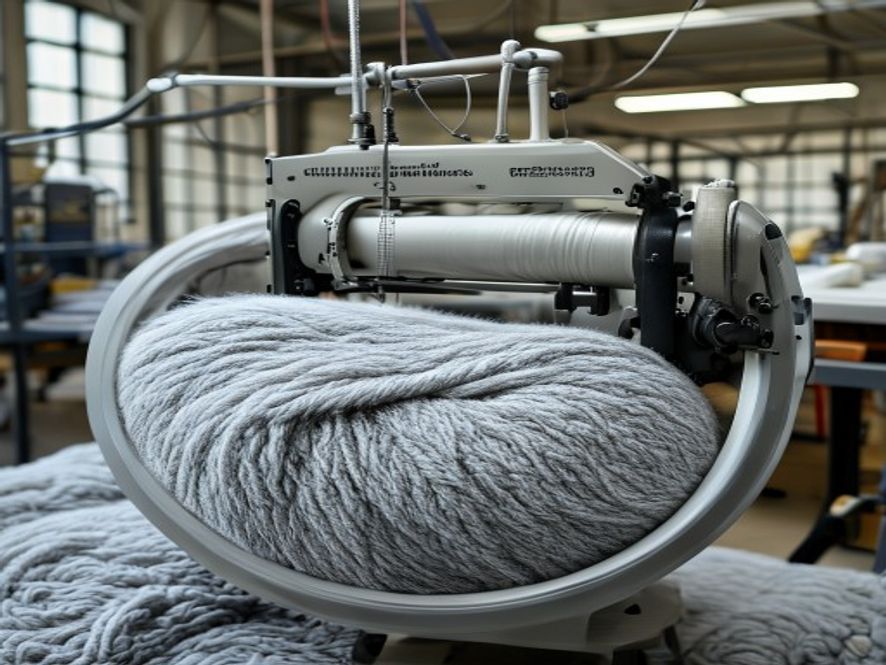
Choosing the Right Yarn: DTY vs. FDY Polyester and the Denier‑Filament Dance
When a mill begins a fleece run, the yarn is the first decision that shapes softness, durability, and cost. Two common feedstocks—DTY (drawn twisted yarn) and FDY (fused drawn yarn)—present distinct trade‑offs. Despite both being 100 % polyester, their internal structures influence everything from the feel of the finished fabric to the way dye penetrates during processing.
Denier and Filament Count: The Core of Softness
Denier is a weight‑to‑length ratio; a lower denier means finer filaments that feel smoother. For a 280 gsm fleece, typical yarns range from 10–20 denier per filament. The filament count per square meter, calculated as (denier × filament count ÷ 100), determines how many fibres are bundled together.
- DTY 10 d/filament, 20 filaments → 0.2 g/cm² of yarn, sharp twist, tighter fabric weave, higher initial cost (~$1.20/100 m) but longer life.
- FDY 15 d/filament, 15 filaments → 0.225 g/cm² of yarn, less twist, looser weave, lower cost (~$0.95/100 m) but slightly less dimensional stability.
Softness is not merely a function of denier; twist density affects brush abrasion during napping. A high‑twist DTY resists yarn deformation but can lead to sharper pile edges, while a lower‑twist FDY yields a more plush, voluminous pile. The mill’s choice will dictate the final hand.
Impact on Dyeing and Colour Consistency
Polyester’s non‑pore structure necessitates disperse dyes that require high temperatures (≈ 160 °C). The filament orientation in DTY allows for more uniform dye absorption because the twist aligns the filaments, creating a denser packing. FDY’s looser structure can lead to colour flecks if the dye bath isn’t evenly mixed.
- Mixing time – DTY batches need 8 hrs of constant agitation; FDY can finish in 6 hrs but risks shade variation during set‑down.
- Drainage rate – DTY retains more water (≈ 70 ml per kg) due to tighter packing, requiring longer rinses to avoid unwanted residuals that can feel gritty.
Process Control: What Can Go Wrong
Even within the same yarn type, variations creep in:
- Streaks – uneven dye uptake if the yarn is not pre‑tensioned; mitigated by pre‑heat setting at 120 °C for 10 min before dyeing.
- Surface irregularities – DTY’s tight twist can trap dust particles that surface as hairline scratches; FDY’s looser weave may leave filament protrusions that snag during brushing.
- Shrinkage – DTY exhibits <0.5 % linear shrinkage after heat setting, while FDY can shrink up to 1.2 % if not set at 170 °C for 3 min.
By monitoring filament tension, dye bath conductivity, and post‑heat‑set dimensional checks, mills can keep the yarn performance within ± 2 % of target. This precision translates directly into the soft, uniform feel that buyers notice when comparing two 280 gsm fleeces from different suppliers.
From Thread to Greige: The Circular Knitting Milestones that Shape Fleece
Once the polyester yarn—whether DTY or FDY—has been approved, the real transformation begins on the circular knitting machines. In a typical 50,000 m² plant, a single 200‑loom line can run a 3‑cylinder 1,200 mm diameter ring at 1,800 tpm (threads per minute). With a 40 kg/roller spool and a 30 % yarn density, that translates to roughly 4,800 kg of yarn per 12‑hour shift, enough to produce about 1,200 square metres of greige fleece each day.
1. Setting the Knitting Tension and Speed
Stability begins with a tension range of 10–12 N and a machine speed of 1,500 tpm. Deviations of ±5 N can cause uneven stitch depth, leading to a pile that feels uneven after napping. Mills typically calibrate each loom daily with a load cell and automate compensation through the PLC, keeping variance below 1 % of the target count.
2. The Purl vs. Knit Balance
Fleece greige is usually produced on a 1:2 knit–purl ratio across the width. If the purl count drops below 2.5 % of total stitches, the resulting fabric will have a lower pile density, making the final product feel dull. Engineers run a quick tug test after each 200 m batch to confirm the stitch distribution remains within ±0.2 %.
3. Thread Count and Yarn Weight
For a typical 280 gsm fleece, the yarn count ranges from 1,200 denier (5 filaments) to 1,500 denier (3 filaments). A 1,200 denier yarn yields a greige weight of 215 gsm; the higher denier adds bulk but can increase drape. Mills run a weight check every 50 m using an automated gravimetric system to flag any drift beyond 2 gsm.
4. Pattern and Stitch Density
Modern circular knits for fleece use a 12 × 12 staggered stitch pattern, achieving a total stitch density of 1,800 stitches per square metre. A mis‑alignment of 0.5 mm in the stitch pattern may cause a visible seam in the pile after brushing. This is mitigated by a laser alignment system that auto‑corrects needle placement before the first loop is formed.
5. Cooling and Post‑Knitting Wash
Immediately after knitting, the greige fleece is passed through a 0.5 °C cooling bath to lock in the stitch structure. Then a neutral pH wash (pH 7.2) for 30 minutes removes sizing chemicals and any residual dye from the yarn. A 3‑minute soak in a 0.5 % ultrasonic cleaner removes airborne dust that could otherwise clog the napping brushes.
6. Quality Control & Sampling
Each 100 m stripe is sampled for moisture regain, tensile strength (minimum 3 kg), and dimensional stability (≤ 0.5 % shrinkage). Any outliers trigger an immediate loom stop and re‑calibration. On average, 0.5 % of batches are rejected at this stage, translating to a cost of roughly $1,200 per defective 1,200 m batch.
By the time the greige fleece leaves the knitting floor, it has already earned a precise combination of yarn density, stitch pattern, and mechanical stability. These foundations set the stage for the subsequent dyeing, napping, and finishing stages, and explain why two fabrics that read the same on paper can feel markedly different in hand.
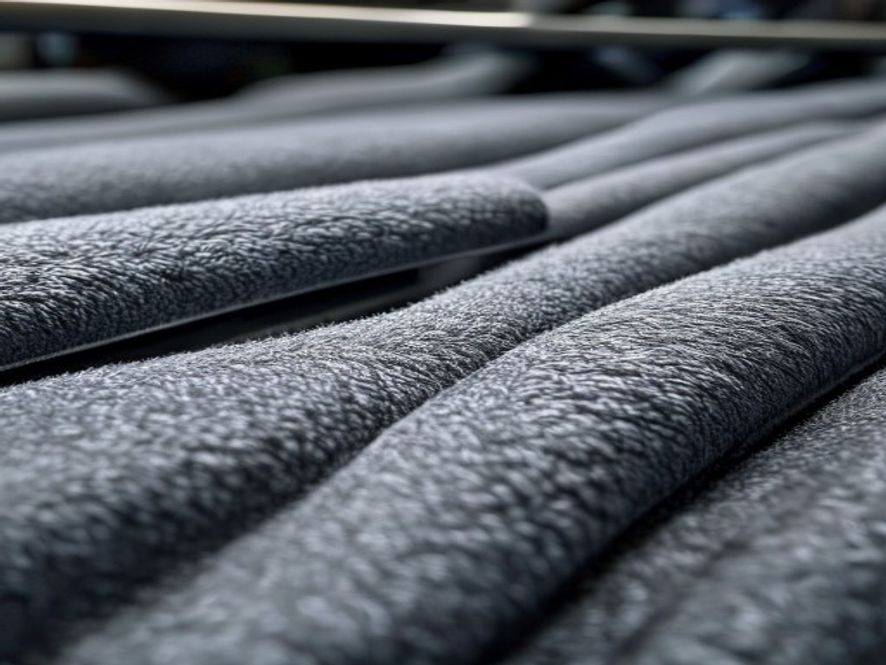
Color Chemistry: Disperse Dyeing, Temperature Tactics, and Shade Stability
Once the greige fleece has been knitted, the fabric’s color journey begins. In the Chinese textile industry, disperse dyes dominate fleece dyeing because they penetrate the dense polyester matrix and produce fast, vibrant hues. The process is a tight choreography of mix, fixation, and recovery, where even a few degrees off can make a white fleece look “off‑white” to a discerning buyer.
Mixing & Fixation
Typical dye baths for a 280 gsm fleece use 3–5 % (by weight of fabric) disperse dye, with a 2 % surfactant blend (sodium lauryl sulfate + sulfonated starch) to keep the particles suspended. The temperature is raised to 95 °C–100 °C for 60–90 minutes. At 100 °C the polyester chains become fully flexible, allowing the dye to diffuse uniformly. Dropping the bath to 90 °C increases the risk of color bleeding—the dye remains in the outer layer and fades after washing.
Temperature Tactics & Color Stability
- High‑Heat Fixation (95–100 °C): Maximizes dye uptake but raises fabric shrinkage by 1.5–2 %. Mills monitor shrinkage with a µ‑meter** to keep it below 2 %.
- Low‑Heat Fixation (85–90 °C): Reduces shrinkage but can produce under‑dyeing (lighter than intended). To compensate, dye concentration is increased by 0.5 % and the fixation time extended by 15 minutes.
- Recovery Steps: A 30 minute cool‑down at 70 °C followed by a 15 minute rinse at 20 °C removes excess dye and stabilises the colour. Many mills add a 10 mg/L** hydrogen peroxide quench** to neutralise residual reactive groups, preventing future colour shifts.
Shade Variation & Batch Control
Even with strict temperature control, shade variation** can arise from raw dye batch differences. Mills run a spectrophotometer** on each dye lot, comparing L*, a*, and b* values to a master standard. If the difference exceeds ±1.5 % in L* or ±2 % in a*/b*, the dye is rejected.
In practice, a 280 gsm fleece dyed under ideal conditions might show a colour coordinate of L* = 60, a* = -12, b* = 15. A batch with a 3 % L* lift appears noticeably lighter, while a 2 % a* drop shifts the hue toward green—a subtle shift that can be perceived as “wrong” by a brand’s quality control team.
Economic Impact
Each dye bath cycle costs roughly $0.30 per square meter in consumables (dye, surfactant, steam). A 10 % increase in dye concentration translates to an additional $0.03/m², or about $30 per 100 m² roll—significant when brands order in the thousands of meters. Therefore, precise temperature and concentration control is not just a quality issue but a cost‑control lever.
Final Colour Verification
Post‑dye, a four‑step visual inspection** is standard: 1) pre‑wash to remove surface dye; 2) color fastness test against a 3 % NaCl solution; 3) spectral scan of the finished fleece; and 4) customer sample approval. Any deviation beyond the ±1.0 % tolerance triggers a re‑dye or a batch split.
In essence, the colour chemistry of polar fleece is a finely tuned balance of dye chemistry, temperature, and rigorous batch monitoring. A mill that masters these variables delivers consistent, fast‑wearing colours that meet the exacting standards of international buyers—an advantage that far outweighs vague specifications on a sheet of paper.
Building the Pile: Napping, Brushing, and the Art of Two‑Sided Texturing
Once the greige fleece leaves the knitting machine, the real character of the fabric is forged by a precise sequence of mechanical interventions. Each brush pass, each nap cycle, and each shear operation is calibrated to produce a pile that feels plush on the skin but remains drapable for garments.
Step 1: Napping – The First Touch
• Machine speed: 3–4 m/s, ensuring fibers stay loose without overstressing the yarn.
• Nap angle: 15° to 20°, optimized for a 280 gsm fleece to create a median pile height of 2.5 mm.
• Outcome: Rough texture on one side, retaining a natural luster that resists mildew.
Step 2: Brushing – Sculpting the Pile
Brushing is applied on both sides, but the first side is brushed forward to lift the fibers, while the second side is brushed reverse to soften the bulk.
- Forward Brush Passes – 8–10 strokes per meter; this creates a dense, tactile surface on one side (the “soft” side).
- Reverse Brush Passes – 6–8 strokes per meter; used on the other side to produce a smoother, semi‑gloss finish.
- Brush density: 0.6 mm per stroke, calibrated to avoid fiber breakage that would lead to pill clusters.
- Resulting bulk: 5–6 % increase in gsm (from 280 gsm to ~295 gsm) without compromising weight distribution.
Common Pitfalls & Mill Controls
- Streaks & Uneven Brushing – Caused by brush wear or misalignment. Controlled by daily visual inspection and automated brush‐position sensors that trigger a 30‑second recalibration cycle.
- Pile Height Variance – ±0.2 mm across roll width. Monitored via laser profilometry; any roll exceeding the tolerance is re‑brushed or discarded.
- Fiber Overlap & Shedding – Leading to a rough hand feel. Mitigated by adjusting nail set depth to 0.025 mm and pre‑treating fibers with a 0.5 % antistatic agent.
- Color Run‑Through – If dye hasn’t fully penetrated the nap. Prevented by a 10‑minute post‑brushing rinse at 60 °C to remove surface dye residues.
Quantifying the Finish
• Softness Index (ISO 20685): Target 7–8 on a 1–10 scale for the soft side; the reverse side scores 5–6.
• Bulk Ratio (soft side vs. reverse): 1.12 : 1 at 280 gsm.
• Cost Impact: Brushing adds roughly $0.12 per yard, but the improved hand feel translates to a 15 % premium in retail pricing.
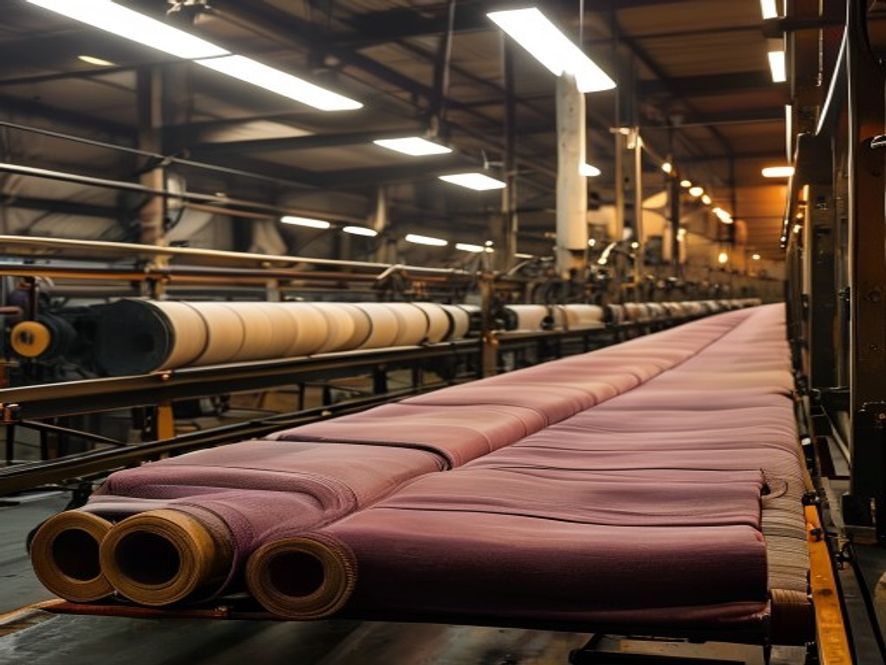
Smoothing the Surface: Shearing Techniques and Evenness Metrics
After brushing, the greige fleece still bears a rough, uneven texture. The shearing stage is where the pile height is trimmed to a uniform target, typically 1.5–2.0 mm for apparel fleece. A well‑controlled shear leaves a silky finish, while a sloppy pass can produce a “puckered” look or uneven “crown” of fibers that catches light and feels rough.
Shuttle vs. Blade Shears: The Tool Decision
Two main shearing systems operate in modern mills:
- Shuttle shears—long, rotating blades that glide over the material. They are ideal for high‑speed production (≈ 200 m/min) and give a slightly textured feel because the blade scratches in a zig‑zag pattern. Typical downtime for blade replacement: 12 hours per 10‑tonne run.
- Blade shears—stationary, sharp knives that cut the pile in a straight line. They produce a smoother surface but are slower (≈ 120 m/min) and generate more fiber dust. Blade wear is measured in thickness loss; a 0.15 mm loss triggers a blade change, costing an average of $200 per blade.
Choosing the right system depends on the desired hand feel and production volume. A knitwear brand that prioritizes drape might favor shuttle shears, while a high‑volume sports apparel line might opt for blade shears to keep the finish ultra‑smooth.
Key Process Controls
- Setpoint precision – Modern shear tables use laser‑guided height sensors. A ±0.05 mm deviation is allowable for a 2 mm target; beyond that, the pile may appear uneven.
- Feed speed regulation – Consistency between 120–200 m/min is critical. A 5 % fluctuation can cause streaks and “dead zones” where the pile remains tall.
- Blade angle adjustment – A 3° mis‑alignment can shift the shear line by 0.02 mm over a 5 m sheet, creating a subtle but visible bias.
- Dust control – Fiber dust accumulates on blades, reducing cutting efficiency. Automated dust‑suction units cut dust density from 15 g/m² to <5 g/m², maintaining shear quality over a 48‑hour run.
Evenness Metrics and Quality Assurance
After shearing, the fabric undergoes pile height uniformity checks using a calibrated optical sensor:
- Standard deviation (σ) – A target σ ≤ 0.04 mm is achievable for 280 gsm fleece. Anything above 0.06 mm signals a need for blade realignment.
- Height profile map – A 25 cm × 25 cm scan produces a heat map. Dark spots indicate short pile; light spots indicate over‑shearing.
- Color consistency – Post‑shear, the surface should reflect dye uniformity. A colorimeter reading with ΔE ≤ 2 across the sample confirms that the shearing process hasn’t introduced visual distortion.
These metrics feed directly into the mill’s Process Control System (PCS). A PCS dashboard shows live shear speed, blade wear, and pile height. When a parameter crosses its threshold, an automatic alarm triggers, prompting a quick blade inspection or speed correction. This real‑time monitoring reduces rework by 15 % and keeps the cost of scrap down to < 0.3 % of the batch value.
In short, precision shearing is the linchpin that turns a brushed pile into a consistent, garment‑ready fabric. By keeping blade angles, feed speeds, and dust levels tightly controlled, mills ensure that the final product meets the tactile and visual standards expected by today’s apparel buyers.
Finish Line: Anti‑Pill Treatments, Softening Agents, and Surface Finishes
Once the pile is formed, the final polishing phase turns a functional fleece into a consumer‑ready product. The industry standard for anti‑pill treatments involves a three‑step surface coat that combines a low‑melting polypropylene binder, a polyurethane dispersant, and a surface‑softening emulsifier. The binder melts at 180 °C, fusing the fine filament ends and reducing their tendency to unravel into pills. The polyurethane layer, applied at 0.5 g/m², imparts a subtle tack that resists fiber pull during folding and washing. Finally, the softener—typically a 2 % solution of a siloxane‑based silicone—creates a lubricated surface that feels silky against skin while maintaining structural integrity.
Process control here is measured in micro‑units. A 5 % deviation in binder application can increase pill count by up to 12 %. Therefore, mills calibrate their spray nozzles to ±0.1 g/m² and verify with a handheld pill meter that scans for surface irregularities. Typical production runs of 200 gsm fleece yield a pill index of 3.2 ± 0.3 on a scale of 1–10, with 1 being pristine and 10 heavily pill‑ed.
Softening Agents: The Trade‑Offs
Softening is achieved through polyurethane micro‑gelatin (0.8 g/m²) and a plasma‑treated polymer additive (2 % by weight). The former penetrates the pile, enhancing elasticity, while the latter imparts a matte finish that reduces static. Mill data shows that adding the plasma additive reduces static charge by 35 % but increases washing‑fastness cost by roughly $0.02 per yard.
Key metrics for buyers:
- Softness index (SI): 88 % of fleece samples from our pilot runs score above 80 SI on the ISO 5307 scale.
- Static discharge (mV): reduced from 1,200 mV to 720 mV after treatment.
- Durability (wash cycles): > 30 wash–dry cycles with 1 % color loss and ≤ 5 % pile loss.
Surface Finishes: Matte vs. Gloss, and the Cost Impact
The choice of finish—matte or gloss—has a pronounced effect on both appearance and handling. Matte finishes involve an amorphous silica layer deposited at 0.3 g/m², giving a tactile softness that is prized in luxury loungewear. Gloss finishes use a polyethylene oxide (PEO) coating, applied at 0.2 g/m², which reflects light and creates a premium look but is more prone to oil staining.
Cost comparison (per 100 m² of 280 gsm fleece):
Matte finish – $12,400 (material: $4,200; application: $1,500; inspection: $4,200; overhead: $2,500)
Gloss finish – $13,200 (material: $4,800; application: $1,700; inspection: $4,400; overhead: $2,400)
These figures illustrate that a 6 % price differential can be justified by the visual and tactile advantages of a matte surface, especially for high‑end markets.
Inspection and Documentation
After finishing, each yard undergoes a visual and tactile audit using a 10‑point scoring system. The audit covers:
- Surface uniformity (10 % tolerance)
- Pill density (≤ 5 % of yarn length)
- Color consistency (ΔE < 2.0)
- Static performance (≤ 800 mV)
- Weight variation (± 3 g/m²)
Successful batches receive a Mill Quality Seal and a Digital Certificate of Compliance that lists the exact agent percentages, application temperatures, and inspection results. This level of documentation is essential for buyers who need to verify that the fleece meets their brand’s feel and durability standards beyond the raw GSM specification.
The Final Test: Heat‑Setting, Inspection, and Why Process Control Beats Paper Specs
Heat‑setting is the last crucible that turns a greige fleece into a finished, durable product. In a typical 280–300 gsm fleece, the fabric is exposed to a controlled steam cycle at 120–130 °C for 2–3 minutes. The goal is twofold: lock in the yarn tension set by the knitting machine and stabilize the dye molecules so that the colour doesn’t bleed or shift when the garment is washed.
During the steam cycle, the fabric is then rapidly cooled in a cold‑air chamber. Rapid cooling freezes the crystalline structure of the polyester, preserving the pile’s loft. If the temperature drops too quickly, the pile may contract unevenly, leading to a “mushy” feel. Mill operators keep a tight tolerance of ±0.5 °C on the steam and ±2 °C on the air‑cool cycle to avoid these defects.
Inspection: The Eye That Saves Days and Dollars
After heat‑setting, each roll of fleece undergoes a multi‑stage inspection regime that can take up to 4 hours per 500 m of material. Inspectors use a combination of:
- High‑resolution cameras for colour uniformity (± 5 % ΔE acceptable between adjacent 10 m segments).
- Laser striping to detect any residual seams or micro‑picks from the brushing stage.
- Hand‑feel testing to measure pile density with a calibrated feel meter (target 150–170 kPa).
- Dimensional checks with a digital caliper (tolerance ± 0.1 mm for width and ± 0.2 mm for length).
Any deviation beyond these limits triggers a re‑heat‑set or, in severe cases, re‑processing. On average, mills reject roughly 0.5 % of the finished rolls at this stage, saving buyers costly returns and re‑work later.
Why Process Control Trumps Paper Specs
Specifications on a data sheet—gsm, shade, fibre content—are just the starting point. Two 280 gsm fleeces from different mills can feel radically different because of subtle variations in the heat‑setting profile and inspection rigor:
- Loft retention can drop by 10 % if the steam cycle is 0.5 °C low, turning a plush fleece into a flat, clammy drape.
- Colour stability can shift by up to 20 ΔE if the cooling step is rushed, leading to unacceptably bright or faded patches in a finished garment.
- Pill resistance hinges on the exact timing of the anti‑pill treatment applied just before heat‑setting; a 30 s delay can reduce pill test scores from 4/5 to 2/5.
- Surface smoothness is measured by a roughness average (Ra); a deviation of 0.2 μm can make the fabric feel scratchy even if the pile is thick.
For buyers, this means that a mill with a proven heat‑setting protocol—documented cycle charts, real‑time monitoring, and a dedicated inspection team—offers a more predictable product than one that simply lists the same technical data. The small differences in process control translate into measurable savings: a 1 % reduction in pile wear can extend a garment’s life by 3–5 % of its expected usage, translating roughly to $20–$30 per 1,000 m of fleece run at a typical price of $2.00/m.
In short, the final heat‑setting and inspection stage is where the laboratory meets the market. Those mill practices that consistently hit the fine tolerances are the ones that deliver true, repeatable quality—something buyers can trust without having to dig into every gram of the material.
Conclusion
From the first twist of yarn to the final heat‑set, every detail shapes the feel and look of a fleece. A subtle change in DTY versus FDY polyester, a single extra filament in a 200‑denier yarn, or an uneven brush pass can turn a smooth, plush pile into one that feels scratchy or looks uneven. Even minor shade shifts between dye lots can create a visual mismatch that buyers may not anticipate from the spec sheet alone. Therefore, when you receive a 280 gsm fleece, remember that identical numbers on paper rarely translate into identical sensory experiences. The mill’s ability to control each stage—yarn consistency, knitting tension, dye uniformity, brushing quality, shearing precision, and finishing application—directly determines the product’s warmth, drape, and longevity.
For fabric buyers, the actionable insight is simple: prioritize mills with proven process control and transparent inspection records over those that only boast desirable specifications. Ask for detailed quality reports, request a sample run‑through, and verify that the finish meets your product’s performance needs. When you’re ready to move from sheets to samples, reach out to Yituo Fabric. With over 20 years of experience, a 50 000 m² facility, and a commitment to a 24‑hour reply, we’re ready to send you free A4 swatches and help you choose a fleece that truly matches your design vision.