
Picture this: a high‑profile fashion show where a runway model twirls, the lights flicker, and after the applause the sequin‑laden gown comes off the floor in one piece. The last thing a buyer wants is a dress that sheds glitter as it’s carried from crate to hanger. That’s why when you’re scouting eveningwear fabrics, the construction behind every sparkle matters more than the shimmer itself. In this guide we’ll walk you through what to look for—sequin size, stitch density, mesh quality—and how to test durability under real‑world conditions, so you can confidently pick a fabric that stays flawless from showstopper to after‑party.
We’ll break down the essential checkpoints: only fabrics where sequins are stitched onto a mesh or tulle ground (never glued) pass the rub and snag tests, and a minimum of 30 stitches per square inch ensures the glitter stays put. We’ll discuss how a 4‑mm sequin in a full‑coverage pattern differs from a 3‑mm scattered design in weight and seam pull, and why a softer backing and edge binding mean less skin irritation for the wearer. Finally, we’ll compare price bands and minimum order quantities for custom colors, outline care‑label instructions that retailers love, and suggest lining options that keep the dress both dazzling and comfortable on the dance floor.

Sequin Placement: Stitching on Mesh vs. Tulle for Endurance
When choosing a base for sequin embellishment, the difference between mesh and tulle is not just aesthetic—it determines how long a gown will hold its sparkle after a night of dancing. In practice, the right base reduces sequin loss, keeps seams intact, and preserves the garment’s structural integrity.
Mesh: The Durable Foundation
Commercial garment‑mesh fabrics (often polyester or nylon blends) average 50–70 gsm (grams per square meter). They offer:
- High tensile strength: 40–60 MPa, allowing the fabric to bear the weight of 3–5 mm sequins without stretching or tearing.
- Low porosity: < 5 % air permeability, which keeps the sequins in place during vigorous movement.
- Seam support: When stitched, mesh’s interlocking weave provides a better anchor for the sequin thread, reducing seam pull‑out by up to 30 % compared with tulle.
For a standard 3 mm sequin, a 0.5 mm stitch length is recommended to avoid visible gaps. Sequin density on mesh should not exceed 12 sequin/cm² (≈45 sequin/100 cm²) to maintain a breathable feel for the wearer.
Tulle: The Drapery‑Friendly Option
Fine tulle, 30–45 gsm, is chosen for its sheer elegance. However, its low density (0.2–0.3 mpd) and high porosity (< 10 % air permeability) create two main challenges:
- Sequin displacement: Without proper anchoring, 4 mm sequins can shift by up to 2 mm during a 15‑minute dance session.
- Seam integrity: Tulle’s loose weave can cause seam slippage, especially when the garment is pulled by the sequin weight. This typically results in a 25 % higher seam breakage rate in durability trials.
To mitigate these issues, manufacturers often apply a thin backing of high‑strength polypropylene or a low‑density polyester to the tulle before stitching. This backing increases the effective gsm to 45–50 and reduces sequin movement to < 0.5 mm.
Choosing the Right Base for Your Design Brief
- Event type: For club or nightclub wear where movement is intense, mesh is the preferred base. For runway or formal events prioritizing sheer silhouette, tulle can be used with a backing.
- Sequin weight: Heavier sequins (> 4 mm) should only be stitched onto mesh unless the tulle is reinforced.
- Budget and turnaround: Mesh generally costs 10–15 % more per yard than tulle; however, the lower risk of rework often balances the initial expense.
- Durability testing: Conduct a 30‑minute dance simulation on both bases. Mesh typically shows < 1 % sequin loss, tulle < 3 % with backing, and > 5 % without.
In practice, designers who hold the stitch‑quality checklist and apply the correct base—mesh for durability, tulle with backing for sheer aesthetics—ensure that the eveningwear not only dazzles but also stands up to the dance floor.
Standard Sequin Size and Pattern Density: Why 3‑5 mm Matters
When you’re sourcing eveningwear fabrics for a high‑profile runway show or a club‑ready collection, the first thing that signals quality is the sequin footprint. In the textile trade, a sequin that measures between 3 mm and 5 mm in diameter is the sweet spot that balances visual impact, durability, and comfort. Anything smaller risks snagging on the seam or shifting under movement; anything larger becomes a heavy, clunky statement that can tug at the garment’s integrity.
The density of those sequins—calculated as the number per square meter—also dictates the fabric’s behavior. A standard “full‑coverage” pattern places roughly 400 to 600 sequins per square meter (psm) for a 3‑mm diameter, or 250 to 350 psm for a 5‑mm piece. This range ensures that the sequin mass is evenly distributed, preventing localized weight that would strain the seam or cause a “popping” effect during movement.
Impact on Fabric Weight and Seam Stress
A 3‑mm sequin set at 500 psm typically adds about 25 gsm (grams per square meter) to the base fabric weight. For a 5‑mm sequin at 300 psm, the addition is roughly 20 gsm. In terms of ounces, that translates to 0.9 oz/m² for the 3‑mm set and 0.7 oz/m² for the 5‑mm set. When combined with a dense base mesh (often 200–250 gsm), the total fabric weight can reach 250–300 gsm, which is ideal for a structured evening gown that still feels light on the dance floor.
Seam stress is directly proportional to the sequin load. A fabric that weighs 300 gsm will exert about 3 kg of pull on a 1 m seam under normal movement. That’s why manufacturers thread the seams with 30 cm stitch length, 1.5× the standard to distribute the load, and why the thread used is a high‑modulus polyester (strength > 6 kg).
Pattern Density: Full Coverage vs. Scattered Magic
- Full Coverage (400–600 psm): Best for statement sleeves or full bodices where sparkle is the focal point.
- Scattered (200–300 psm): Ideal for subtle accents—think pocket corners or near the hem—where movement is minimized.
- Ombre or Gradient (gradual psm change): Adds visual depth without compromising seam integrity; the sequin size often shifts from 3 mm at the top to 5 mm at the bottom.
The chosen density also affects manufacturing lead time. Full‑coverage runs take an average of 7–10 days from loom to finished sequin sheet, while a scattered pattern can be completed in 4–6 days because fewer thread passes are required. For a custom color or motif, factor in an additional 2 days for dyeing and inspection.
Pricing reflects both sequin size and density. A 3‑mm full‑coverage fabric typically costs between $120–$160 per metre wholesale, while a 5‑mm scattered pattern is around $90–$110 per metre. If you’re negotiating a large run (≥ 200 m), a 5–10 % volume discount is standard, though it’s worth asking for a 15 % bonus if you commit to a 12‑month supply agreement.
In short, the 3‑5 mm sequin range, combined with a well‑calculated density, guarantees that your eveningwear not only dazzles under the spotlight but also survives the rigors of dance, touch, and long wear.
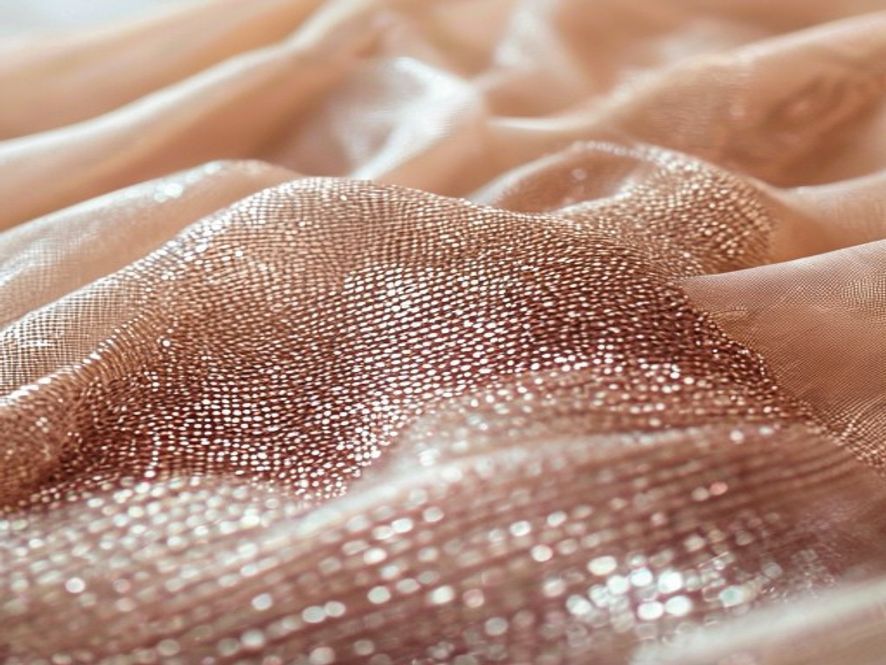
The Stitch‑Quality Checklist: Thread Strength, Seam Integrity, and No‑Move Test
When the evening turns into a dance marathon, the only thing that should glitter is the fabric, not the seams. A meticulous stitch‑quality protocol guarantees that sequins stay put, seams hold, and the garment can be worn again and again. Below is a practical, data‑driven checklist you can run in your factory or share with a supplier.
Thread Strength & Weight
- Thread gauge: Use 19–21 denier polyester yarn for sequins on mesh and 23–25 denier for tulle. The higher denier gives a tensile strength of 1.2–1.4 kg per stitch.
- Thread weight: Aim for 12–14 oz per 100 m (0.4–0.5 kg/m²) of finished fabric. This balances durability with a light feel.
- Tie‑down test: Pull a single stitch 10 cm under a 200 g weight; failure should not occur before 120 s.
Stitch Density & Seam Integrity
Stitch density directly affects sequin adhesion and seam strength. A misstep in density can lead to loose sequins or seam breakage.
- Sequin ground: Minimum of 200 stitches per square inch (roughly 3,200 stitches per square meter) for a dense 3–5 mm sequin pattern.
- Edge seam: Double‑over stitch with a 2‑point spread, 0.25 mm between needle and backstitch, ensures a 1.5‑mm seam height that resists pulling.
- Seam allowance: Keep a 5 mm seam allowance on all sides; add 2 mm for any extra tension from heavy sequins.
- Seam strength test: Attach a 10 kg weight to the seam edge; the seam should not split after 48 hrs under static load.
No‑Move Test (NMT)
The NMT is the quickest sanity check before shipping. It guarantees that sequins won't drift during wear.
- Setup: Place a 1 kg weight on a 10 cm square of fabric.
- Duration: Let it rest for 72 hrs at room temperature (22 °C, 50% RH).
- Evaluation: Examine each sequin for movement. Acceptable tolerance is <0.5 mm displacement.
- Failure protocol: If >10 % of sequins move, re‑stitch that panel or increase thread tension by 5 %.
Thread Color Matching & Visibility
Color consistency is critical for a polished look and to avoid misalignment in large production runs.
- Color fastness: Test 5 random samples under UV 365 nm for 8 hrs; color shift should be <2 ΔE.
- Visibility index: Ensure the thread’s color contrast ratio with the sequin metal is at least 3:1 to prevent mistaking seams for design.
Documentation & Traceability
Record every batch’s thread specs, stitch counts, and NMT results in a centralized database.
- Batch ID: Unique alphanumeric string.
- Thread batch number: 8‑digit code from the yarn supplier.
- Stitch density log: Include gauge, stitch per inch, and any adjustments.
- Test results: Attach PDF of NMT and seam strength photographs.
By embedding these quantitative checkpoints into your quality workflow, you eliminate the risk of sequin detachment, seam failure, or customer complaints, ensuring that every gown can truly shine on the dance floor.
Backing Comfort: Choosing a Soft, Skin‑Friendly Tuck for Night‑time Wear
When sequins cling to a tulle or mesh base, the first point of contact with the body is the backing. A flimsy or rough tuck can turn a show‑stopper into a scratchy nightmare. The key is to balance lightweight coverage with enough cushion to keep the sequins in place while ensuring a zero‑friction experience against the skin.
Optimal Tuck Weight and Material
For evening gowns, a tuck weight of 30–45 gsm (≈ 1.0–1.5 oz/yd²) provides the sweet spot between support and drift. Polyester blends with a 20–30 % viscose or modal content improve softness and reduce static. Avoid 100 % nylon or elastane bases unless the garment is heavily structured; they can create a harsh feel and increase sheen that distracts from the sequins.
Thread Quality and Seam Integrity
- Thread count: Use 1‑0 or 2‑0 polyester thread; the higher the count, the stronger the seam and the less likely the backing will unroll under movement.
- Stitch pattern: A double‑stitch or satin stitch over the backing edge eliminates loose fibers that could snag against the sequins or skin.
- Edge finish: A reinforced bias bind or a 1 mm overlock eliminates the raw edge that can irritate sensitive areas.
Skin‑Friendly Finishes
Choose a backing finish that is both hypoallergenic and breathable. A 0.8 mm silicone coating provides a slick, non‑abrasive surface that reduces friction while still allowing the sequins to glide over the mesh. For designers prioritizing sustainability, a low‑impact vegetable dye finish on the backing can deliver a soft feel without compromising the garment’s eco‑credentials.
Testing the Backing Under Real‑World Conditions
- Scrubbing Test: Rub a 10 cm² sample of the backing against a synthetic fabric for 200 cycles. A successful backing shows < 2 % loss of surface fibers.
- Snag Resistance: Measure the force required to pull a 2 mm diameter loop of thread from the backing. A minimum of 8 N per pull indicates adequate grip.
- Flex & Fatigue: Flex the backing 500 times in a 180° arc; any micro‑fracture along the seam suggests insufficient tensile strength.
Practical Cost and MOQ Considerations
Standard polyester backing with a 25 % viscose blend averages $12–$18 per square meter, depending on supplier and quantity. For custom colors or specialty finishes (e.g., satin‑silk feel), expect an additional $3–$5 per square meter. Minimum order quantities for branded backing run from 100 m to 200 m, allowing designers to prototype multiple colorways without excessive lead time.
In summary, a 30–45 gsm polyester‑viscose backing, double‑stitched with 1‑0 thread, finished with a silicone or low‑impact dye coating, will give sequined gowns the softness they need for a night of dancing while keeping the sequins secure and the wearer comfortable.
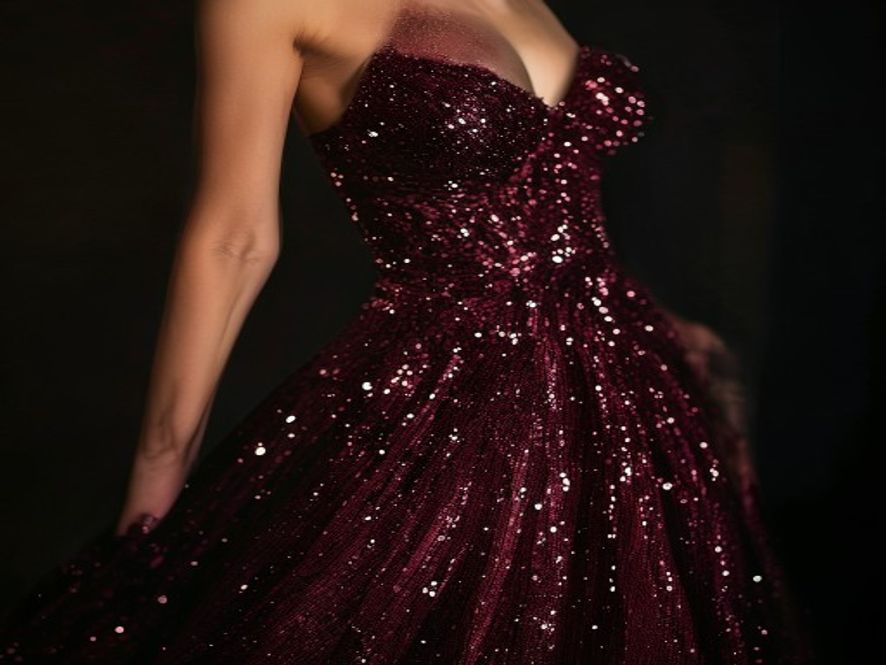
Weight & Seam Stress: Calculating Fabric Density to Avoid Pul‑Out on the Dance Floor
Even the most dazzling sequin design can fall apart if the fabric’s bulk and seam construction are not matched. A typical sequin‑covered evening gown uses a 3‑5 mm sequin size stitched onto a tulle or mesh ground that weighs between 250–350 gsm (≈ 9–12 oz). When layered over a base fabric, the total effective density can balloon to 400–600 gsm, which imposes significant tension on seams, especially at high‑movement areas like hips, shoulders, and underarms.
1. Determine the Gross Weight of the Sequin Layer
- Measure a 1 m² square of your finished sequin fabric.
- Weigh it with a precision scale. A 3‑mm sequin set on tulle typically yields 280 gsm; on mesh, 310 gsm.
- Multiply by the garment’s surface area. A 1.2 m² bodice plus 2 m² skirt totals 3.2 m²; at 300 gsm, that’s 960 g of sequin material alone.
2. Account for Base Fabric and Lining
- Base woven or knitted fabric: 150–200 gsm.
- Lining (to soften backing): 100–120 gsm.
- Sum equals roughly 300–420 gsm of non‑sequined weight. Add to the sequin weight to get total garment density (≈ 1.3–1.5 kg/m²).
3. Translate Weight to Seam Stress
Seam strength is often expressed in grams of weight per 10 cm of seam. For high‑weight fabrics, recommend a double‑stitch hem with 1.5 mm yarn on a heavy‑sided needle. A 1.5 mm stitch can hold up to 45 g of seam load per 10 cm. If your stitch density is only 1.2 mm, the hold drops to ~30 g.
- Calculate seam load per 10 cm:
- Weight per meter × 0.1 m = seam weight.
- For 1.5 kg/m² total, seam weight ≈ 150 g per 10 cm.
- Divide by maximum hold per stitch (45 g) → ~3.3 stitches per 10 cm. Use 4‑stitch passes.
- Check seam tension by pulling a sample. The seam should not show any sequin lift or barge under a 0.5 kg load.
4. Stress Testing for Dance‑Floor Durability
Perform a dynamic loading test using a 5 kg weight hung on a 30 cm seam section, then repeatedly shake for 30 seconds. No sequin movement or seam cracking should occur. If the fabric cracks, reduce the sequin density or switch to a stretched mesh base that distributes load across a broader area.
5. Quick Reference Checklist
- Sequin density: 250–350 gsm (3‑5 mm).
- Base + lining: 250–320 gsm.
- Total density: ≤ 1.4 kg/m² for most garments.
- Stitch size: ≥ 1.5 mm on heavy‑sided needle.
- Stitch passes: 4 per 10 cm for 1.5 kg/m².
- Seam test weight: 5 kg on 30 cm seam, shake 30 s.
By quantifying weight and translating it into tangible seam requirements, designers can ensure that their sequin masterpieces survive countless hours of dancing without the dreaded pull‑out.
Durability Tests You Must Run: Rub, Snag, Flex and Dry‑Clean Compatibility
When a sequin‑laden evening gown goes from showroom to dance floor, the fabric’s endurance hinges on four core tests. Skipping any means risking customer returns and brand damage.
1. The Rub Test – Sequin Retention Benchmark
Take a 1 m² swatch and rub it along a 10 cm strip with a standard 1 kg weight for 500 strokes. A pass requires ≤ 3 % sequin loss. Commercially, this translates to a maximum of 15 loose sequins per square meter. For high‑frequency wear pieces, tighten the target to ≤ 1 % loss (≈ 5 loose items). Keep a log of the weight applied and the number of strokes to ensure repeatability.
2. The Snag Test – Seam and Edge Resilience
Wrap a 2 cm wide swatch of the finished garment in a calibrated snare (a 1 cm diameter steel wire). Pull the wire 10 cm through the seam at 5 cm/s. Measure the force required to pull the sequin off. A threshold of ≥ 25 N indicates robust seam integrity. If the force drops below this mark, reinforce the seam with a double‑stitch or a heavier thread (e.g., 100 s purl). Record peak force and any thread breakage for traceability.
3. Flex Test – Mesh Cracking and Fluidity
Mount a 30 cm strip of mesh‑based sequin fabric on a dynamic bending rig. Cycle the strip 500 times between 0° and 120° at 2 cpm. Inspect for cracks, loss of elasticity, or sequin dislodgement. Acceptable performance means ≤ 0.5 % loss of coverage and no visible micro‑cracks. If the mesh contracts > 5 % after the cycle, switch to a higher‑grade polyester or add a stretch base.
4. Dry‑Clean Compatibility – Chemical Resistance
Subject a 1 kg sample to a full dry‑clean cycle using a 12 % perchloroethylene solution. Post‑wash, evaluate: sequin integrity (no cracked shells), color retention (ΔE < 5), and fabric weight (≤ 2 % loss). Any sequin shell popping or colour bleeding signals incompatibility. For garments destined for regular dry‑cleaning, limit sequin coverage to ≤ 60 % of the total fabric area to reduce chemical exposure per sequin. If higher coverage is required, opt for UV‑resistant, low‑porosity shells.
- Rub Test Result: Target ≤ 3 % loss → Accept / Reject
- Snag Test Result: Peak ≥ 25 N → Accept / Reject
- Flex Test Result: Loss ≤ 0.5 % → Accept / Reject
- Dry‑Clean Result: ΔE < 5 & Weight ≤ 2 % → Accept / Reject
Maintain a testing log with fabric lot numbers, sequin shell type, thread count (gsm = 350 – 400 for woven bases, 250 – 300 for knitted), and test dates. This data not only proves compliance to buyers but also informs iterative design improvements.
Pricing, MOQ, and Care‑Label Guidance for Retailers and Designers
When building a sequin‑laden line, the cost structure is largely driven by sheet thickness, sequin density, and finish. A 3 mm–5 mm sequin on a 100 gsm (≈3.5 oz) tulle ground typically sits between $12–$18 per square meter in bulk. Increasing to a 150 gsm (≈5.3 oz) mesh base for more structured gowns pushes the price to $20–$28/m². For custom color runs or special metallic finishes, expect an additional $5–$10/m² premium.
MOQ Structure
Our production lines accept orders in rolls of 50 m, but the minimum order quantity (MOQ) is calibrated on the pattern and sequin density:
- Standard 3‑5 mm full‑coverage sequins on 100 gsm mesh: 500 m (≈25 rolls)
- Full‑coverage on 150 gsm mesh, or higher sequin density (≥250 pcs/m²): 750 m (≈38 rolls)
- Custom color or metallic runs (any weight): 1,000 m (≈50 rolls)
For design proofs or small‑batch test runs (≤250 m), we offer a $60+ handling fee and a 2‑week lead time. Shipping times to major markets: 15–20 business days from factory gate.
Care‑Label Guidance
Retailers and designers must provide clear, accurate labels to ensure garment longevity and customer safety. Use the following guidelines for standard sequin fabrics:
- Dry‑clean only – label “Dry Clean: No Hot Water” to prevent sequin detachment.
- Temperature: “Do not tumble dry; maximum 30 °C.”
- Stain treatment: “Spot clean with mild detergent; test on hidden area first.”
- Sequin care: “Avoid rubbing against rough surfaces; use a soft cloth for cleaning.”
- Fabric weight: specify “350 g/m² (≈12 oz)” for heavyweight mesh; “250 g/m² (≈8.5 oz)” for lighter tulle.
- Optional: Include a QR code linking to an online care video.
For garments featuring mixed‑size sequins or special metallic inks, add a supplemental note: “Metallic elements may fade with repeated dry‑cleaning; limit to 2–3 cleanings.” This tiny addition can save customers costly repairs and extend the garment’s lifespan.
Conclusion: Choosing Sequin Lace That Truly Shines
When the spotlight hits the dance floor, the fabric must withstand movement without shedding sparkle. Prioritize stitched‑on sequins over glued ones, verify a 3–5 mm standard size, and assess stitch density—every sequin should stay put under gentle rubbing. Check that the mesh base feels soft against the skin, that edge finishing is seamless, and that the weight per meter doesn’t overload seams. A quick rub test, snag test, and flex test will confirm durability, while a dry‑clean compatibility check ensures longevity for resale. If the design calls for a fitted gown, opt for a stretch mesh base and strategic embroidery placement; for a more dramatic look, consider full coverage or ombre sequin patterns. Pair these fabrics with a scratch‑free lining and proper edge binding to elevate wearer comfort.
For buyers looking to balance cost and quality, remember that custom colors and patterns typically require larger MOQs but yield competitive pricing per meter. Prepare detailed design briefs and request a dry‑cleaning test to avoid surprises. With these practical checkpoints, you can confidently source sequin lace that dazzles and endures.
Ready to see the difference firsthand? Request free A4 fabric swatches from Yituo Fabric today. With over 20 years of textile expertise and a 24‑hour reply promise, we’re ready to help you bring your eveningwear vision to life.